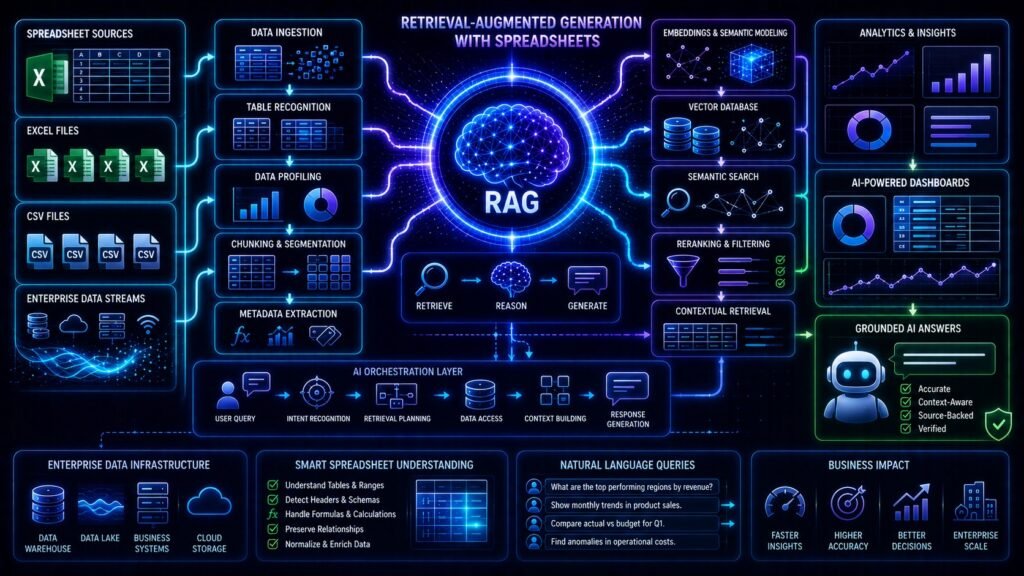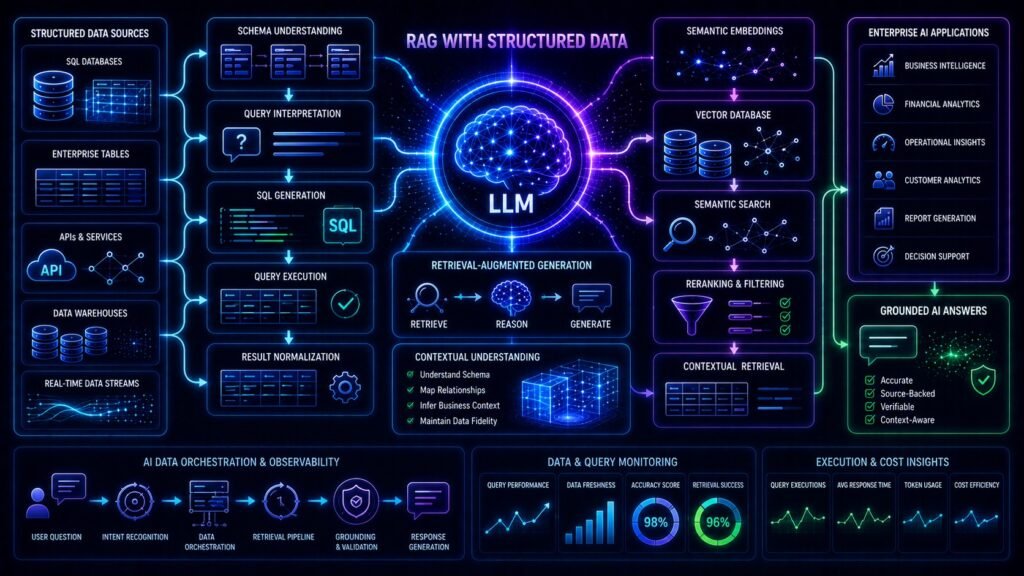
RAG

Role of Vector Databases in RAG : Explained Simply

Role of Vector Databases in RAG Explained Simply: vector database role in rag pipeline diagram

Role of Vector Databases  in  RAG Pipeline Vector databases are one of the most critical components in a RAG (Retrieval-Augmented Generation) pipeline. They are responsible for storing and retrieving embeddings—numerical representations of text—so that an AI system can find the most relevant information before generating a response. Without vector databases, RAG systems cannot efficiently search […]

Role of Vector Databases in RAG : Explained Simply Read More »

Best Chunking Strategies for RAG: How to Improve Retrieval Quality

Best Chunking Strategies for RAG: How to Improve Retrieval Quality

Best Chunking Strategies for RAG The best chunking strategy for RAG is the one that helps your system retrieve the right information without breaking important context. In practice, there is no single best chunking method for every use case. Fixed-size chunking is simple and fast, section-based chunking is strong for structured documents, and semantic chunking

Best Chunking Strategies for RAG: How to Improve Retrieval Quality Read More »

RAG vs Fine-Tuning: Which One Should You Use in AI?

RAG vs fine-tuning comparison diagram for AI systems

RAG vs Fine-Tuning: Which One Should You Use? RAG and fine-tuning solve different AI problems. RAG improves answers by retrieving relevant external information before generation, while fine-tuning changes the model’s behavior through additional training. In simple terms, choose RAG when your system needs access to changing or private knowledge, and choose fine-tuning when you need

RAG vs Fine-Tuning: Which One Should You Use in AI? Read More »

What Is RAG in AI? Explained Simply for Beginners

RAG pipeline using documents and an LLM

What Is RAG in AI? Explained Simply RAG in AI stands for retrieval-augmented generation. It is a method that improves language model answers by retrieving relevant information first and then using that information as context during generation. In practice, this helps systems answer with fresher, more domain-specific, and often more traceable information than a standalone

What Is RAG in AI? Explained Simply for Beginners Read More »

Scroll to Top