RAG

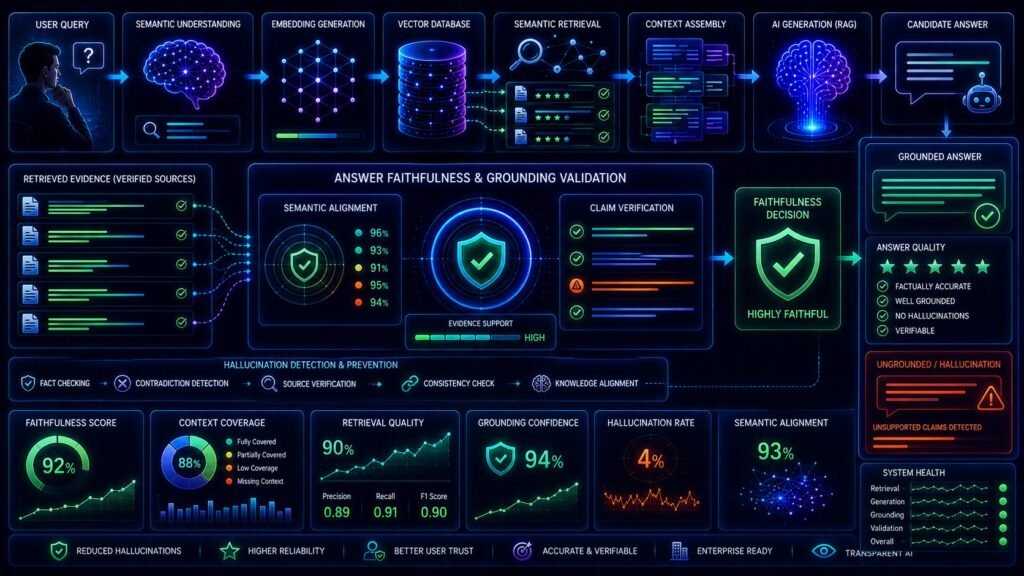
Answer Faithfulness in RAG Explained Simply

Answer faithfulness in RAG visual showing grounded AI responses, semantic retrieval validation, and hallucination detection systems

Answer Faithfulness in RAG: How AI Systems Stay Grounded in Facts Retrieval-Augmented Generation (RAG) systems became one of the most important breakthroughs in modern Artificial Intelligence because they improved how Large Language Models access external knowledge. Unlike standalone LLMs that rely mostly on pretrained model memory, RAG systems retrieve contextual information from: vector databases enterprise […]

Answer Faithfulness in RAG Explained Simply Read More »

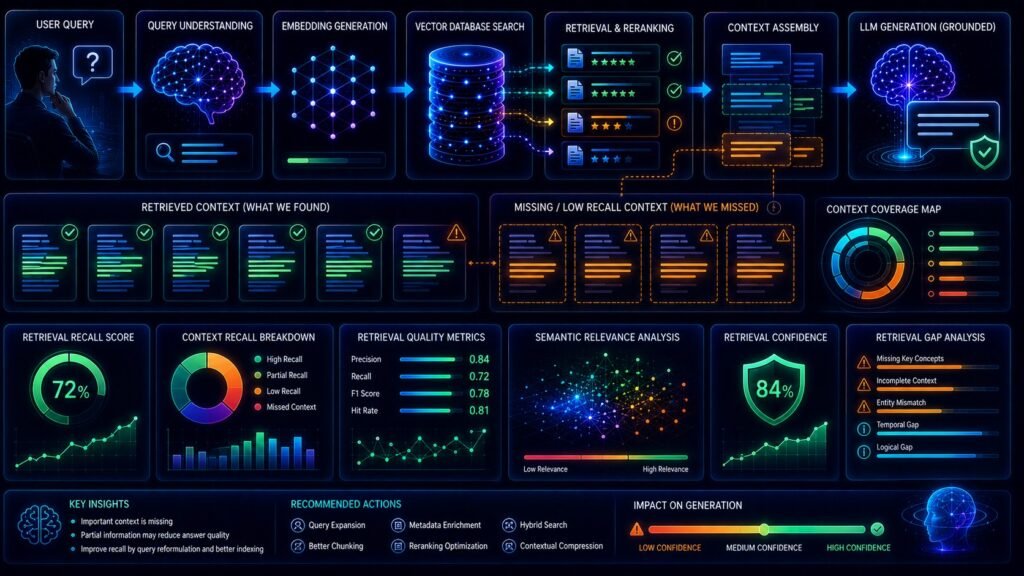
Context Recall in RAG Explained Simply

Context recall in RAG visual showing retrieval quality analysis, semantic search systems, missing contextual information, and AI evaluation dashboards

Context Recall in RAG: How Retrieval Systems Measure Missing Information Retrieval-Augmented Generation (RAG) systems have become one of the most important architectures in modern Artificial Intelligence. Enterprises increasingly use RAG-powered AI assistants, semantic search systems, enterprise knowledge platforms, customer support copilots, and document intelligence systems to improve AI grounding and reduce hallucinations. However, retrieval quality

Context Recall in RAG Explained Simply Read More »

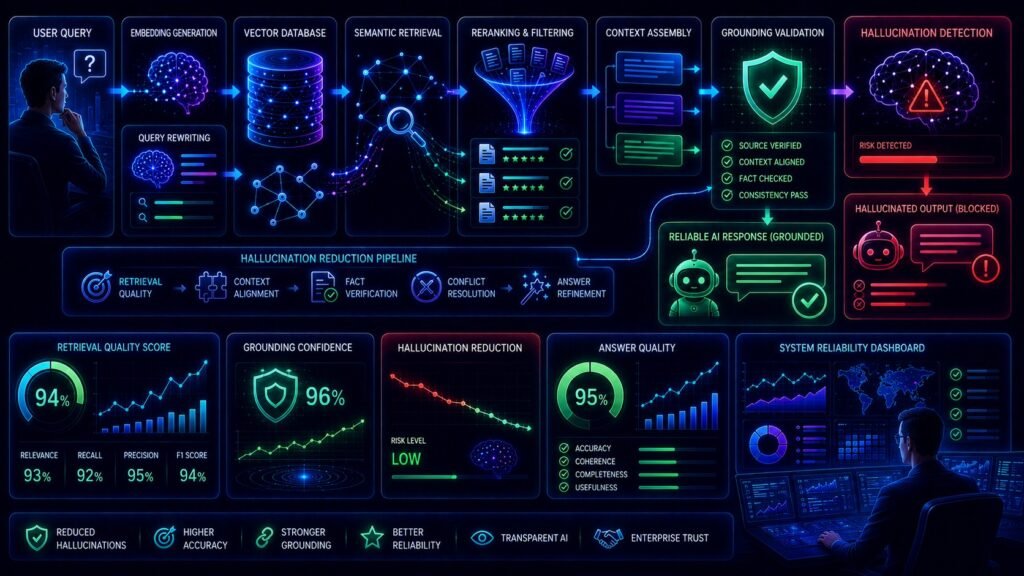
Reducing Hallucinations in RAG: Complete AI Guide

Reducing hallucinations in RAG visual showing grounded AI generation, semantic retrieval optimization, and hallucination detection systems

Reducing Hallucinations in RAG: How to Build More Reliable AI Systems Retrieval-Augmented Generation (RAG) systems became popular because they significantly improved the reliability of Large Language Models. Unlike standalone LLMs that rely mostly on pretrained model memory, RAG systems retrieve external information from: vector databases enterprise documents semantic search systems knowledge bases PDFs websites internal

Reducing Hallucinations in RAG: Complete AI Guide Read More »

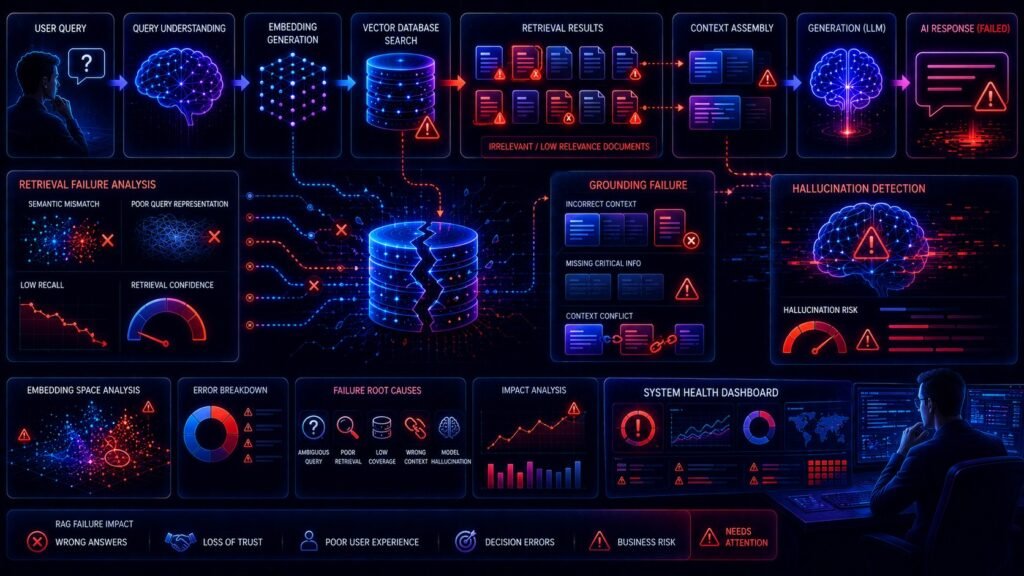
Why RAG Gives Wrong Answers: Explained Simply

Why RAG gives wrong answers visual showing hallucinations, retrieval failures, semantic search errors, and AI grounding issues

Why RAG Gives Wrong Answers: Understanding Retrieval Failures in AI Systems Retrieval-Augmented Generation (RAG) systems became popular because they promised a major improvement over standalone Large Language Models. Instead of relying only on model memory, RAG systems retrieve external information from: enterprise documents vector databases knowledge bases semantic search systems PDFs websites internal company repositories

Why RAG Gives Wrong Answers: Explained Simply Read More »

How to Evaluate RAG: Metrics, Benchmarks, and Real AI Examples

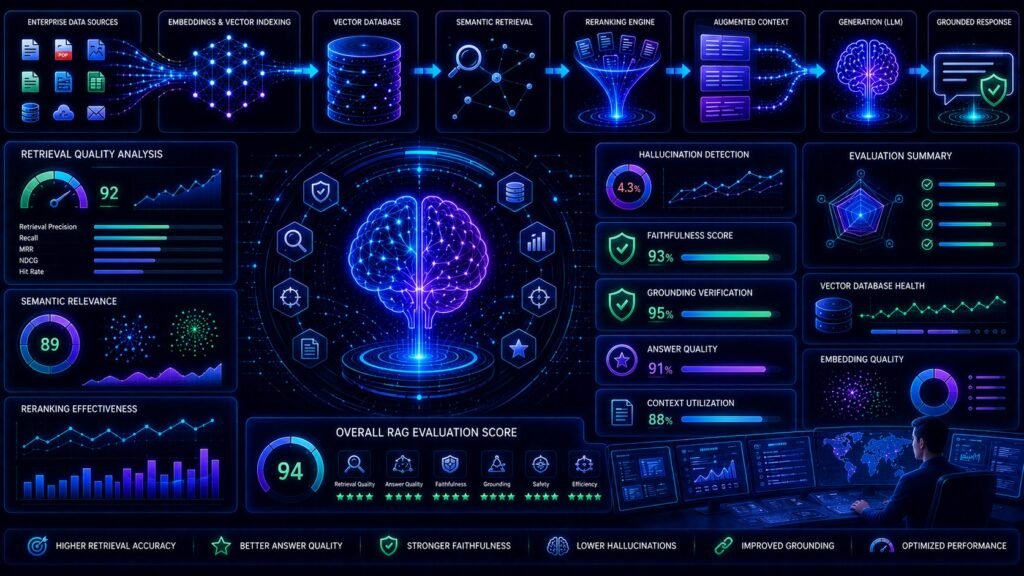
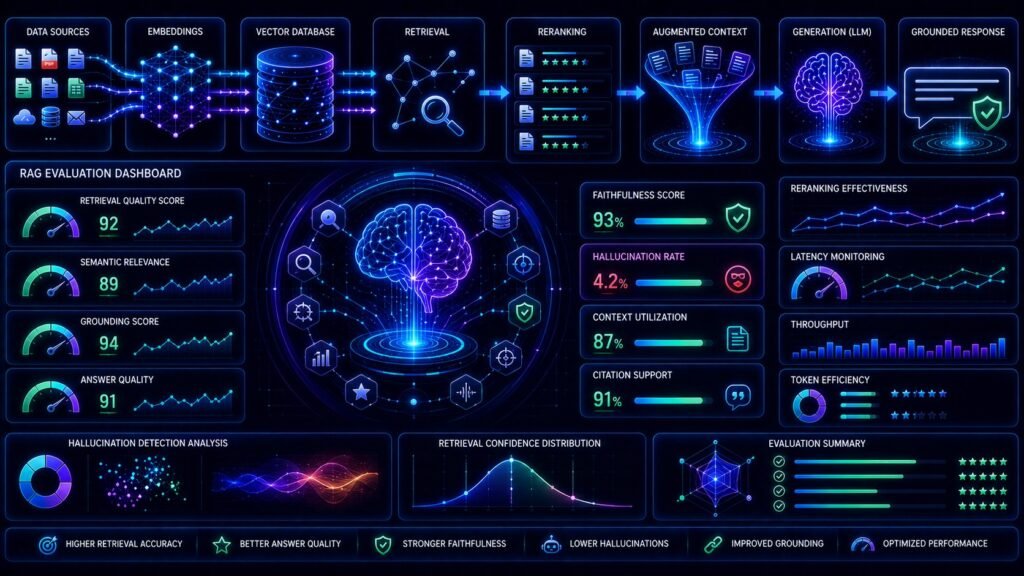
How to evaluate RAG systems visual showing AI benchmarking dashboards, hallucination detection, retrieval scoring, and semantic relevance analysis

How to Evaluate RAG Systems: Complete Enterprise AI Evaluation Guide Retrieval-Augmented Generation (RAG) systems have become one of the most important architectures in modern Artificial Intelligence. Enterprises increasingly use RAG-powered AI assistants, customer support copilots, semantic search systems, enterprise knowledge platforms, legal AI systems, and healthcare retrieval applications to improve AI accuracy and reduce hallucinations.

How to Evaluate RAG: Metrics, Benchmarks, and Real AI Examples Read More »

RAG Evaluation Metrics: Complete AI Evaluation Guide

RAG evaluation metrics visual showing retrieval quality scoring, hallucination detection, semantic relevance, and AI benchmarking dashboards

RAG Evaluation Metrics: How to Measure Retrieval-Augmented Generation Systems Retrieval-Augmented Generation (RAG) systems have rapidly become one of the most important architectures in modern Artificial Intelligence. Enterprises increasingly use RAG-powered AI assistants, customer support copilots, semantic search systems, enterprise knowledge platforms, and document intelligence systems to improve AI accuracy and reduce hallucinations. However, building a

RAG Evaluation Metrics: Complete AI Evaluation Guide Read More »

Query Rewriting for RAG: Improve AI Retrieval Accuracy

Query rewriting for RAG visual showing semantic query optimization, embeddings, vector databases, and AI retrieval pipelines

Query Rewriting for RAG: How AI Systems Improve Retrieval Accuracy Retrieval-Augmented Generation (RAG) systems have become one of the most important architectures in modern Artificial Intelligence. Enterprises increasingly use RAG-powered AI assistants, customer support copilots, semantic search systems, document intelligence platforms, and enterprise search engines to improve AI accuracy and reduce hallucinations. However, even advanced

Query Rewriting for RAG: Improve AI Retrieval Accuracy Read More »

Best Chunk Size for RAG Explained Simply

Best chunk size for RAG visual showing semantic chunking, embeddings, vector databases, and retrieval optimization

Best Chunk Size for RAG: How to Optimize AI Retrieval Quality Retrieval-Augmented Generation (RAG) systems have become one of the most important architectures in modern Artificial Intelligence. Enterprises increasingly use RAG-powered AI assistants, enterprise search systems, customer support copilots, document intelligence platforms, and semantic retrieval systems to improve AI accuracy and reduce hallucinations. However, one

Best Chunk Size for RAG Explained Simply Read More »

Chunking Strategies for RAG Explained Simply

Chunking strategies for RAG visual showing semantic chunking, embeddings, vector databases, and AI retrieval optimization

Chunking Strategies for RAG: How AI Retrieval Systems Improve Context Retrieval-Augmented Generation (RAG) systems have become one of the most important architectures in modern Artificial Intelligence. Enterprises increasingly use RAG-powered AI assistants, enterprise search systems, customer support copilots, and document intelligence platforms to improve AI accuracy and reduce hallucinations. However, many beginners focus heavily on:

Chunking Strategies for RAG Explained Simply Read More »

Dense Retrieval vs Sparse Retrieval Explained for RAG

Dense retrieval vs sparse retrieval visual showing semantic search, keyword retrieval, embeddings, and AI search systems

Dense Retrieval vs Sparse Retrieval: Understanding Modern AI Search Systems Modern Artificial Intelligence systems increasingly depend on retrieval technologies to improve search quality, contextual understanding, and grounded response generation. Enterprise AI assistants, Retrieval-Augmented Generation (RAG) systems, semantic search platforms, and AI copilots all rely heavily on retrieval infrastructure to access relevant information efficiently. Two retrieval

Dense Retrieval vs Sparse Retrieval Explained for RAG Read More »

Scroll to Top