AI News


Latest Artificial Intelligence News | AI Trends & Updates


Artificial Intelligence is evolving faster than any technology in history. From breakthroughs in large language models to real-world AI applications in healthcare, finance, and automation, staying updated is no longer optional—it’s essential.

In this AI News section, we bring you the latest developments in artificial intelligence, including major announcements, research breakthroughs, new AI tools, and industry trends. Whether you’re a developer, researcher, business owner, or simply curious about the future of AI, this blog page delivers reliable and easy-to-understand updates.

We cover everything from generative AI models like ChatGPT, Claude AI to emerging technologies such as autonomous systems, AI agents, robotics, and machine learning innovations from top global ai companies like Anthropic, OpenAI, Google AI, GrokAI, and more. Each article is optimized to give you quick insights along with deeper understanding—without overwhelming technical jargon.

Stay informed. Stay ahead.


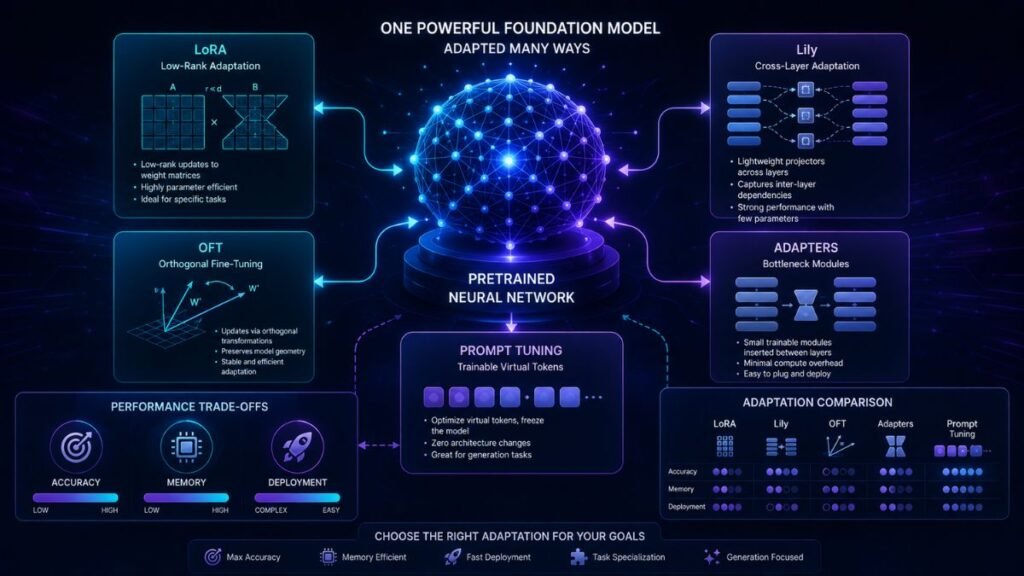
LoRA Alternatives PEFT Benchmark: Which Methods Perform Better?

LoRA alternatives PEFT methods compared by accuracy memory and inference overhead

LoRA Is the Most Popular Fine-Tuning Method—but Not Always the Best Hugging Face published a new parameter-efficient fine-tuning comparison on June 18, 2026, challenging the assumption that LoRA should be the automatic choice for every model-adaptation task. LoRA remains overwhelmingly dominant. In Hugging Face’s sample of 20,834 model cards mentioning one PEFT technique, 98.4% referenced […]

LoRA Alternatives PEFT Benchmark: Which Methods Perform Better? Read More »

GPT-5.5 Health Intelligence: What OpenAI’s Evaluations Show

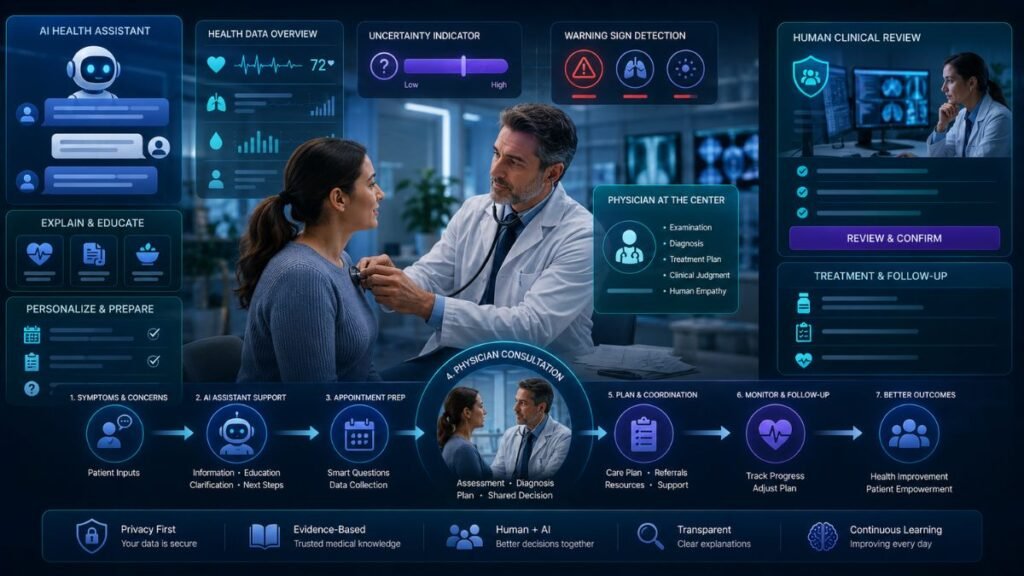
GPT-5.5 health intelligence supporting patient education with clinician oversight

GPT-5.5 Instant Is Better at Health Questions—but It Is Not a Doctor OpenAI published a new assessment of GPT-5.5 health intelligence on June 18, 2026, describing improvements in how ChatGPT handles health and wellness questions. The company says GPT-5.5 Instant is more likely to notice warning signs, request important missing information, communicate uncertainty, and explain

GPT-5.5 Health Intelligence: What OpenAI’s Evaluations Show Read More »

OpenAI Patch the Planet: How AI Will Secure Open Source

OpenAI Patch the Planet workflow for validating and fixing open-source vulnerabilities

OpenAI’s Patch the Planet Turns AI Bug Reports Into Real Fixes OpenAI introduced Patch the Planet on June 22, 2026, partnering with Trail of Bits to help maintainers secure critical open-source software. The initiative combines AI-assisted vulnerability research with human security review. Its goal is not merely to identify suspicious code. Engineers reproduce findings, remove

OpenAI Patch the Planet: How AI Will Secure Open Source Read More »

Samsung ChatGPT Enterprise Rollout: Strategy, Risks and ROI

Samsung ChatGPT Enterprise and Codex deployment across global business teams

Samsung Is Bringing ChatGPT and Codex to Employees Worldwide Samsung Electronics is deploying ChatGPT Enterprise and Codex across a large part of its global workforce, OpenAI announced on June 21, 2026. Access will extend to all Samsung Electronics employees in South Korea and all employees worldwide in the company’s Device eXperience division, which covers major

Samsung ChatGPT Enterprise Rollout: Strategy, Risks and ROI Read More »

PP-OCRv6 Explained: 50-Language OCR From 1.5M Parameters

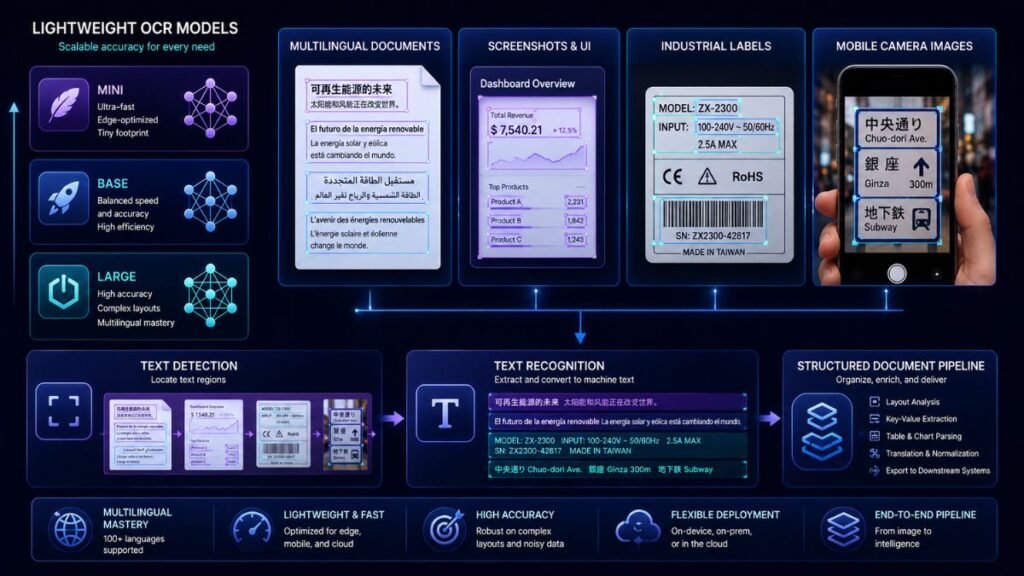
PP-OCRv6 multilingual OCR models for edge mobile and server document processing

PP-OCRv6 Brings 50-Language OCR to Models Small Enough for Phones PaddleOCR released PP-OCRv6 as part of version 3.7.0 on June 11, 2026, introducing three lightweight model tiers for multilingual text detection and recognition. The family ranges from a 1.5-million-parameter tiny model to a 34.5-million-parameter medium model, with deployment paths spanning PaddlePaddle, Hugging Face Transformers, ONNX

PP-OCRv6 Explained: 50-Language OCR From 1.5M Parameters Read More »

LFM2.5 Embedding 350M: Liquid AI’s New Retrieval Models Explained

: LFM2.5 Embedding 350M and ColBERT multilingual retrieval models compared

Liquid AI’s 350M Models Bring Multilingual Search to Laptops Liquid AI released two compact retrieval models on June 18, 2026, giving developers a choice between fast dense embeddings and more precise token-level retrieval. LFM2.5 Embedding 350M converts each document into one vector, making it suitable for low-cost semantic search and large indexes. Its companion, LFM2.5-ColBERT-350M,

LFM2.5 Embedding 350M: Liquid AI’s New Retrieval Models Explained Read More »

OpenAI o3 Rare Disease Study: What the 18 Diagnoses Really Show

OpenAI o3 rare disease study workflow with genomic analysis expert review and laboratory confirmation

OpenAI o3 Helped Experts Revisit 376 Unsolved Rare-Disease Cases A study published in NEJM AI on June 18, 2026 used OpenAI o3 Deep Research to reanalyze 376 rare-disease cases that had remained unsolved after earlier specialist review. The result was not autonomous diagnosis. The model generated evidence-linked hypotheses that physicians and genetic experts investigated through

OpenAI o3 Rare Disease Study: What the 18 Diagnoses Really Show Read More »

MosaicLeaks AI Agents: How Web Searches Can Expose Private Files

: MosaicLeaks AI agents exposing private document information through public web searches

AI Research Agents Can Leak Private Files Without Uploading Them Researchers published MosaicLeaks on May 29, 2026, revealing a privacy weakness in AI research agents that combine confidential documents with public web search. The risk is subtle. An agent does not need to upload an internal report or paste a secret into one search box.

MosaicLeaks AI Agents: How Web Searches Can Expose Private Files Read More »

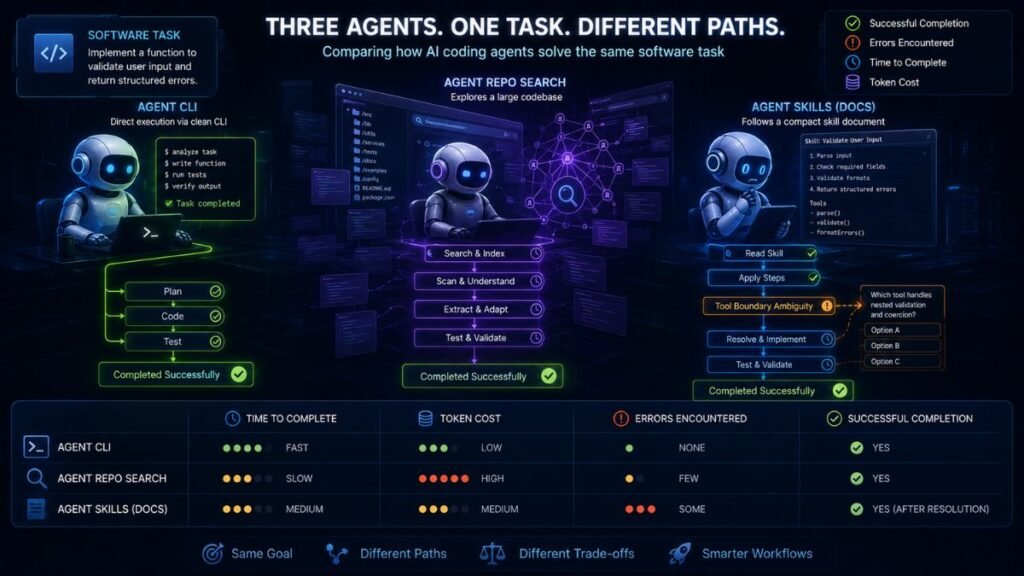
Proactive Coding Agent Benchmark: Google’s Jules Research Explained

Proactive coding agent benchmark measuring useful code insights before developers ask

Google Wants Coding Agents to Spot Problems Before Developers Ask Google published a preliminary evaluation framework for proactive coding agents on June 22, 2026, arguing that current benchmarks do not measure whether an AI system can notice useful engineering problems before a developer explicitly assigns them. The research matters because coding agents are already becoming

Proactive Coding Agent Benchmark: Google’s Jules Research Explained Read More »

Scroll to Top