Prompt Hub

Best Prompts for Classification in 2026 (Sentiment, Support, Leads & Data)

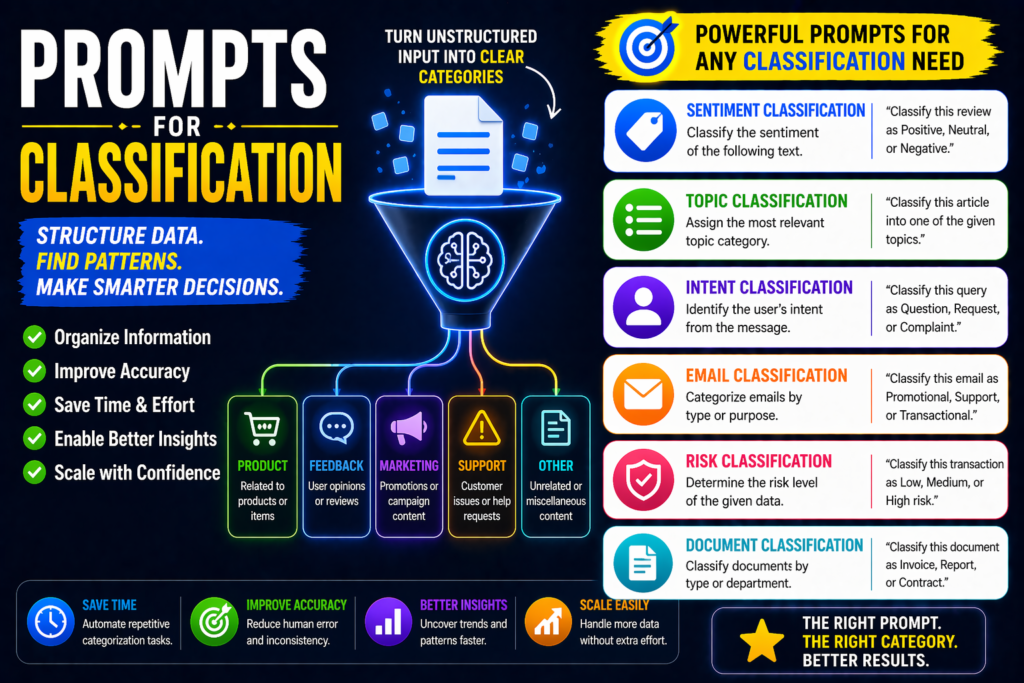
prompts for classification examples

Prompts for Classification: 25 Best AI Prompts You Can Copy and Use AI can sort text, detect intent, tag documents, and categorize data quickly. But weak prompts often create inconsistent labels or vague results. Strong prompts improve accuracy, consistency, and automation. This guide shares the best prompts for classification for support tickets, sentiment analysis, lead […]

Best Prompts for Classification in 2026 (Sentiment, Support, Leads & Data) Read More »

Adversarial Prompting in 2026 (How It Works & How to Defend AI Systems)

adversarial prompting explained example

Adversarial Prompting Explained: Meaning, Examples, Risks, and Defenses Adversarial prompting refers to deliberately crafted prompts designed to confuse, manipulate, bypass safeguards, or exploit weaknesses in AI models. Instead of using prompts productively, attackers use them to trigger unsafe, misleading, or unintended behavior. This topic matters for chatbots, AI agents, enterprise assistants, and public AI tools.

Adversarial Prompting in 2026 (How It Works & How to Defend AI Systems) Read More »

Prompt Engineering vs Fine Tuning: What’s the Difference?

prompt engineering vs fine tuning comparison diagram

Prompt Engineering vs Fine Tuning: Which One Should You Use? Prompt engineering and fine-tuning are two different ways to improve AI outputs. Both aim to make models more useful, but they work in completely different ways. Prompt engineering focuses on improving inputs, while fine-tuning changes the model itself. Understanding when to use each approach is

Prompt Engineering vs Fine Tuning: What’s the Difference? Read More »

Scroll to Top