
Structured Prompting Guide (With Examples and Templates)
Structured prompting is one of the most effective ways to improve AI outputs. Instead of writing loose or conversational prompts, you define a clear structure that guides the model step by step.
This approach is widely used in production AI systems because it improves consistency, accuracy, and usability.
In simple terms
Structured prompting means:
- organizing your prompt into sections
- clearly defining instructions
- controlling output format
Instead of:
“Explain AI”
You use:
“Explain AI in simple terms. Provide 3 examples. Use bullet points.”
Why structured prompting matters
From analyzing high-ranking guides and real-world usage, unstructured prompts often lead to:
- inconsistent outputs
- missing information
- unclear formatting
Structured prompts solve these problems by making expectations explicit.
Core components of structured prompting
1.Task
What you want the AI to do.
Example:
“Summarize this article”
2.Context
Background information.
Example:
“This is for beginners with no technical knowledge”
3.Constraints
Rules or limits.
Examples:
- “Keep under 200 words”
- “Do not add extra information”
4.Output format
Structure of the response.
Example:
“Use bullet points with headings”
5.Examples (optional)
Show expected outputs.
Example:
“Input → Output”
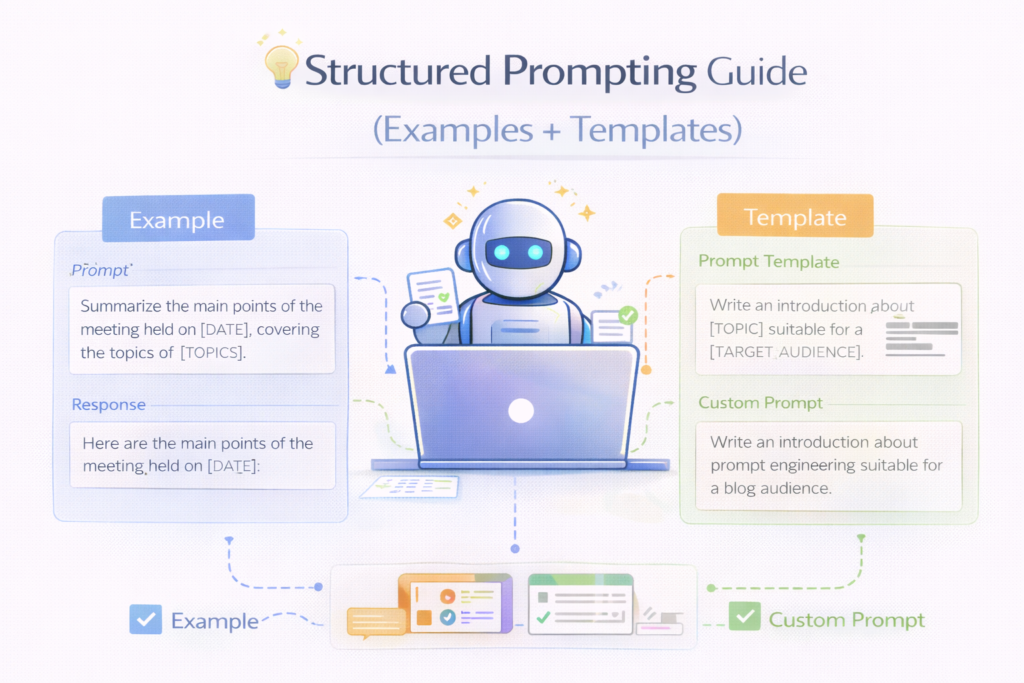
Structured prompt template
Here is a reusable template:
Task: [What you want]
Context: [Background]
Constraints:
– [Rule 1]
– [Rule 2]
Output format:
– [Structure]
Example:
[input → output]
Example: Unstructured vs Structured prompt
Unstructured prompt
“Write about AI tools”
Structured prompt
“Write a 200-word explanation of AI tools for beginners.
Constraints:
- Use simple language
- Include 2 real-world examples
Output format:
- 2 short paragraphs”
Result
- clearer
- more relevant
- consistent output
Types of structured prompting
1.Instruction-based structure
Clear step-by-step instructions.
Example:
“First summarize, then analyze, then provide recommendations”
2.Format-based structure
Defines output shape.
Example:
“Answer in JSON format”
3.Role-based structure
Defines perspective.
Example:
“You are a financial advisor”
4.Multi-step structured prompts
Break tasks into steps.
Example:
- step 1: extract data
- step 2: analyze
- step 3: generate output
Real-world use cases
1.Content creation
- blog writing
- structured articles
- consistent formatting
2.Data extraction
- extracting key points
- converting text to tables
3.Business workflows
- reports
- emails
- summaries
4.Coding
- structured code output
- debugging steps
Structured Prompting vs Regular Prompting
| Aspect | Regular Prompt | Structured Prompt |
| Clarity | Low | High |
| Output consistency | Variable | Stable |
| Control | Limited | Strong |
| Use case | Simple tasks | Complex workflows |
Best practices for structured prompting
- Use clear sections
Separate task, context, and format.
- Keep structure simple
Avoid unnecessary complexity.
- Use bullet points for constraints
Improves readability.
- Combine with examples
Improves accuracy.
- Test and refine
Structure improves with iteration.
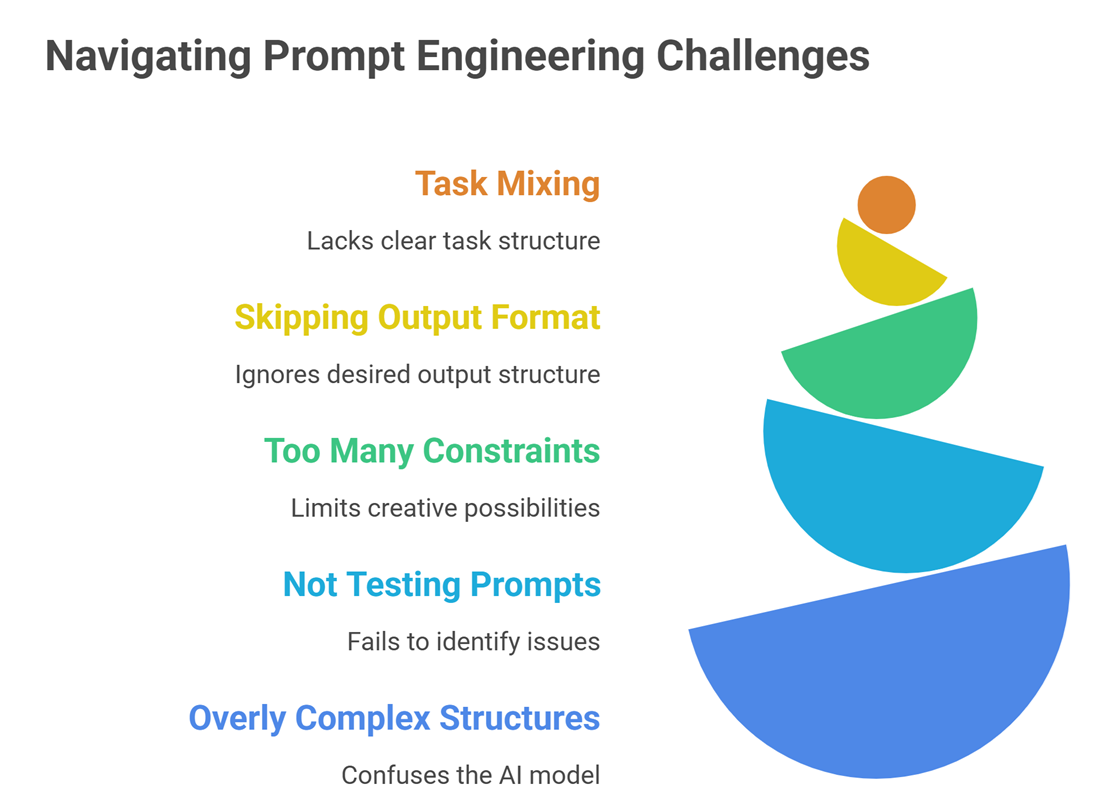
Common mistakes
- mixing multiple tasks without structure
- skipping output format
- adding too many constraints
- not testing prompts
- writing overly complex structures
Advanced tip: Structured prompting + systems
Structured prompting works best when combined with:
This creates reliable AI systems.
Suggested Read:
- What Is Prompt Engineering? A Simple Guide for Beginners
- Prompt Engineering Best Practices You Should Follow
- Prompt Engineering Workflow: Step-by-Step Guide
- How to Write Better System Prompts
- Prompt Engineering Examples (Beginner to Advanced)
- Common Prompt Engineering Mistakes (And How to Fix Them)
FAQ: Structured Prompting Guide
What is structured prompting?
A method of organizing prompts into clear sections.
Why is it important?
It improves consistency and output quality.
Is structured prompting better than normal prompting?
Yes, especially for complex tasks.
Do I need templates?
Templates help but are not required.
Final takeaway
Structured prompting turns AI from unpredictable to controllable. By defining clear tasks, context, constraints, and output formats, you can consistently generate high-quality results.
If you want reliable AI outputs, structured prompting is one of the most effective techniques you can use.