
Why Prompt Engineering Matters in AI
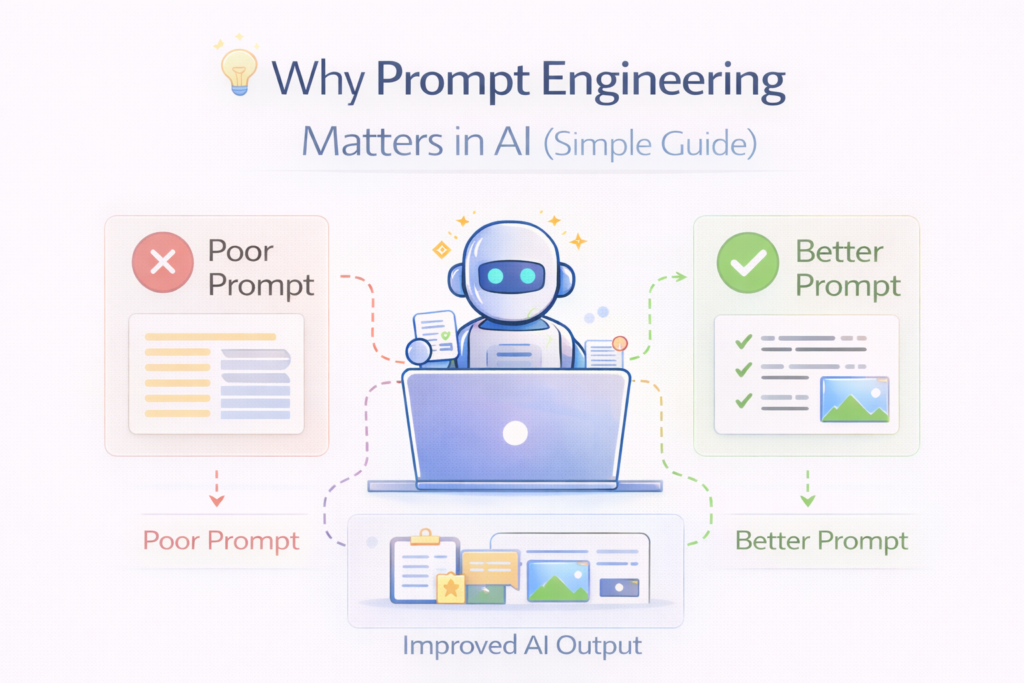
Prompt engineering is often underestimated, but it plays a critical role in how effectively AI systems perform. The same AI model can produce completely different results depending on how you ask the question.
That means prompt engineering is not just a “nice-to-have” skill—it is a core part of using AI correctly.
In simple terms
Prompt engineering matters because:
AI is only as good as the instructions it receives.
- bad prompt → poor output
- good prompt → useful output
This applies across writing, coding, research, and business workflows.
The real reason prompt engineering matters
AI models do not think—they predict patterns based on input. This means:
- they rely heavily on instructions
- they do not automatically understand intent
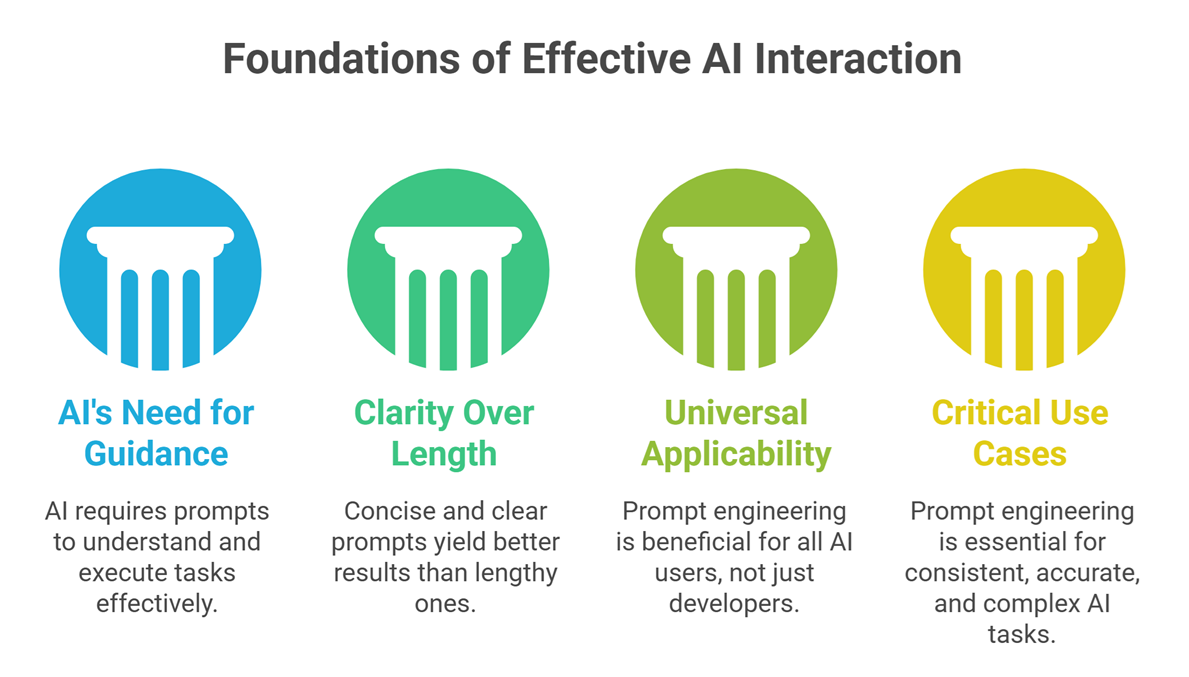
- they need guidance
Prompt engineering provides that guidance.
It directly improves output quality
The biggest impact of prompt engineering is better results.
Example
Prompt 1:
“Explain AI.”
Prompt 2:
“Explain AI in simple terms for beginners with 3 real-world examples.”
The second prompt produces:
- clearer explanation
- structured output
- higher usefulness
This difference is why prompt engineering matters.
It reduces hallucinations
AI models can generate incorrect or misleading information.
Good prompts can reduce this by:
- adding constraints
- requesting sources
- limiting assumptions
Example:
“Answer only using the provided information.”
This makes outputs more reliable.
It saves time and effort
Without prompt engineering:
- you rewrite prompts multiple times
- outputs require heavy editing
With better prompts:
- fewer iterations
- more accurate results
- faster workflows
This is especially important for teams using AI at scale.
It enables real-world applications
Prompt engineering is what makes AI usable in:
- chatbots
- automation tools
- business workflows
- content pipelines
Without structured prompts, these systems become inconsistent.
It improves consistency
Inconsistent outputs are one of the biggest problems in AI usage.
Prompt engineering solves this by:
- defining structure
- setting tone
- controlling format
Example:
“Answer in bullet points with clear headings.”
Now every output follows the same format.
It unlocks advanced AI capabilities
Many advanced features require proper prompting:
- step-by-step reasoning
- structured outputs (JSON, tables)
- multi-step tasks
Without prompt engineering, these capabilities are underutilized.
It reduces costs in AI systems
In production systems:
- poor prompts → more retries → higher cost
- better prompts → fewer calls → lower cost
This makes prompt engineering valuable for businesses.
It is easier than building models
Compared to training models:
- no coding required
- no data collection
- faster results
Prompt engineering is often the fastest way to improve AI performance.
It is a core skill for the AI era
As AI adoption grows, prompt engineering becomes:
- a productivity skill
- a technical skill
- a business skill
It is useful for:
- developers
- marketers
- analysts
- entrepreneurs
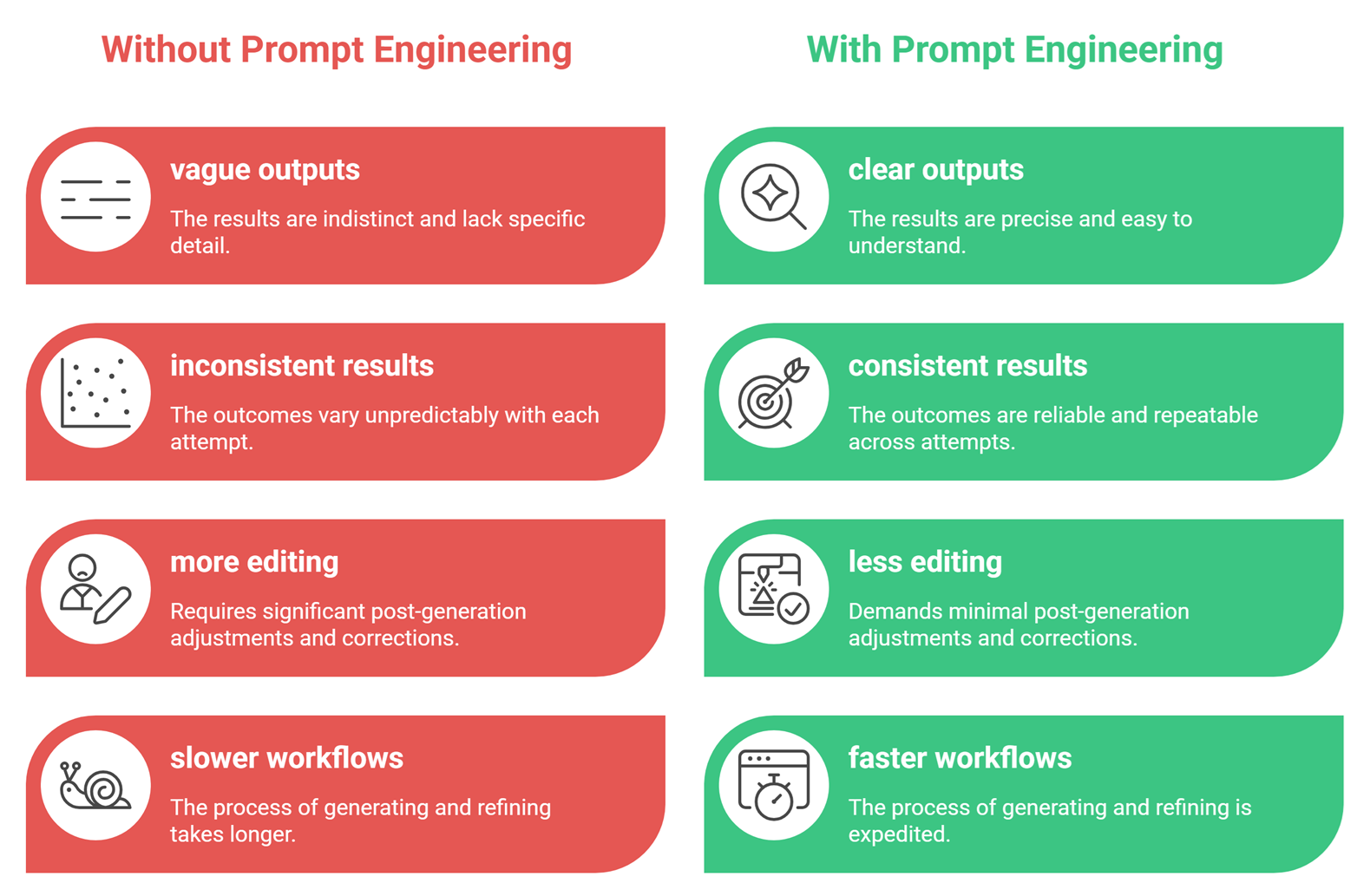
Prompt Engineering vs Not using it
| Without Prompt Engineering | With Prompt Engineering |
| vague outputs | clear outputs |
| inconsistent results | consistent results |
| more editing | less editing |
| slower workflows | faster workflows |
Real-world impact examples
Content creation
- better blog structure
- improved readability
Coding
- clearer code generation
- fewer errors
Research
- more relevant insights
- better summaries
Business workflows
- automated emails
- structured reports
Common misconceptions
“AI is smart enough without prompts”
Not true—AI still needs guidance.
“Long prompts are always better”
Clarity matters more than length.
“Prompt engineering is only for developers”
It is useful for anyone using AI.
When prompt engineering matters the most
Prompt engineering is critical when:
- outputs need to be consistent
- tasks are complex
- accuracy is important
- AI is used in production
Suggested Read:
- What Is Prompt Engineering? A Simple Guide for Beginners
- Prompt Engineering Examples (Beginner to Advanced)
- 25 Prompt Engineering Techniques With Examples
- How to Write Better System Prompts
- Zero-Shot vs Few-Shot Prompting Explained
- Context Engineering vs Prompt Engineering: What Changed?
FAQ: Why Prompt Engineering Matters
Why is prompt engineering important?
Because it directly affects output quality and usefulness.
Does prompt engineering really make a difference?
Yes—even small changes can significantly improve results.
Is prompt engineering difficult?
No, it mainly requires clarity and practice.
Will prompt engineering become obsolete?
No, but it will evolve with context engineering and AI systems.
Final takeaway
Prompt engineering matters because it bridges the gap between AI capability and real-world usefulness.
The model provides potential—but the prompt unlocks it.
If you want better results from AI, the fastest improvement you can make is not changing the model—it is improving your prompts.