
Prompt Engineering Examples (Beginner to Advanced)
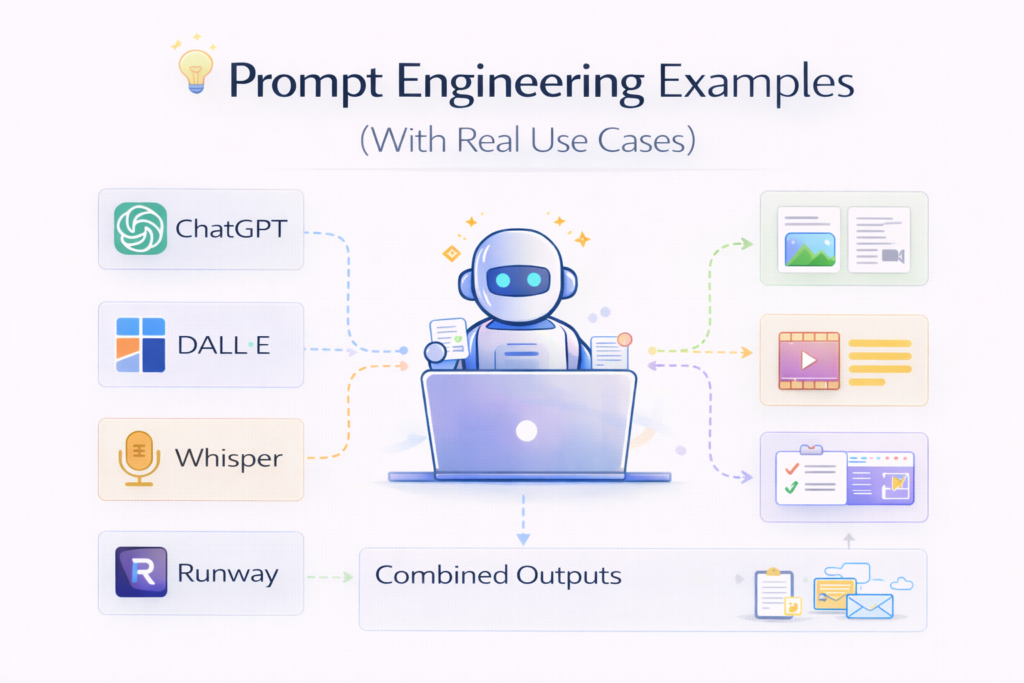
Prompt engineering becomes easier when you see real examples. Instead of learning theory, you can understand how small changes in prompts lead to better AI outputs.
This guide covers practical prompt engineering examples across writing, coding, research, and business tasks—along with why each one works.
In simple terms
Prompt engineering is not about writing long prompts—it is about writing clear and structured prompts.
Examples help you see the difference between:
- vague prompts
- effective prompts
Example 1: Basic vs improved prompt
Weak prompt
“Write about AI.”
Improved prompt
“Write a 300-word beginner-friendly explanation of AI with real-world examples.”
Why it works:
- adds clarity
- defines length
- specifies audience
Example 2: Role-based prompt
“You are a senior marketing expert. Write a product description for a fitness app targeting beginners.”
Why it works:
- sets expertise level
- improves tone and relevance
Example 3: Structured output prompt
“Summarize this article in 5 bullet points with clear headings.”
Why it works:
- controls format
- improves readability
Example 4: Few-shot prompting
“Translate:
Hello → Hola
Good morning → Buenos días
Thank you → ?”
Why it works:
- teaches pattern
- improves accuracy
Example 5: Chain-of-thought prompt
“Explain step by step how to solve this math problem.”
Why it works:
- encourages reasoning
- improves correctness
Example 6: Content writing prompt
“Write a blog introduction about remote work for beginners. Use a friendly tone and include one real-life example.”
Why it works:
- defines tone
- adds context
- improves engagement
Example 7: Coding prompt
“Write a Python function to sort a list of numbers. Include comments explaining each step.”
Why it works:
- defines task
- adds explanation requirement
Example 8: Debugging prompt
“Review this code and identify errors. Suggest fixes with explanations.”
Why it works:
- focuses on analysis
- improves output usefulness
Example 9: Research prompt
“Summarize the key trends in AI in 2025 based on recent developments. Provide 5 insights.”
Why it works:
- narrows scope
- defines output structure
Example 10: Comparison prompt
“Compare ChatGPT and Gemini in a table based on features, strengths, and limitations.”
Why it works:
- structured output
- clear criteria
Example 11: Rewrite prompt
“Rewrite this paragraph to sound more professional and concise.”
Why it works:
- clear transformation goal
Example 12: Summarization prompt
“Summarize this document in 3 key points for a busy executive.”
Why it works:
- defines audience
- improves relevance
Example 13: Creative prompt
“Write a short story about AI becoming self-aware, using a suspenseful tone.”
Why it works:
- defines style
- improves creativity
Example 14: Business email prompt
“Write a professional email declining a meeting request politely.”
Why it works:
- real-world task
- tone control
Example 15: Multi-step prompt
“Summarize this text, then generate 3 questions based on it.”
Why it works:
- combines tasks
- increases productivity
What these examples teach
Across all examples, strong prompts include:
- clear instructions
- defined output format
- context or role
- constraints
This pattern is consistent across high-performing prompts.
Beginner vs advanced prompts
| Level | Example |
| Beginner | “Explain AI” |
| Intermediate | “Explain AI in simple terms with examples” |
| Advanced | “Explain AI to beginners using 3 real-world examples and bullet points” |
Common mistakes
- writing vague prompts
- not specifying format
- ignoring audience
- expecting perfect output
- not iterating
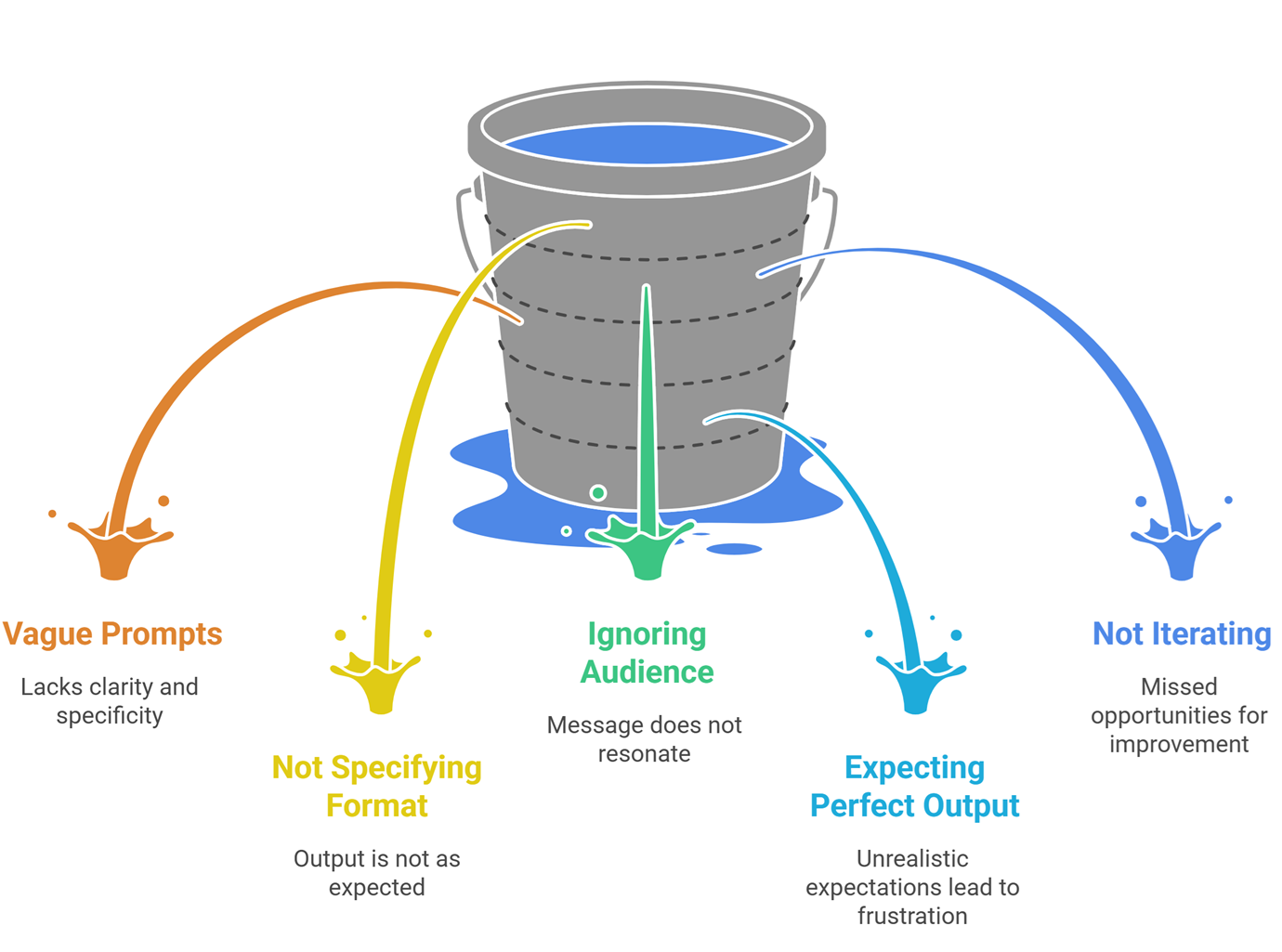
Prompt engineering improves through testing.
How to create your own prompts
Follow this simple formula:
[Task] + [Context] + [Constraints] + [Format]
Example:
“Write a 200-word blog intro (task) about AI tools (context) for beginners (audience) in bullet points (format).”
Suggested Read:
- What Is Prompt Engineering? A Simple Guide for Beginners
- 25 Prompt Engineering Techniques With Examples
- How to Write Better System Prompts
- Zero-Shot vs Few-Shot Prompting Explained
- Best Prompt Templates for Summarization and Research
- Context Engineering vs Prompt Engineering: What Changed?
FAQ: Prompt Engineering Examples
What is a good prompt example?
A prompt that is clear, structured, and specific.
Do longer prompts work better?
Not always—clarity matters more than length.
Can I reuse prompts?
Yes, especially templates.
How do I improve prompts?
Test, refine, and add structure.
Final takeaway
Prompt engineering examples show one key idea: better inputs create better outputs.
Instead of guessing, use structured prompts, test variations, and refine your approach. Over time, you will naturally develop better prompting skills.