
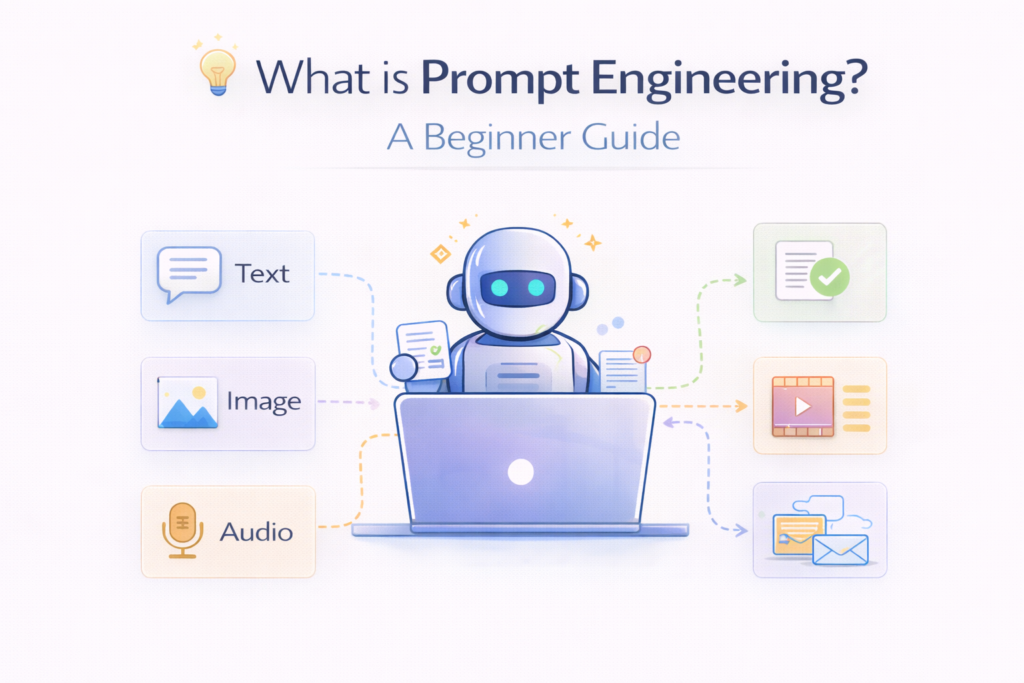
What Is Prompt Engineering? A Simple Guide for Beginners
Prompt engineering is the practice of designing inputs (prompts) to get better outputs from AI models. Instead of relying on random results, you guide the AI with clear instructions, context, and structure.
As AI tools like ChatGPT, Claude, and Gemini become more powerful, prompt engineering has become one of the most important skills for working with AI effectively.
In simple terms
Prompt engineering is how you “talk” to AI.
- bad prompt → vague answer
- good prompt → useful answer
Small changes in wording can completely change the result.
Why prompt engineering matters
AI models don’t truly “understand” like humans. They predict responses based on patterns. That means:
- unclear prompts → unpredictable outputs
- clear prompts → better results
This is why prompt engineering is critical for:
- content writing
- coding
- research
- automation
- business workflows
How prompt engineering works
At a basic level, AI works like this:
Prompt → Model → Output
Your prompt acts as:
- instructions
- context
- constraints
The better the input, the better the output.
Weak vs strong prompt
Weak prompt
“Write about AI.”
Output:
- generic
- unfocused
- low value
Strong prompt
“Write a 500-word beginner-friendly blog explaining AI in simple terms with examples.”
Output:
- structured
- clear
- useful
Key elements of a good prompt
1.Clarity
Be specific about what you want.
Example:
Instead of “Explain AI” →
“Explain AI in simple terms for beginners”
2.Context
Provide background information.
Example:
“This is for a blog targeting students”
3.Constraints
Set limits or rules.
Example:
- word count
- tone
- format
4.Output format
Define structure.
Example:
“Answer in bullet points”
5.Examples
Show what you expect.
Example:
“Example: [input → output]”
Types of prompt engineering techniques
1.Zero-shot prompting
Ask without examples.
Example:
“Explain blockchain.”
2.Few-shot prompting
Provide examples first.
Example:
“Translate: Hello → Hola”
3.Role prompting
Assign a role.
Example:
“You are a marketing expert…”
4.Chain-of-thought prompting
Ask for step-by-step reasoning.
Example:
“Explain step by step…”
5.Structured prompting
Define format clearly.
Example:
“Answer in JSON format”
Real-world use cases
1.Content creation
- blogs
- social media
- scripts
2.Coding
- code generation
- debugging
- explanations
3.Research
- summarization
- analysis
- insights
4.Business automation
- emails
- reports
- workflows
Prompt Engineering vs Traditional Programming
| Aspect | Prompt Engineering | Programming |
| Input | Natural language | Code |
| Flexibility | High | Structured |
| Learning curve | Lower | Higher |
| Control | Indirect | Direct |
Common mistakes
- being too vague
- not specifying format
- ignoring context
- expecting perfect output
- not iterating
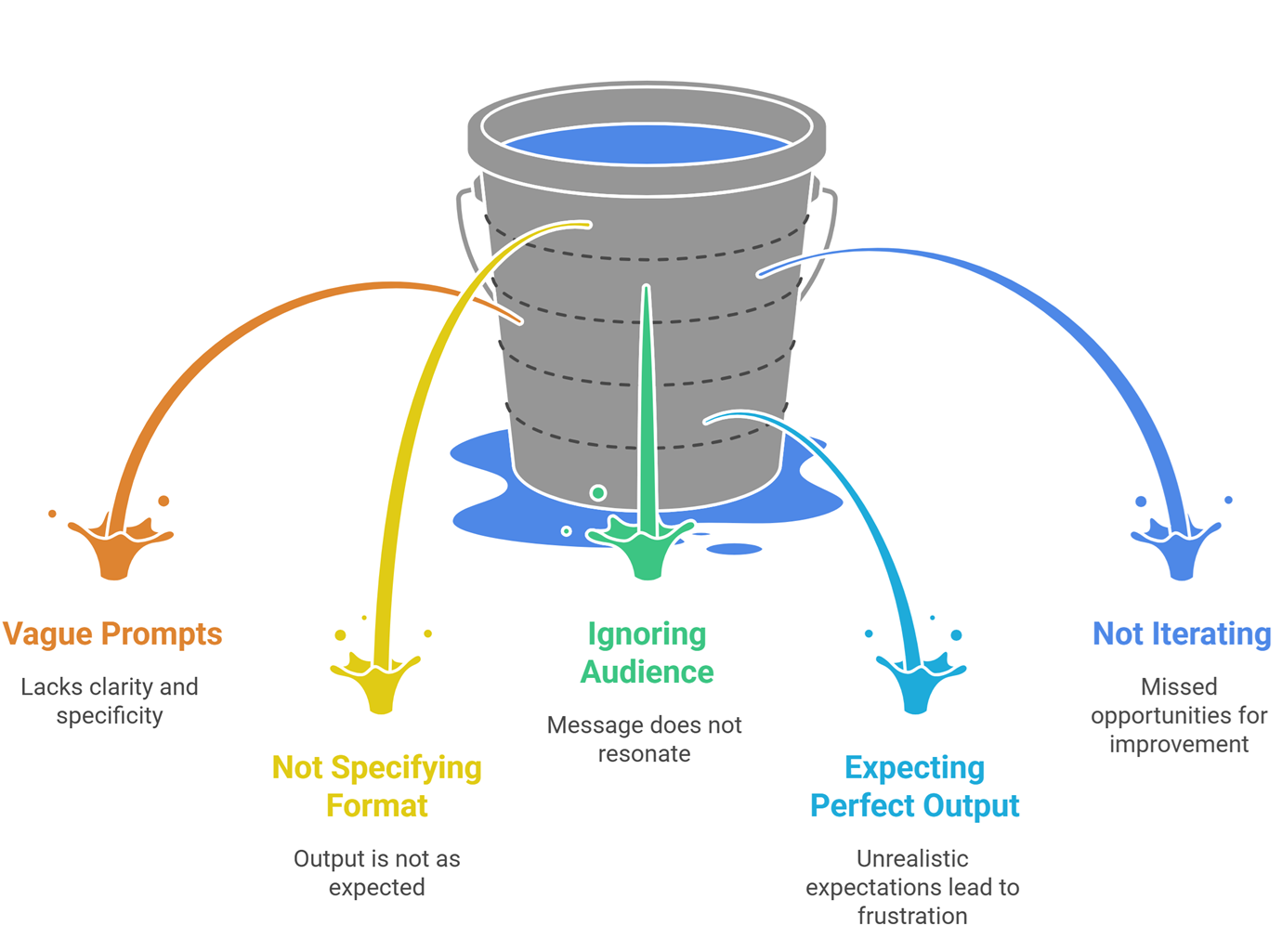
Prompting is iterative—you improve results step by step.
Best practices
- start simple
- refine gradually
- test different variations
- use examples
- combine techniques
Suggested Read:
- 25 Prompt Engineering Techniques With Examples
- How to Write Better System Prompts
- Zero-Shot vs Few-Shot Prompting Explained
- Context Engineering vs Prompt Engineering: What Changed?
- Best Prompt Templates for Summarization and Research
- What Is Prompt Injection? Examples and Risks
FAQ: What Is Prompt Engineering
What is prompt engineering in simple terms?
It is the process of writing better inputs to get better AI outputs.
Do I need coding skills?
No. Prompt engineering uses natural language.
Is prompt engineering still important?
Yes, especially for controlling AI outputs.
Can prompt engineering replace training models?
In many cases, yes—it is faster and cheaper.
Final takeaway
Prompt engineering is one of the most valuable skills in the AI era. It allows you to unlock the full potential of AI tools without building complex systems.
The key idea is simple:
Better prompts → better results
Start with clear instructions, add context, and refine your approach over time.