
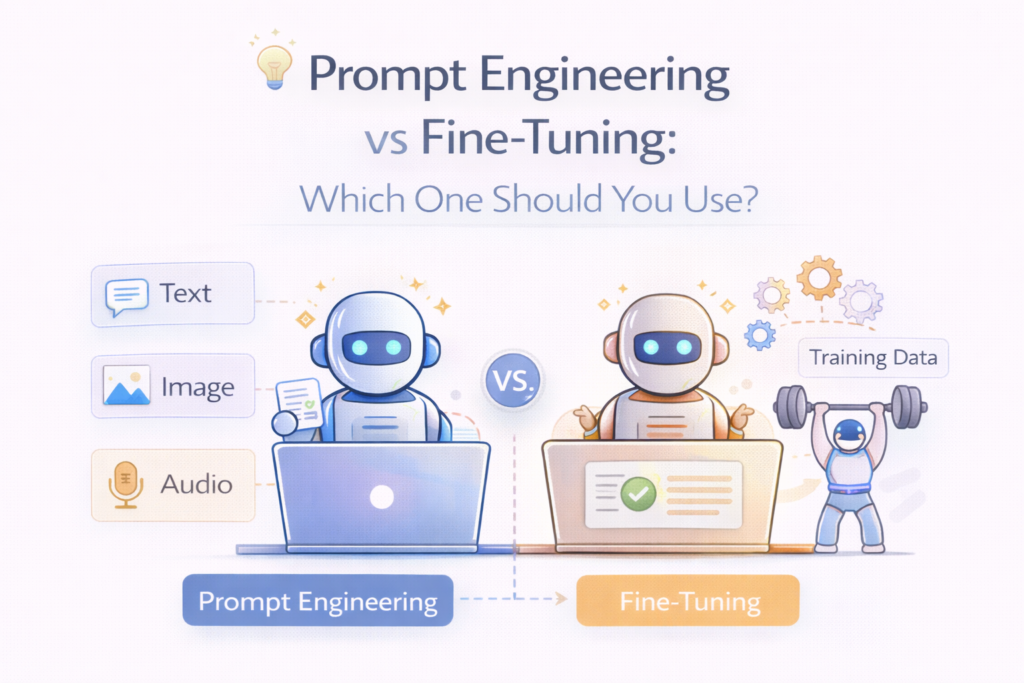
Prompt Engineering vs Fine Tuning: Which One Should You Use?
Prompt engineering and fine-tuning are two different ways to improve AI outputs. Both aim to make models more useful, but they work in completely different ways.
Prompt engineering focuses on improving inputs, while fine-tuning changes the model itself.
Understanding when to use each approach is critical for building effective AI systems.
In simple terms
- Prompt engineering = change how you ask
- Fine-tuning = change how the model behaves
One works outside the model. The other works inside it.
What is prompt engineering?
Prompt engineering is the process of designing better inputs to guide AI outputs.
You improve results by:
- adding context
- defining structure
- setting constraints
Example:
Instead of:
“Write about AI”
You use:
“Write a 300-word beginner-friendly explanation of AI with examples.”
No model changes are required.
What is fine-tuning?
Fine-tuning is the process of training a model on specific data to improve performance for a particular task.
You:
- provide training data
- adjust model parameters
- create a specialized version
Example:
- training a model on legal documents
- building a customer support model
This requires data, compute, and setup.
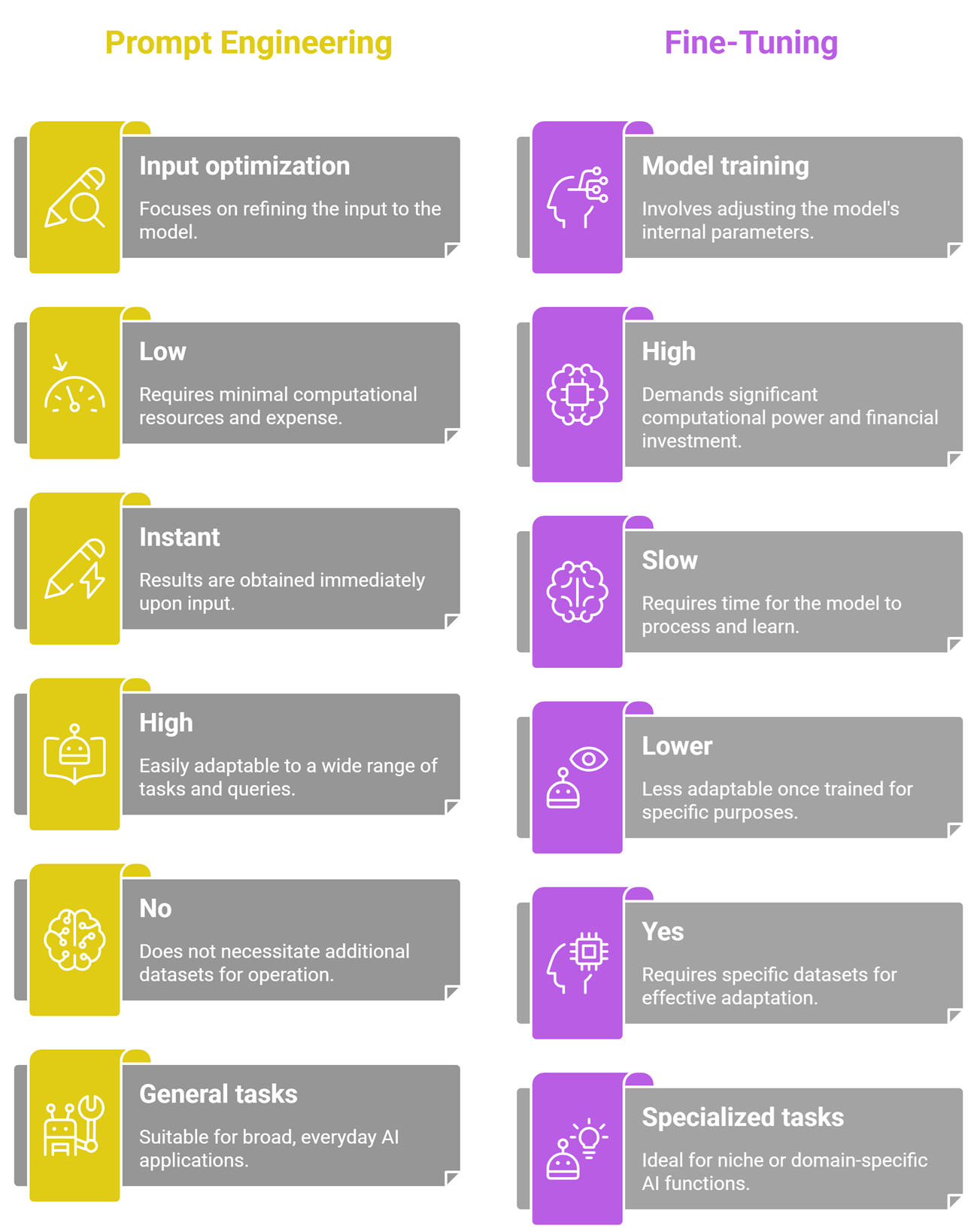
Key differences: Prompt Engineering vs Fine Tuning
| Aspect | Prompt Engineering | Fine-Tuning |
| Method | Input optimization | Model training |
| Cost | Low | High |
| Speed | Instant | Slow |
| Flexibility | High | Lower |
| Data required | No | Yes |
| Use case | General tasks | Specialized tasks |
When to use prompt engineering
Prompt engineering is best when:
- tasks are general
- you need fast results
- data is limited
- flexibility is important
Example use cases
- content writing
- coding assistance
- research
- automation
It is the easiest and fastest way to improve AI outputs.
When to use fine-tuning
Fine-tuning is useful when:
- tasks are highly specific
- consistent outputs are required
- domain knowledge is critical
- prompts are not enough
Example use cases
- legal AI systems
- medical applications
- brand-specific tone
- large-scale automation
Real-world example
Scenario: Customer support AI
Prompt engineering approach:
- use structured prompts
- provide context dynamically
Pros:
- fast
- flexible
Cons:
- inconsistent at scale
Fine-tuning approach:
- train on support conversations
Pros:
- consistent responses
- domain expertise
Cons:
- expensive
- less flexible
Hybrid approach (most common)
Modern AI systems use both:
- prompt engineering for flexibility
- fine-tuning for specialization
Example:
- fine-tuned model for domain knowledge
- prompts for task-specific instructions
This combination provides the best results.
Why prompt engineering is often enough
In many cases:
- models are already powerful
- prompts can control behavior
- no training is needed
This is why most applications start with prompting.
Limitations of prompt engineering
- inconsistent outputs
- requires iteration
- limited control for complex tasks
Limitations of fine-tuning
- high cost
- requires data
- slower updates
- less flexibility
Decision framework
Use this simple guide:
- start with prompt engineering
- evaluate results
- move to fine-tuning only if needed
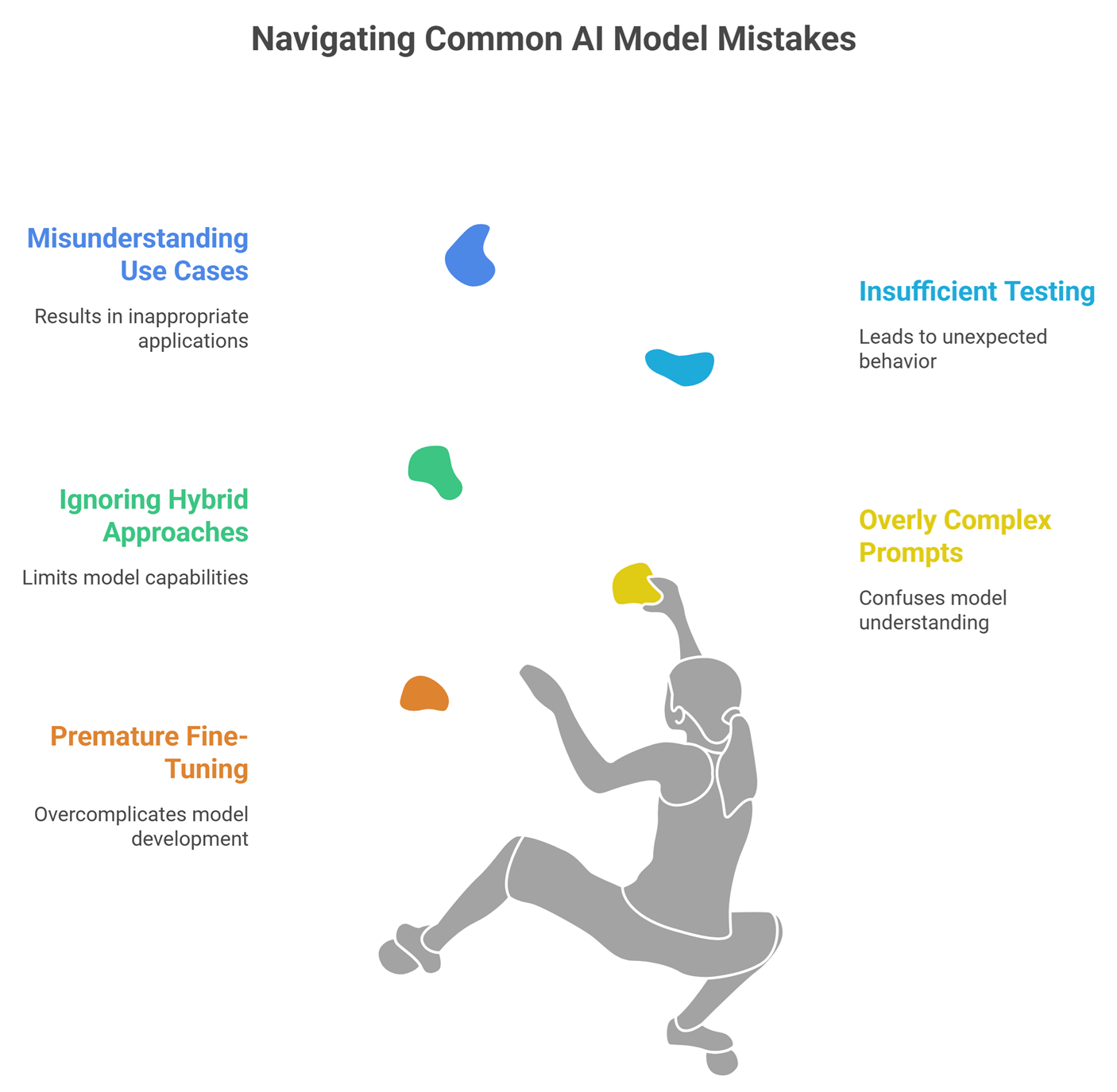
Common mistakes
- jumping to fine-tuning too early
- overcomplicating prompts
- ignoring hybrid approaches
- not testing properly
- misunderstanding use cases
Suggested Read:
- What Is Prompt Engineering? A Simple Guide for Beginners
- Prompt Engineering Examples (Beginner to Advanced)
- Why Prompt Engineering Matters in AI
- Context Engineering vs Prompt Engineering: What Changed?
- What Is RAG in AI? A Beginner-Friendly Guide
- How to Evaluate a RAG System
FAQ: Prompt Engineering vs Fine Tuning
Which is better: prompt engineering or fine-tuning?
It depends on the use case. Prompting is usually the starting point.
Is fine-tuning necessary?
Only for specialized or large-scale applications.
Can prompt engineering replace fine-tuning?
In many cases, yes.
What is cheaper?
Prompt engineering is significantly cheaper.
Final takeaway
Prompt engineering and fine-tuning are not competitors—they are complementary tools.
Start with prompt engineering for speed and flexibility. Use fine-tuning when you need deeper control and specialization.
The key is choosing the right approach based on your use case, not complexity.