Vikash P

Vikash Pal is an AI/ML Engineer at ScholarEase and Editor for AIML Insights, focusing on machine learning, applied AI workflows, and practical implementation.

RAG Deployment Basics: Complete Guide to Production AI Systems

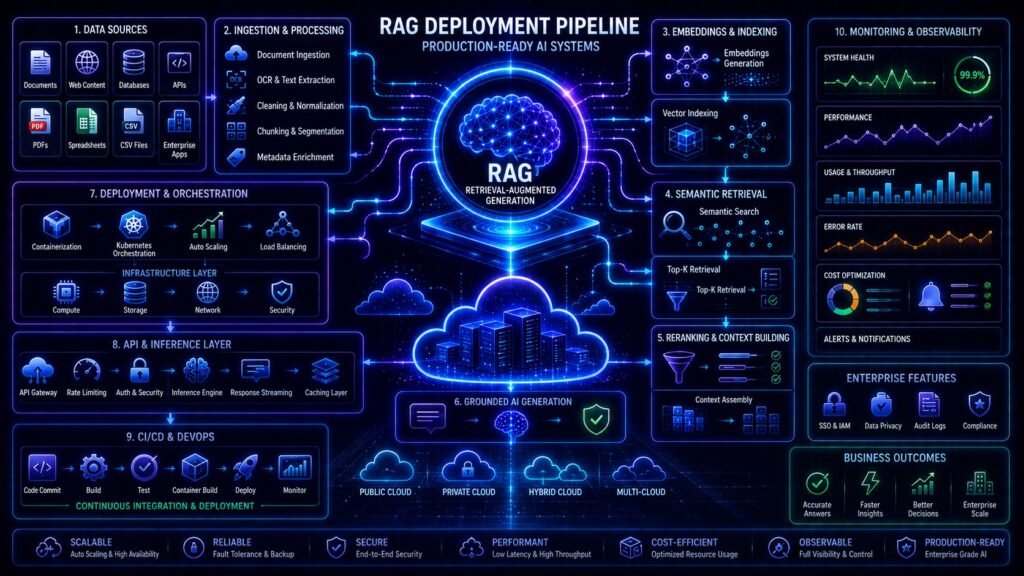
RAG deployment Basics architecture showing vector databases, semantic retrieval pipelines, cloud infrastructure, and AI monitoring systems

RAG Deployment Basics: How to Deploy Production-Ready AI Systems Retrieval-Augmented Generation (RAG) has rapidly become one of the most important architectures in modern enterprise AI. Organizations increasingly use RAG systems for: enterprise search AI copilots customer support assistants legal AI systems healthcare knowledge retrieval financial intelligence platforms document intelligence conversational analytics research automation RAG dramatically […]

RAG Deployment Basics: Complete Guide to Production AI Systems Read More »

Multimodal Context Windows Explained Simply

Multimodal context windows visual showing text, images, audio, video, documents, token budgets, context limits, and AI reasoning

Multimodal Context Windows Explained: How AI Handles Text, Images, Audio, and Video Multimodal context windows define how much information an AI model can process at once when the input includes text, images, audio, video, code, or documents. They matter because multimodal AI systems must manage different input types inside one limited working space before generating

Multimodal Context Windows Explained Simply Read More »

Multimodal Embeddings Explained Simply

Multimodal embeddings visual showing text, images, audio, video, PDFs, vectors, semantic clusters, and cross-modal search in a shared vector space

Multimodal Embeddings Explained: How AI Connects Text, Images, Audio, and Video Multimodal embeddings are vector representations that let AI compare different data types, such as text, images, audio, video, PDFs, and documents, inside a shared semantic space. They help power multimodal search, visual search, recommendation systems, document retrieval, and multimodal RAG applications. In Simple Terms

Multimodal Embeddings Explained Simply Read More »

RAG With Spreadsheets: Complete Excel and CSV AI Retrieval Guide

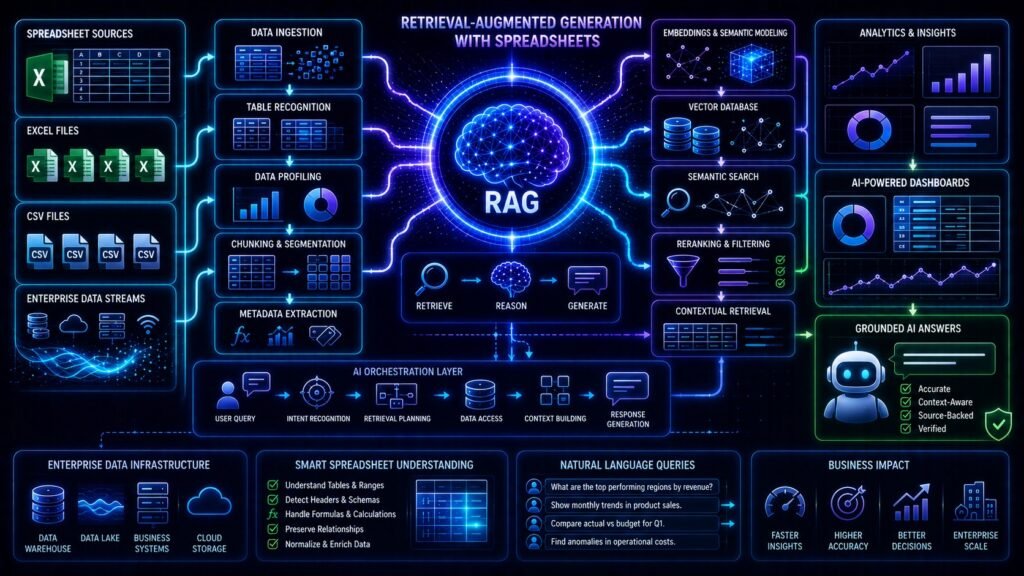
RAG with spreadsheets architecture showing Excel files, CSV retrieval, vector databases, semantic search, and grounded AI analytics

RAG With Spreadsheets: How AI Systems Analyze Excel and CSV Data Modern enterprises rely heavily on spreadsheets for operational decision-making. Across industries, organizations store critical business information inside: Excel files CSV datasets financial spreadsheets analytics sheets operational trackers inventory reports sales dashboards forecasting models compliance spreadsheets customer data tables Even in large enterprises with advanced

RAG With Spreadsheets: Complete Excel and CSV AI Retrieval Guide Read More »

RAG With Structured Data: Complete Enterprise AI Database Guide

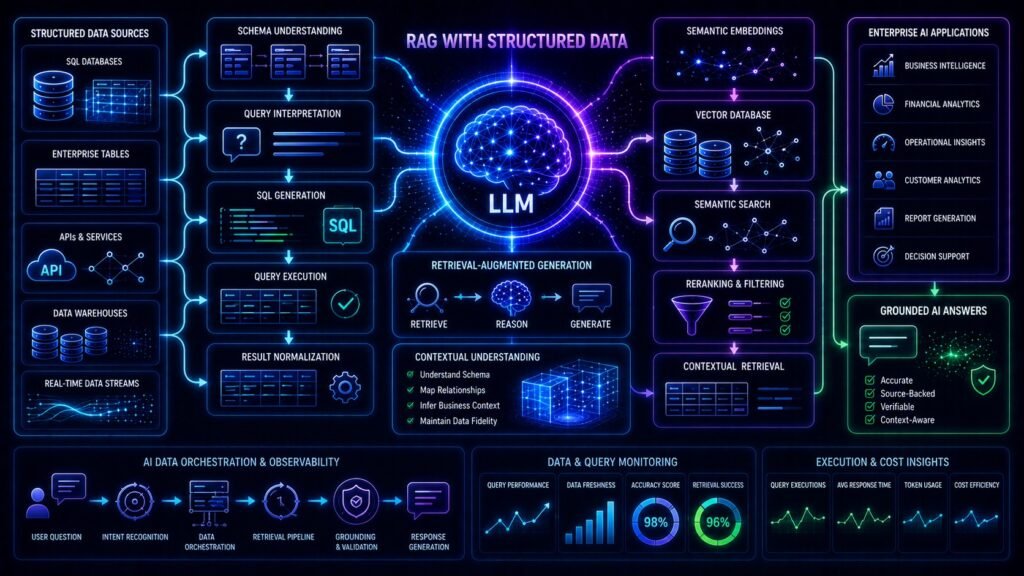
RAG with structured data architecture showing SQL databases, semantic retrieval, vector databases, APIs, and grounded AI generation

RAG With Structured Data: How AI Systems Query Databases Intelligently Modern enterprises generate enormous volumes of structured data every day. This data exists across: SQL databases CRM systems ERP platforms analytics warehouses APIs spreadsheets transactional systems customer records operational dashboards financial reporting systems As organizations adopt AI systems, a major challenge quickly appears: Large Language

RAG With Structured Data: Complete Enterprise AI Database Guide Read More »

Document Understanding AI Explained Simply

Document understanding AI workflow showing PDFs, scanned forms, OCR extraction, layout analysis, tables, fields, and structured data output

Document Understanding AI Explained: How AI Reads, Extracts, and Interprets Documents Document understanding AI is technology that reads, extracts, structures, and interprets information from documents such as PDFs, forms, invoices, receipts, contracts, scanned files, and reports. Unlike basic OCR, modern document AI can understand layout, tables, key-value pairs, entities, and business context. In Simple Terms

Document Understanding AI Explained Simply Read More »

RAG With PDFs: Complete Guide to PDF AI Retrieval Systems

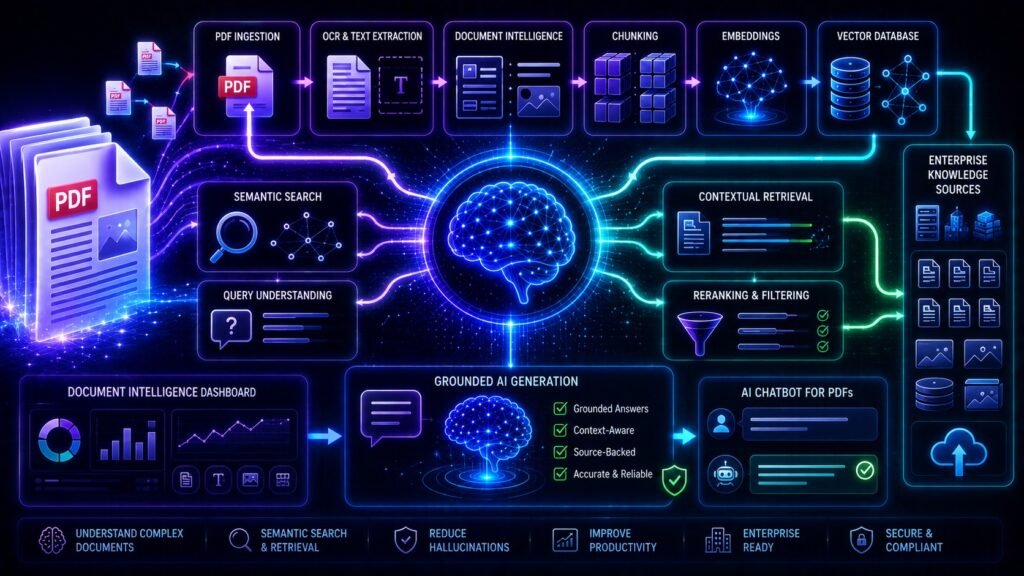
RAG with PDFs architecture showing semantic document retrieval, vector databases, embeddings, and grounded AI generation

RAG With PDFs: How to Build AI Systems That Understand Documents Modern enterprises manage enormous collections of PDF documents every day. These include: contracts policies compliance reports research papers invoices manuals healthcare records technical documentation financial reports legal documents As organizations adopt AI systems, one major challenge quickly appears: Large Language Models cannot reliably understand

RAG With PDFs: Complete Guide to PDF AI Retrieval Systems Read More »

RAG vs Tool Calling: Complete Enterprise AI Architecture Guide

RAG vs tool calling comparison showing semantic retrieval systems, AI agents, API orchestration, vector databases, and grounded AI generation

RAG vs Tool Calling: Which AI Architecture Works Better? Modern enterprise AI systems are evolving rapidly beyond simple chatbots and standalone Large Language Models. Organizations increasingly deploy advanced AI architectures across: enterprise AI assistants autonomous AI agents customer support copilots research automation systems enterprise workflow orchestration AI engineering assistants healthcare AI systems intelligent enterprise search

RAG vs Tool Calling: Complete Enterprise AI Architecture Guide Read More »

Scroll to Top