Vikash P

Vikash Pal is an AI/ML Engineer at ScholarEase and Editor for AIML Insights, focusing on machine learning, applied AI workflows, and practical implementation.

RAG vs Knowledge Graphs: Complete Enterprise AI Guide

RAG vs knowledge graphs comparison showing semantic retrieval systems, graph databases, entity relationships, and grounded AI architectures

RAG vs Knowledge Graphs: Which AI Architecture Is Better for Enterprise AI? Modern enterprise AI systems are evolving rapidly beyond traditional search engines and standalone Large Language Models. Organizations increasingly deploy advanced AI architectures across: enterprise knowledge systems semantic search platforms AI assistants customer support copilots healthcare AI systems legal intelligence platforms research automation systems […]

RAG vs Knowledge Graphs: Complete Enterprise AI Guide Read More »

RAG vs Long Context Windows: Complete AI Architecture Guide

RAG vs long context windows comparison showing semantic retrieval systems, transformer attention layers, vector databases, and grounded AI architectures

RAG vs Long Context Windows: Which AI Architecture Works Better? Modern enterprise AI systems are rapidly evolving beyond simple chatbot architectures. Organizations increasingly deploy Large Language Models across: enterprise search systems AI assistants customer support copilots document intelligence platforms legal AI systems healthcare AI systems coding assistants research automation platforms However, as enterprise AI adoption

RAG vs Long Context Windows: Complete AI Architecture Guide Read More »

RAG vs Semantic Search: Complete AI Retrieval Guide

RAG vs semantic search comparison showing vector databases, semantic retrieval workflows, grounded AI generation, and enterprise search systems

RAG vs Semantic Search: What’s the Real Difference in AI Systems? Modern enterprise AI systems increasingly depend on intelligent retrieval architectures to power: AI assistants enterprise search systems customer support copilots document intelligence platforms legal AI systems healthcare retrieval systems knowledge management tools research assistants However, as organizations adopt Large Language Models and AI retrieval

RAG vs Semantic Search: Complete AI Retrieval Guide Read More »

RAG vs Fine Tuning: Complete AI Comparison Guide

RAG vs fine tuning comparison showing retrieval pipelines, semantic search systems, training workflows, and AI customization methods

RAG vs Fine Tuning: Which AI Customization Method Is Better? Modern enterprise AI systems increasingly depend on Large Language Models to power: AI assistants customer support copilots enterprise search systems document intelligence platforms legal AI systems healthcare AI applications coding assistants workflow automation systems However, organizations quickly face a major challenge after adopting Large Language

RAG vs Fine Tuning: Complete AI Comparison Guide Read More »

RAG Monitoring Explained: Complete AI Monitoring Guide

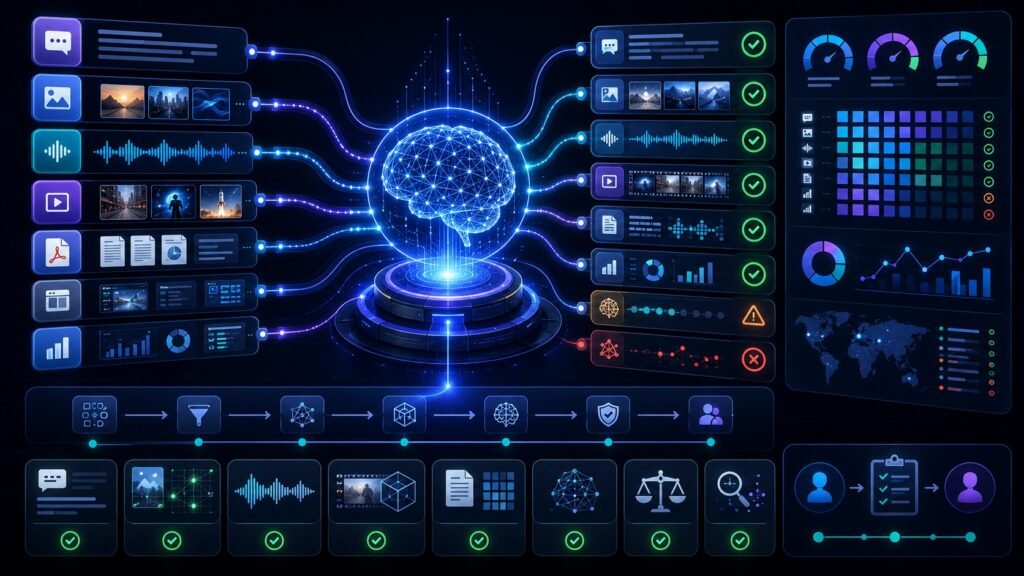
RAG monitoring visual showing AI observability dashboards, semantic retrieval analytics, hallucination detection, and enterprise AI systems

RAG Monitoring: How to Track and Improve AI System Performance Retrieval-Augmented Generation (RAG) systems are becoming one of the most important architectures in enterprise Artificial Intelligence. Organizations increasingly deploy RAG-powered AI assistants, semantic enterprise search systems, customer support copilots, document intelligence platforms, legal AI systems, and healthcare retrieval systems to improve grounded AI generation and

RAG Monitoring Explained: Complete AI Monitoring Guide Read More »

RAG Observability Explained: Complete AI Monitoring Guide

RAG observability visual showing AI monitoring dashboards, retrieval tracing systems, semantic search analytics, and hallucination detection

RAG Observability: How to Monitor and Debug AI Retrieval Systems Retrieval-Augmented Generation (RAG) systems are rapidly becoming foundational infrastructure for modern enterprise AI applications. Organizations increasingly use RAG-powered AI assistants, semantic search systems, customer support copilots, enterprise knowledge platforms, healthcare retrieval systems, and intelligent document search tools to improve AI grounding and reduce hallucinations. However,

RAG Observability Explained: Complete AI Monitoring Guide Read More »

RAG Benchmark Basics Explained Simply

RAG benchmark basics visual showing AI evaluation dashboards, retrieval scoring, semantic search benchmarking, and grounded AI systems

RAG Benchmark Basics: How AI Systems Are Evaluated and Compared Retrieval-Augmented Generation (RAG) systems have become one of the most important architectures in modern Artificial Intelligence. Enterprises increasingly use RAG-powered AI assistants, semantic search systems, customer support copilots, enterprise knowledge platforms, and intelligent document retrieval systems to improve AI grounding and reduce hallucinations. However, building

RAG Benchmark Basics Explained Simply Read More »

Retrieval Precision in RAG Explained Simply

Retrieval precision in RAG visual showing semantic retrieval optimization, contextual filtering, vector databases, and AI evaluation systems

Retrieval Precision in RAG: How AI Systems Reduce Irrelevant Results Retrieval-Augmented Generation (RAG) systems have become one of the most important architectures in modern Artificial Intelligence. Enterprises increasingly use RAG-powered AI assistants, semantic search systems, enterprise knowledge platforms, customer support copilots, and intelligent document retrieval systems to improve AI grounding and reduce hallucinations. However, retrieval

Retrieval Precision in RAG Explained Simply Read More »

Answer Faithfulness in RAG Explained Simply

Answer faithfulness in RAG visual showing grounded AI responses, semantic retrieval validation, and hallucination detection systems

Answer Faithfulness in RAG: How AI Systems Stay Grounded in Facts Retrieval-Augmented Generation (RAG) systems became one of the most important breakthroughs in modern Artificial Intelligence because they improved how Large Language Models access external knowledge. Unlike standalone LLMs that rely mostly on pretrained model memory, RAG systems retrieve contextual information from: vector databases enterprise

Answer Faithfulness in RAG Explained Simply Read More »

Context Recall in RAG Explained Simply

Context recall in RAG visual showing retrieval quality analysis, semantic search systems, missing contextual information, and AI evaluation dashboards

Context Recall in RAG: How Retrieval Systems Measure Missing Information Retrieval-Augmented Generation (RAG) systems have become one of the most important architectures in modern Artificial Intelligence. Enterprises increasingly use RAG-powered AI assistants, semantic search systems, enterprise knowledge platforms, customer support copilots, and document intelligence systems to improve AI grounding and reduce hallucinations. However, retrieval quality

Context Recall in RAG Explained Simply Read More »

Scroll to Top