Vikash P

Vikash Pal is an AI/ML Engineer at ScholarEase and Editor for AIML Insights, focusing on machine learning, applied AI workflows, and practical implementation.

Image to Text AI Explained: OCR and VLM Guide

Image to text AI workflow showing screenshots, scanned documents, receipts, forms, OCR extraction, text recognition, and document understanding

Image to Text AI Explained: How AI Reads and Converts Images Into Text Image to text AI is technology that extracts readable text from images, screenshots, scanned documents, forms, labels, receipts, and visual files. Traditional systems use OCR, while newer multimodal AI systems can also understand layout, context, tables, and visual meaning beyond simple character […]

Image to Text AI Explained: OCR and VLM Guide Read More »

RAG vs Prompt Engineering: Complete Enterprise AI Optimization Guide

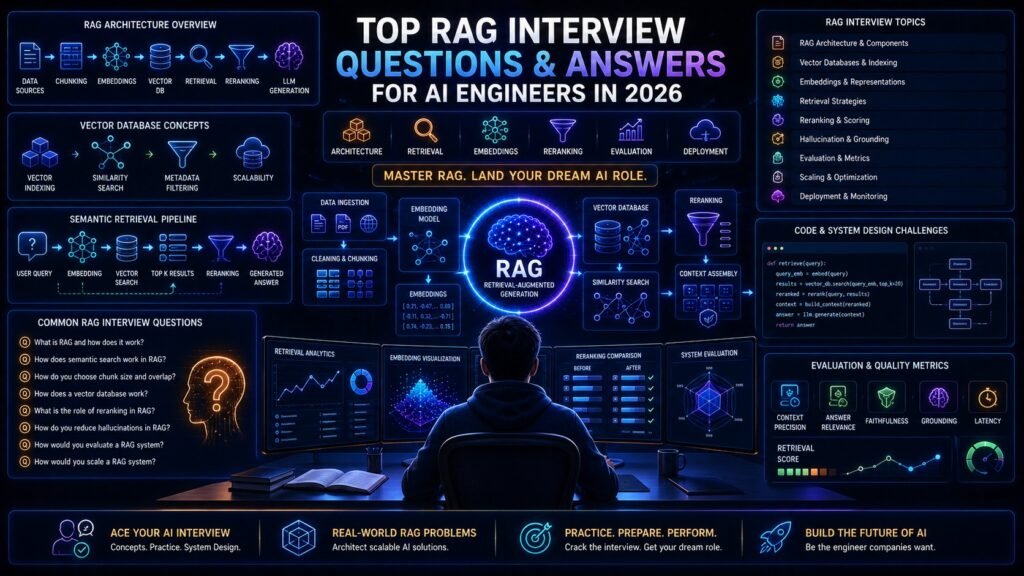
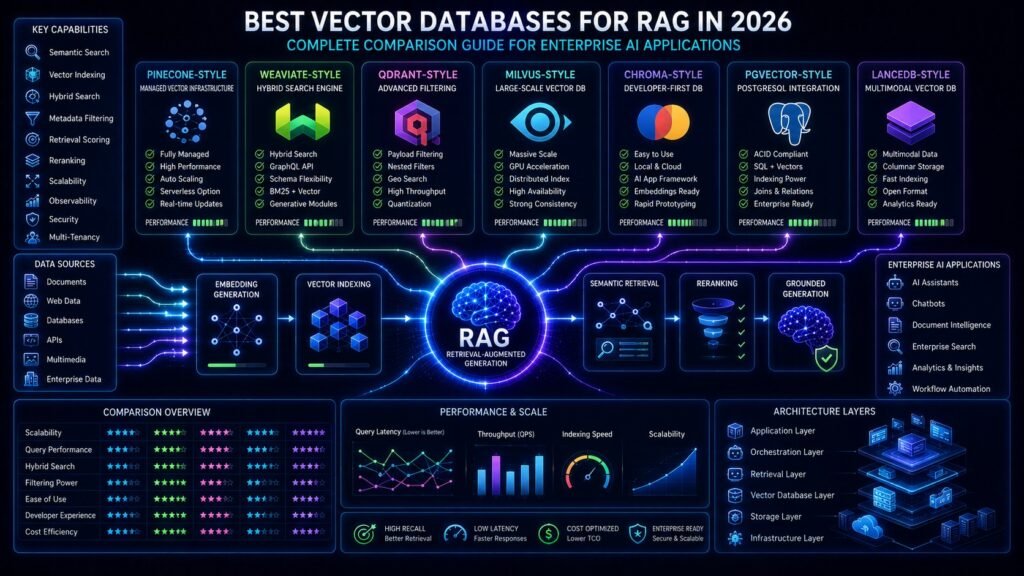
RAG vs prompt engineering comparison showing semantic retrieval systems, prompt optimization workflows, vector databases, and grounded AI generation

RAG vs Prompt Engineering: Which AI Optimization Method Works Better? Large Language Models changed enterprise AI by enabling systems capable of: conversational AI enterprise search document summarization coding assistance customer support automation workflow orchestration research automation intelligent reasoning However, organizations quickly realized something important: raw LLM performance alone is often not enough for production-grade AI

RAG vs Prompt Engineering: Complete Enterprise AI Optimization Guide Read More »

LLM Plus RAG vs Standalone LLM: Complete AI Architecture Guide

LLM plus RAG vs standalone LLM comparison showing semantic retrieval systems, grounded AI generation, vector databases, and hallucination reduction

LLM Plus RAG vs Standalone LLM: Which AI Architecture Works Better? Large Language Models transformed enterprise AI by enabling systems capable of: conversational AI document summarization coding assistance customer support automation enterprise search research automation workflow orchestration intelligent reasoning However, organizations quickly discovered a major limitation with standalone LLMs: they often hallucinate and lack access

LLM Plus RAG vs Standalone LLM: Complete AI Architecture Guide Read More »

Text and Image Models Explained: Simple AI Guide

Text and image models visual showing AI connecting prompts, captions, screenshots, charts, photos, embeddings, and visual reasoning together

Text and Image Models Explained: How AI Connects Visuals and Language Text and image models are multimodal AI models that connect visual information with language. They can understand images, screenshots, diagrams, charts, or documents together with text prompts, captions, or questions. These models power image captioning, visual question answering, image-to-text workflows, visual search, document AI,

Text and Image Models Explained: Simple AI Guide Read More »

Vision Language Models Explained: Simple Guide

Vision language models explained architecture showing images, text prompts, visual encoders, language encoders, embeddings, and AI reasoning connected together

Vision Language Models Explained: How AI Connects Images and Text Vision-language models are multimodal AI models that connect computer vision with natural language processing. They help AI understand images, screenshots, charts, documents, or video frames together with text prompts, captions, or questions. This makes VLMs useful for image captioning, visual question answering, document AI, visual

Vision Language Models Explained: Simple Guide Read More »

RAG vs Database Lookup: Complete Enterprise AI Retrieval Guide

RAG vs database lookup comparison showing semantic retrieval systems, SQL databases, vector databases, and enterprise AI architectures

RAG vs Database Lookup: Which AI Retrieval Method Works Better? Modern enterprise AI systems increasingly depend on intelligent retrieval architectures to power: AI assistants enterprise search systems customer support copilots document intelligence platforms healthcare AI systems legal retrieval systems ecommerce AI platforms workflow automation systems However, as organizations scale AI adoption, a major architectural question

RAG vs Database Lookup: Complete Enterprise AI Retrieval Guide Read More »

Agentic RAG Explained: Complete Guide to Autonomous AI Retrieval

Agentic RAG explained architecture showing autonomous AI agents, semantic retrieval systems, vector databases, and grounded AI reasoning workflows

Agentic RAG Explained: How Autonomous AI Retrieval Systems Work Modern AI systems are evolving far beyond simple chatbots and static retrieval pipelines. Organizations increasingly deploy intelligent AI architectures across: enterprise AI assistants customer support copilots autonomous research systems software engineering agents legal AI platforms healthcare AI systems AI workflow orchestration systems enterprise automation platforms However,

Agentic RAG Explained: Complete Guide to Autonomous AI Retrieval Read More »

Multimodal Reasoning Explained: How AI Thinks Across Data

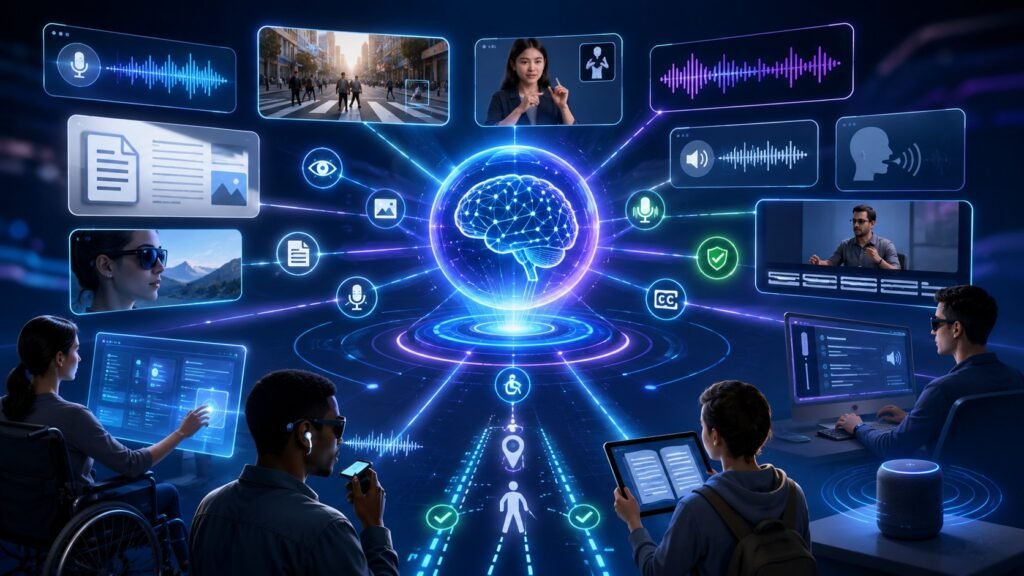
Multimodal reasoning visual showing AI connecting text, images, audio, video, documents, charts, embeddings, and reasoning paths into one answer

Multimodal Reasoning Explained: How AI Understands Text, Images, Audio, and Video Together Multimodal reasoning is the AI ability to connect information from different data types, such as text, images, audio, video, documents, and charts, to reach a more useful conclusion. It goes beyond recognizing inputs separately and focuses on reasoning across them together. In Simple

Multimodal Reasoning Explained: How AI Thinks Across Data Read More »

Multimodal Agents Explained: AI That Sees, Hears, and Acts

Multimodal agents visual showing AI processing text, images, audio, video, documents, memory, planning, tools, and actions in one workflow

Multimodal Agents Explained: How AI Agents Understand Text, Images, Audio, and Video Multimodal agents are AI systems that can understand multiple data types, reason over them, and take actions. Unlike simple chatbots, they can process text, images, audio, video, documents, and sometimes sensor data before planning what to do next. This makes them important for

Multimodal Agents Explained: AI That Sees, Hears, and Acts Read More »

GraphRAG Explained: Complete Guide to Graph-Based AI Retrieval

GraphRAG explained architecture showing knowledge graph reasoning, semantic retrieval systems, vector databases, and grounded AI generation

GraphRAG Explained: How Graph-Based Retrieval Improves AI Systems Modern enterprise AI systems are evolving rapidly beyond traditional chatbots and standalone Large Language Models. Organizations increasingly deploy advanced AI architectures across: enterprise search systems AI assistants customer support copilots legal intelligence platforms healthcare AI systems research automation tools document intelligence systems enterprise knowledge management platforms However,

GraphRAG Explained: Complete Guide to Graph-Based AI Retrieval Read More »

Scroll to Top