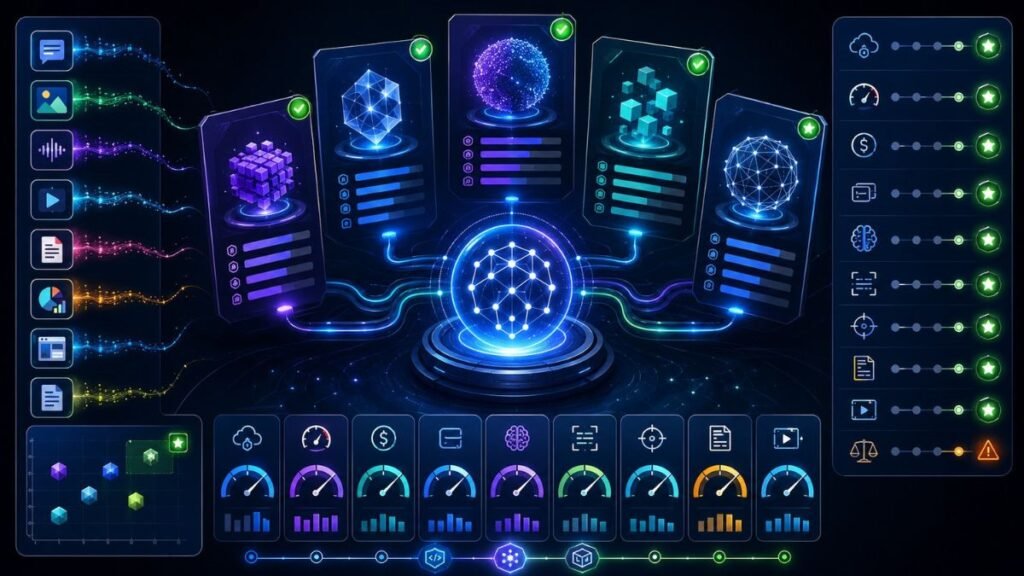
RAG Monitoring Explained: Complete AI Monitoring Guide

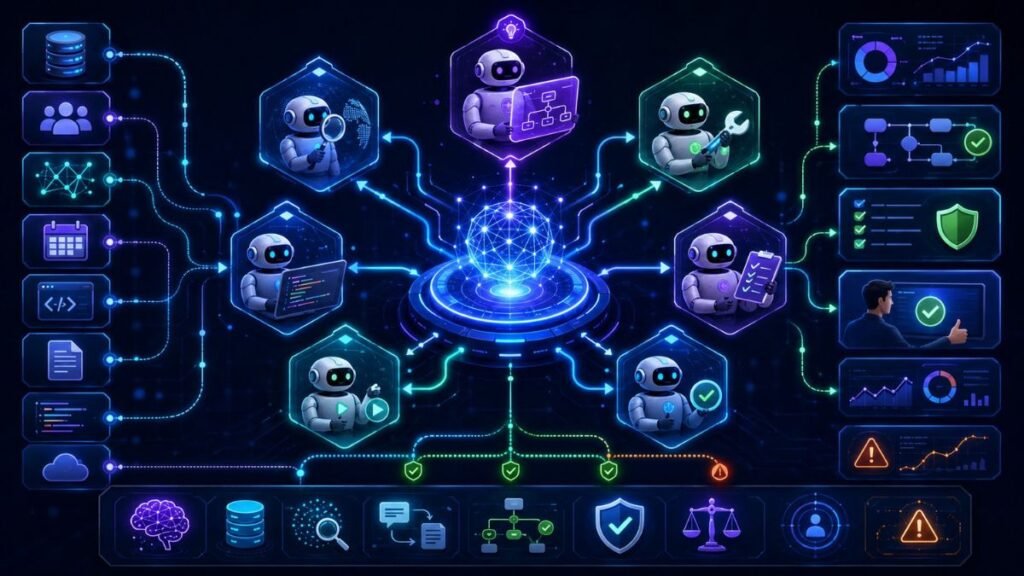
RAG monitoring visual showing AI observability dashboards, semantic retrieval analytics, hallucination detection, and enterprise AI systems

RAG Monitoring: How to Track and Improve AI System Performance Retrieval-Augmented Generation (RAG) systems are becoming one of the most important architectures in enterprise Artificial Intelligence. Organizations increasingly deploy RAG-powered AI assistants, semantic enterprise search systems, customer support copilots, document intelligence platforms, legal AI systems, and healthcare retrieval systems to improve grounded AI generation and […]

RAG Monitoring Explained: Complete AI Monitoring Guide Read More »

Multimodal AI Use Cases: Real-World Applications

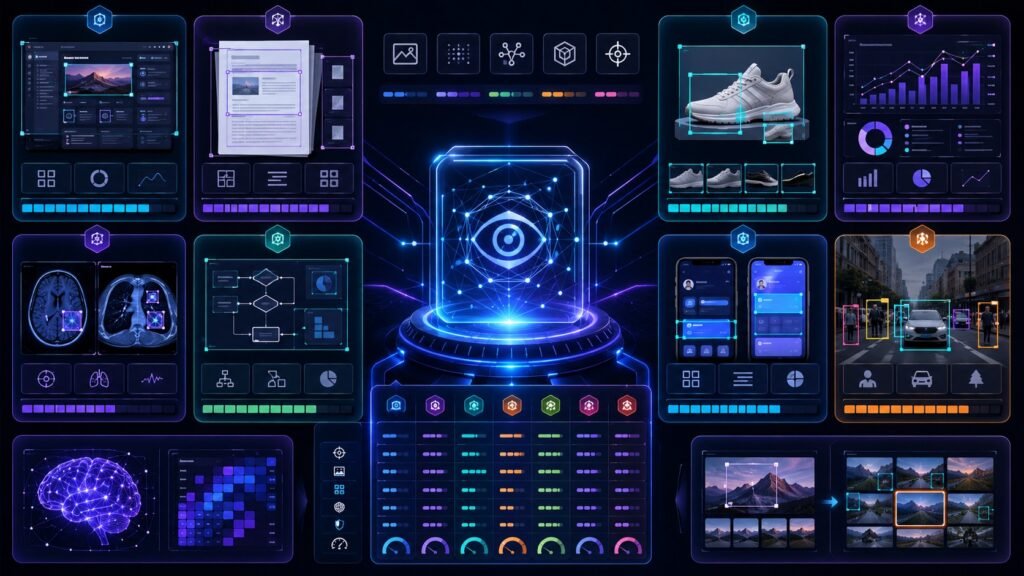
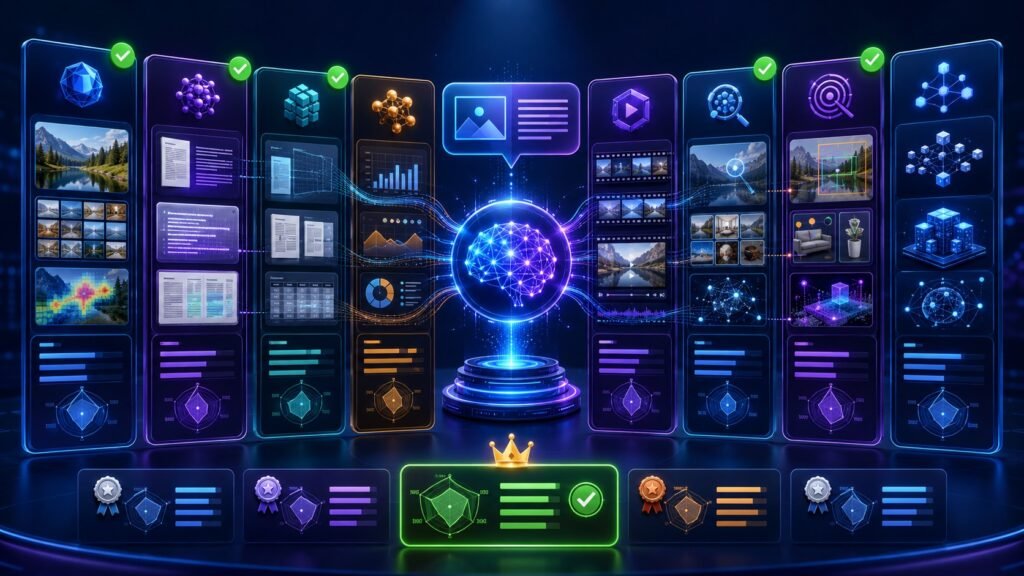
Multimodal AI use cases : Multimodal AI use cases visual showing healthcare, retail, education, robotics, customer support, finance, documents, images, audio, video, and AI reasoning connected together

Multimodal AI Use Cases: Real-World Applications Across Industries Multimodal AI use cases are growing because modern AI can combine text, images, audio, video, documents, charts, and sensor data in one workflow. This makes AI more useful for real-world tasks such as customer support, healthcare, retail search, education, robotics, document processing, and enterprise decision-making. In Simple

Multimodal AI Use Cases: Real-World Applications Read More »

How Multimodal AI Works: Simple Complete Guide

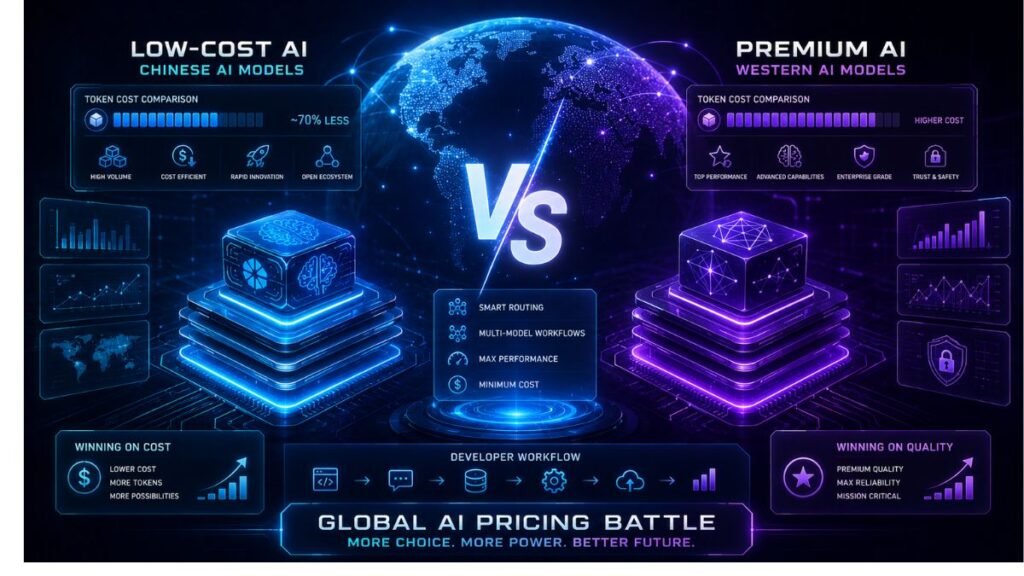
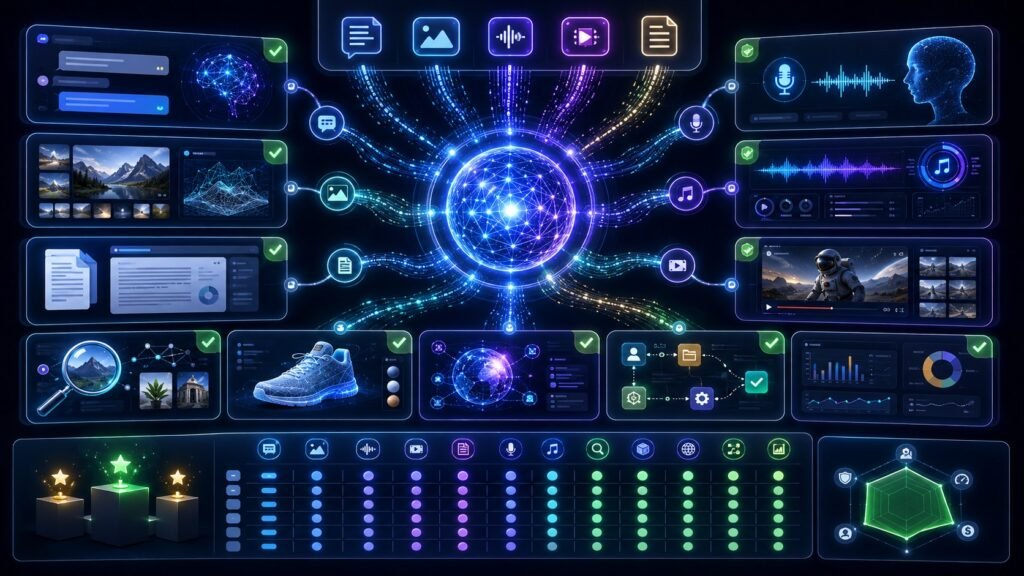
How Multimodal AI works: Multimodal AI workflow showing text, images, audio, video, documents, embeddings, fusion layers, and AI reasoning connected together

How Multimodal AI Works: A Simple Guide to Text, Image, Audio, and Video AI Multimodal AI works by converting different data types, such as text, images, audio, video, and documents, into machine-readable representations, combining them into shared context, and using that context to reason or generate outputs. This lets AI understand mixed information more naturally

How Multimodal AI Works: Simple Complete Guide Read More »

RAG Observability Explained: Complete AI Monitoring Guide

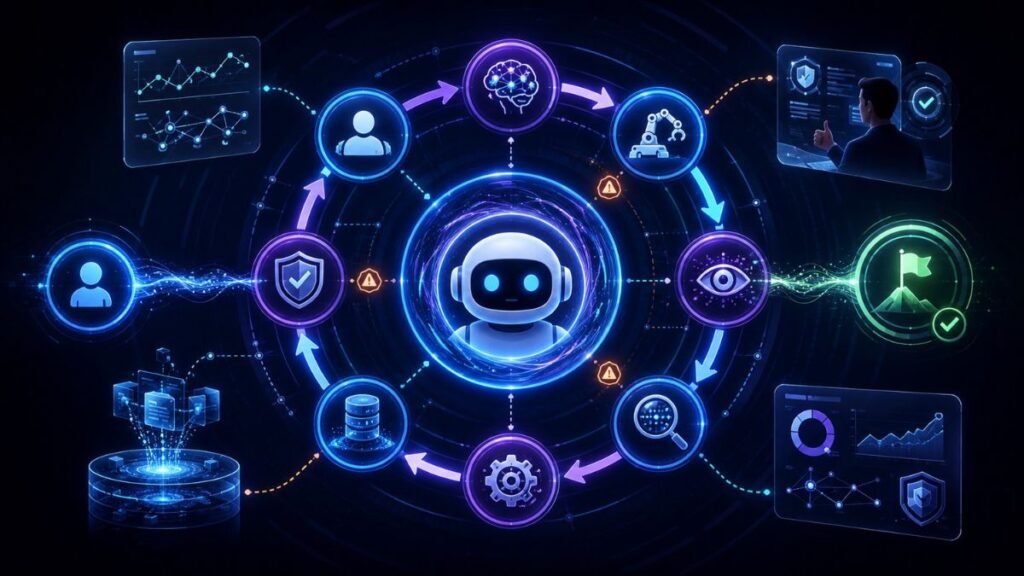
RAG observability visual showing AI monitoring dashboards, retrieval tracing systems, semantic search analytics, and hallucination detection

RAG Observability: How to Monitor and Debug AI Retrieval Systems Retrieval-Augmented Generation (RAG) systems are rapidly becoming foundational infrastructure for modern enterprise AI applications. Organizations increasingly use RAG-powered AI assistants, semantic search systems, customer support copilots, enterprise knowledge platforms, healthcare retrieval systems, and intelligent document search tools to improve AI grounding and reduce hallucinations. However,

RAG Observability Explained: Complete AI Monitoring Guide Read More »

RAG Benchmark Basics Explained Simply

RAG benchmark basics visual showing AI evaluation dashboards, retrieval scoring, semantic search benchmarking, and grounded AI systems

RAG Benchmark Basics: How AI Systems Are Evaluated and Compared Retrieval-Augmented Generation (RAG) systems have become one of the most important architectures in modern Artificial Intelligence. Enterprises increasingly use RAG-powered AI assistants, semantic search systems, customer support copilots, enterprise knowledge platforms, and intelligent document retrieval systems to improve AI grounding and reduce hallucinations. However, building

RAG Benchmark Basics Explained Simply Read More »

Multimodal AI Examples: Real-World Use Cases

Multimodal AI examples visual showing healthcare, retail, education, robotics, customer support, documents, images, audio, video, and AI reasoning connected together

Multimodal AI Examples: Real-World Applications Across Industries Multimodal AI examples are appearing everywhere because modern AI can now work with text, images, audio, video, documents, charts, and sensor data together. Instead of only answering typed questions, multimodal AI can inspect screenshots, listen to voice, analyze images, read documents, and combine those signals into more useful

Multimodal AI Examples: Real-World Use Cases Read More »

Multimodal AI for Beginners: Simple Complete Guide

Multimodal AI for beginners visual showing text, images, audio, video, documents, charts, and AI reasoning connected in one intelligent system

Multimodal AI for Beginners: How AI Understands Text, Images, Audio, and Video Multimodal AI is artificial intelligence that can understand more than one type of information, such as text, images, audio, video, documents, charts, and sensor data. For beginners, the simplest way to think about it is this: multimodal AI helps machines understand the world

Multimodal AI for Beginners: Simple Complete Guide Read More »

Retrieval Precision in RAG Explained Simply

Retrieval precision in RAG visual showing semantic retrieval optimization, contextual filtering, vector databases, and AI evaluation systems

Retrieval Precision in RAG: How AI Systems Reduce Irrelevant Results Retrieval-Augmented Generation (RAG) systems have become one of the most important architectures in modern Artificial Intelligence. Enterprises increasingly use RAG-powered AI assistants, semantic search systems, enterprise knowledge platforms, customer support copilots, and intelligent document retrieval systems to improve AI grounding and reduce hallucinations. However, retrieval

Retrieval Precision in RAG Explained Simply Read More »

Answer Faithfulness in RAG Explained Simply

Answer faithfulness in RAG visual showing grounded AI responses, semantic retrieval validation, and hallucination detection systems

Answer Faithfulness in RAG: How AI Systems Stay Grounded in Facts Retrieval-Augmented Generation (RAG) systems became one of the most important breakthroughs in modern Artificial Intelligence because they improved how Large Language Models access external knowledge. Unlike standalone LLMs that rely mostly on pretrained model memory, RAG systems retrieve contextual information from: vector databases enterprise

Answer Faithfulness in RAG Explained Simply Read More »

LLM vs Fine Tuning: How to Choose the Best AI Customization Method

llm vs fine tuning explained: LLM vs fine tuning comparison showing AI customization methods, training data, prompts, and model adaptation

LLM vs Fine Tuning: What’s the Difference and Which Should You Use in 2026? As businesses adopt AI, two terms appear often: LLM and fine tuning. Many beginners confuse them or assume they are competing options. They are related, but not the same. An LLM is the foundation model. Fine tuning is one method used

LLM vs Fine Tuning: How to Choose the Best AI Customization Method Read More »

Scroll to Top