Vikash P

Vikash Pal is an AI/ML Engineer at ScholarEase and Editor for AIML Insights, focusing on machine learning, applied AI workflows, and practical implementation.

Multimodal Benchmarking: Metrics and Testing Guide
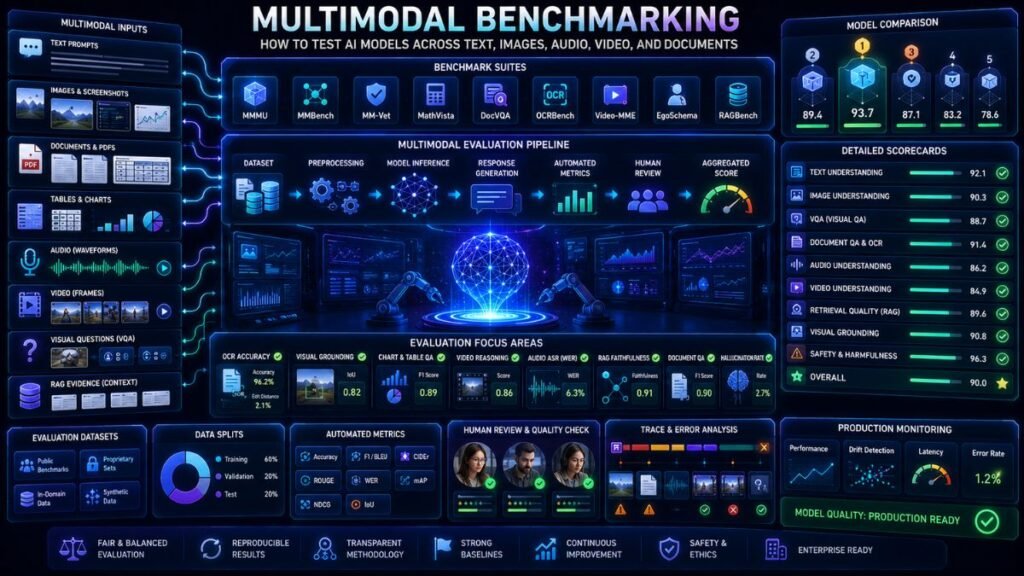
Multimodal benchmarking dashboard showing AI models tested on text, images, PDFs, audio, video, OCR, visual grounding, RAG, and benchmark scorecards

Multimodal benchmarking is the process of testing AI systems that work with more than text, including images, screenshots, PDFs, charts, audio, video, and documents. It helps teams compare models, measure reliability, find failure cases, and decide whether a multimodal AI system is ready for real users. In Simple Terms Multimodal benchmarking means giving an AI […]

Multimodal Benchmarking: Metrics and Testing Guide Read More »
What Are the Best AI Tools in 2026?

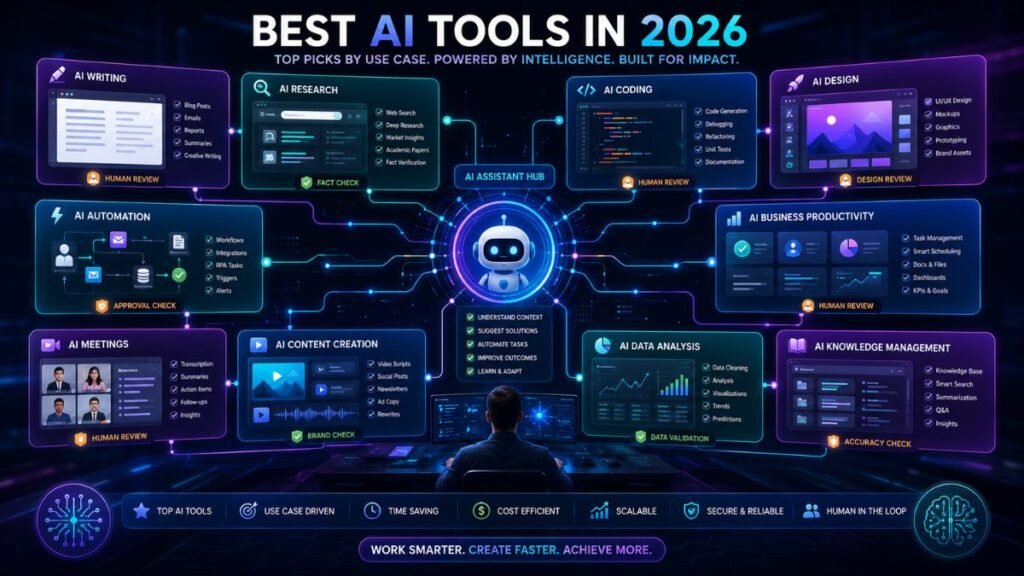
What Are the Best AI tools dashboard showing writing, research, coding, design, automation, business productivity, content creation, and analytics workflows

The best AI tools in 2026 are the ones that solve a specific workflow problem: writing faster, researching with sources, coding, designing visuals, automating repetitive work, summarizing meetings, organizing knowledge, or improving business productivity. The smartest approach is not downloading every popular app. It is building a small AI stack that fits your daily work.

What Are the Best AI Tools in 2026? Read More »

Multimodal RAG Explained: Images, Text, Video

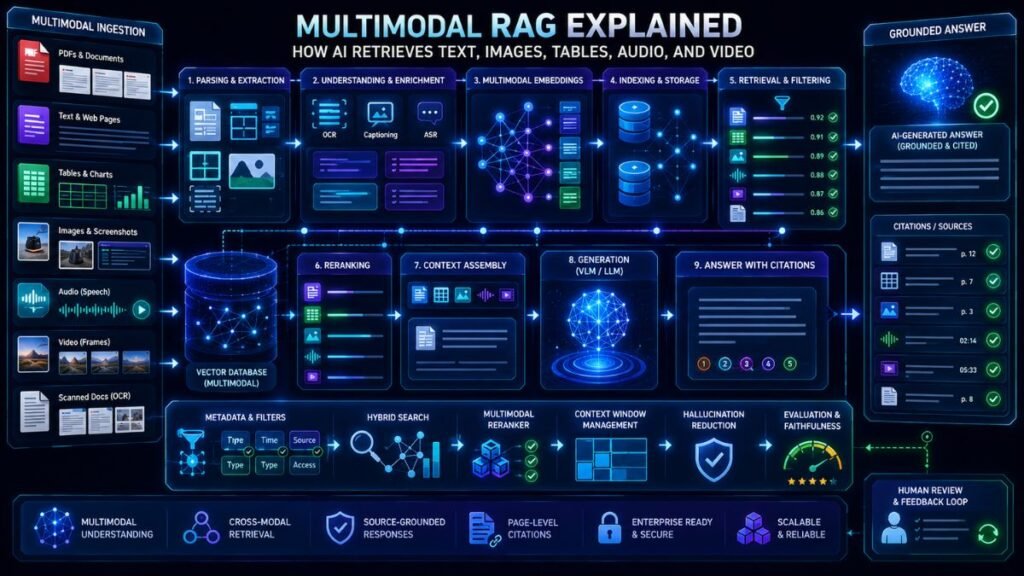
Multimodal RAG Explained pipeline showing text, images, PDFs, tables, audio, video, embeddings, retrieval, citations, and grounded AI answers

Multimodal RAG explained simply: it is retrieval-augmented generation that can search and use more than text. Instead of retrieving only written passages, multimodal RAG can retrieve images, tables, charts, screenshots, PDFs, audio, video frames, or document pages before generating a more grounded answer. In Simple Terms Traditional RAG gives an AI model relevant text before

Multimodal RAG Explained: Images, Text, Video Read More »

No-Code vs Developer-First Agentic AI Platforms

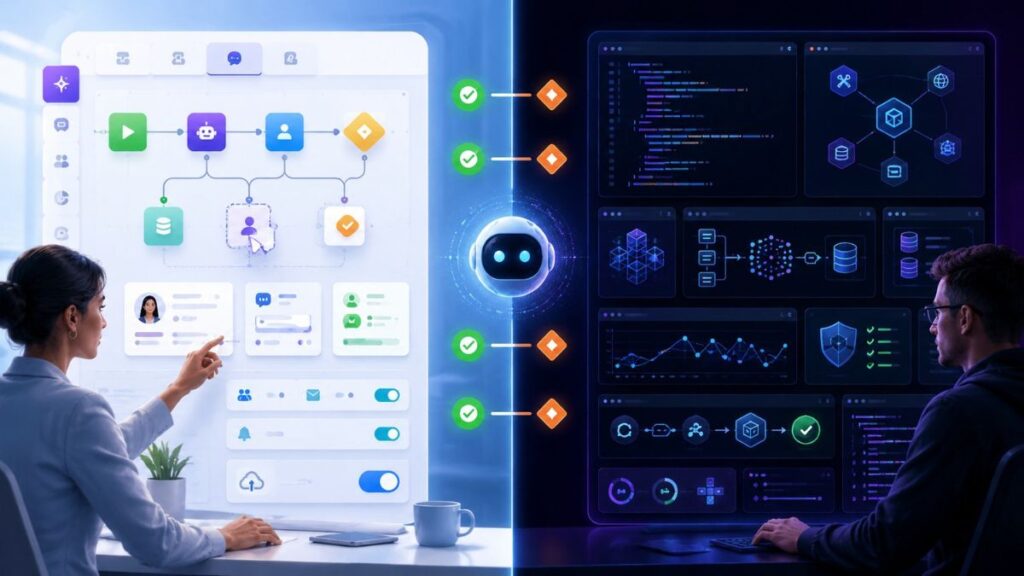
No-code vs developer-first agentic AI platforms comparison showing workflow builders, SDKs, tools, APIs, observability, security, and deployment trade-offs

 No-code vs developer-first agentic AI platforms is a choice between speed and control. No-code AI agent builders help business teams create agents faster with visual workflows and connectors. Developer-first platforms give engineers deeper control over tools, memory, APIs, orchestration, observability, security, and production deployment. In Simple Terms A no-code agentic AI platform is for building

No-Code vs Developer-First Agentic AI Platforms Read More »

Building Multimodal Apps: Architecture and Tools

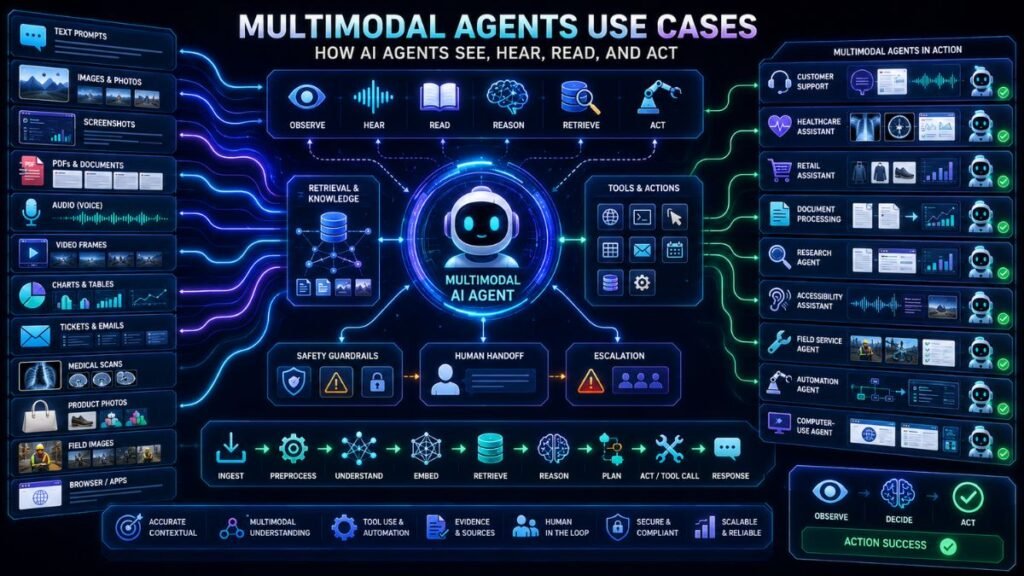
Building multimodal apps architecture showing text, images, audio, video, documents, APIs, RAG, agents, evaluation, and deployment workflows

 Building multimodal apps means creating AI applications that can accept and reason over more than text. A practical multimodal app may process images, screenshots, PDFs, audio, video, charts, forms, and user prompts, then combine models, retrieval, tools, evaluation, and user interface design into one reliable workflow. In Simple Terms A multimodal app lets users interact

Building Multimodal Apps: Architecture and Tools Read More »

Multimodal Interview Questions and Answers

Multimodal interview questions dashboard showing VLMs, OCR, documents, audio, video, RAG, agents, evaluation, and AI career preparation

Multimodal interview questions test whether you understand AI systems that combine text, images, audio, video, documents, and structured data. Strong candidates should explain vision-language models, OCR, multimodal embeddings, RAG, agents, evaluation, latency, data quality, and real-world failure cases clearly. In Simple Terms A multimodal AI interview is not only about LLMs or computer vision. It

Multimodal Interview Questions and Answers Read More »

Scroll to Top