

China’s New GLM-5.2 AI Model Is Putting Pressure on Claude
The GLM-5.2 AI model has entered the global AI race with a combination that developers are paying close attention to: open weights, a huge context window, strong coding abilities and API prices below premium Claude models.
Developed by Chinese AI company Z.ai, formerly known internationally as Zhipu AI, GLM-5.2 is designed for long-running software engineering and agentic workflows rather than simple chatbot conversations.
The important question is not whether one benchmark proves it has “beaten Claude.” The bigger issue is whether open and lower-cost models are becoming good enough to challenge proprietary AI systems in real developer work.
What Is the GLM-5.2 AI Model?
GLM-5.2 is Z.ai’s newest flagship language model for coding, tool use and long-horizon tasks.
Z.ai describes the model as being built for work that requires an AI system to maintain context, plan multiple steps and continue toward an outcome over a long period. Its official release material highlights improvements in long-context reasoning and reduced computation compared with GLM-5.1.
The model is especially relevant to developers building AI coding agents. Instead of producing only a short code snippet, an agent powered by GLM-5.2 can potentially inspect a large project, plan changes, use tools, test results and continue refining its output.
That places it in the same broad category as Claude-powered coding agents, OpenAI Codex and other systems built for autonomous software work.
Why GLM-5.2 Is Attracting So Much Attention
Several features make the Z.ai GLM-5.2 release notable.
First, it supports a context window of up to one million tokens, according to Z.ai and early launch coverage. A large context window allows the model to process extensive codebases, long documents or lengthy agent histories without losing earlier information as quickly.
Second, it is an open-weight model. That means developers can access the model weights and have more deployment flexibility than they would with a closed API-only system. Open weights can support private hosting, customization, research and deployment in environments where companies want more control.
Third, it focuses on long-horizon work. This is important because modern AI coding is moving beyond autocomplete. Developers increasingly want agents that can finish larger engineering tasks, not simply suggest the next line.
Finally, its cost is substantially below Anthropic’s most expensive Claude models when used through Z.ai’s API.
Is GLM-5.2 Really Free?
Calling GLM-5.2 “free” requires an important distinction.
Because it is an open-weight model, developers may be able to download and self-host it without paying Z.ai a per-token API charge. However, running a large model still requires costly hardware, electricity, storage and technical infrastructure.
Using Z.ai’s hosted API is not free. Z.ai’s official pricing page currently lists GLM-5.2 at:
- $1.40 per million input tokens
- $0.26 per million cached input tokens
- $4.40 per million output tokens
The same page lists some smaller GLM Flash models as fully free, but not GLM-5.2 itself.
Z.ai also promotes paid coding subscriptions starting from $18 per month with access to its flagship models through compatible AI coding tools.
So the accurate conclusion is this: GLM-5.2 is open-weight and potentially free to access or test in some environments, but serious hosted or self-hosted usage still has a cost.
GLM-5.2 vs Claude: Does It Actually Win?
The claim that GLM-5.2 “beats Claude” is too broad.
Z.ai’s launch material and media reports point to strong performance in coding, design and long-horizon benchmarks. Early coverage says the model is competitive with Anthropic’s high-end Claude models on some programming evaluations.
But benchmark leadership depends on the test.
One model may perform better on front-end design, another on repository-level bug fixing, another on writing quality and another on tool use. Company-reported benchmark results also need independent verification.
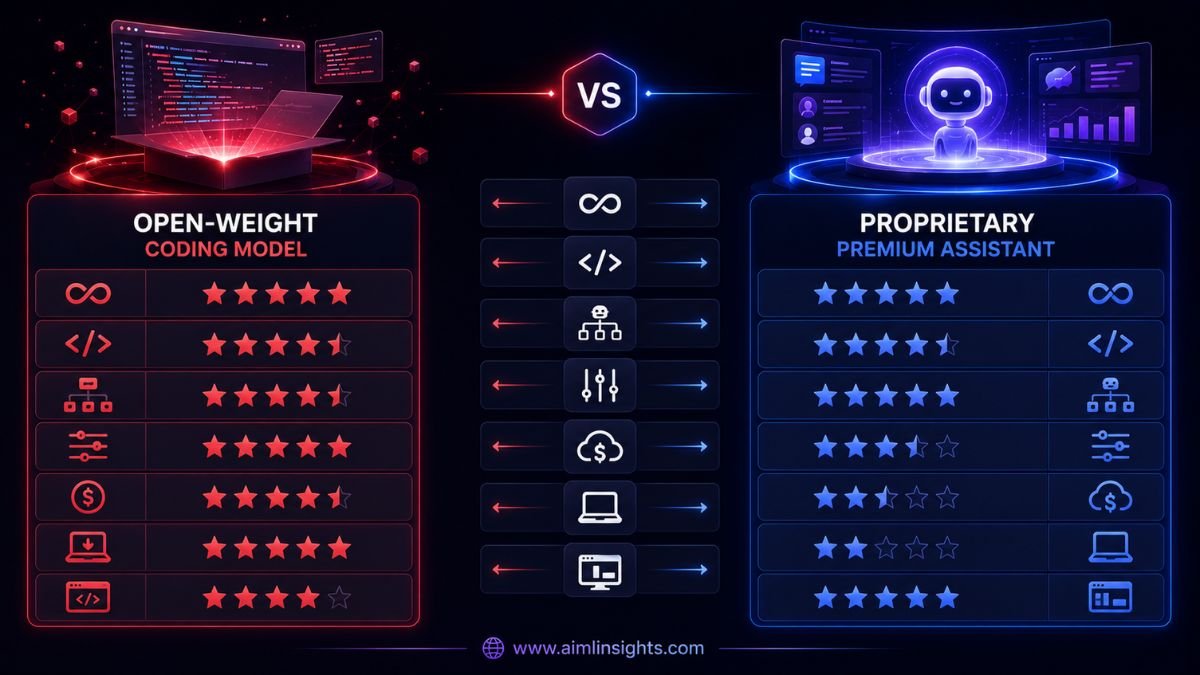
Z.ai’s earlier GLM-5.1 model scored strongly on SWE-Bench Pro, where the company reported a result above several major proprietary models. GLM-5.2 is presented as an improvement in long-context and long-horizon performance, but broader independent testing is still developing because the model is new.
A responsible comparison is therefore:
- GLM-5.2 appears highly competitive for coding and agentic workflows.
- It may outperform Claude on selected benchmarks or tasks.
- That does not prove it is better than Claude for every user or workload.
How GLM-5.2 Pricing Compares With Claude
Price is one of GLM-5.2’s strongest advantages.
Z.ai lists GLM-5.2 at $1.40 per million input tokens and $4.40 per million output tokens.
Anthropic’s consumer pricing page currently shows a free Claude plan, a Pro plan at $20 per month when billed monthly and Max plans starting at $100 per month. Claude Code and Claude Cowork are included with the Pro plan rather than the free plan.
API and subscription pricing are not directly interchangeable, but the comparison illustrates the broader market pressure. A developer running high-volume coding agents may care more about token costs. An individual user who wants a polished desktop assistant may care more about a predictable subscription and finished product experience.
GLM-5.2 could be cheaper at the model layer, while Claude may provide a more mature integrated experience through Claude Code, Cowork, connectors and desktop applications.
Why the One-Million-Token Context Window Matters
A one-million-token context window sounds technical, but the practical meaning is straightforward.
It allows an AI system to consider much more information in a single task.
For software developers, that could include a large codebase, documentation, issue history, testing instructions and logs. For researchers, it could include many reports or books. For businesses, it could include internal policies, customer records and operational documents—subject to privacy controls.
The advantage is continuity. An AI agent can work through more of a project without constantly asking the user to re-upload information.
The limitation is that a large context window does not guarantee perfect understanding. Models may still overlook details, prioritize the wrong information or generate incorrect conclusions.
Large context is useful, but accuracy and retrieval quality remain just as important.
GLM-5.2 Is Designed for Agentic Engineering
Z.ai has repeatedly framed its newer GLM models around “agentic engineering.”
Agentic engineering means using AI systems that can plan, call tools, execute commands, test work and revise their approach. GLM-5 was introduced as a shift from short “vibe coding” sessions toward complex system engineering and long-running agent tasks. GLM-5.2 continues that direction with stronger long-context capabilities.
This matters because AI agents consume far more tokens than ordinary chat.
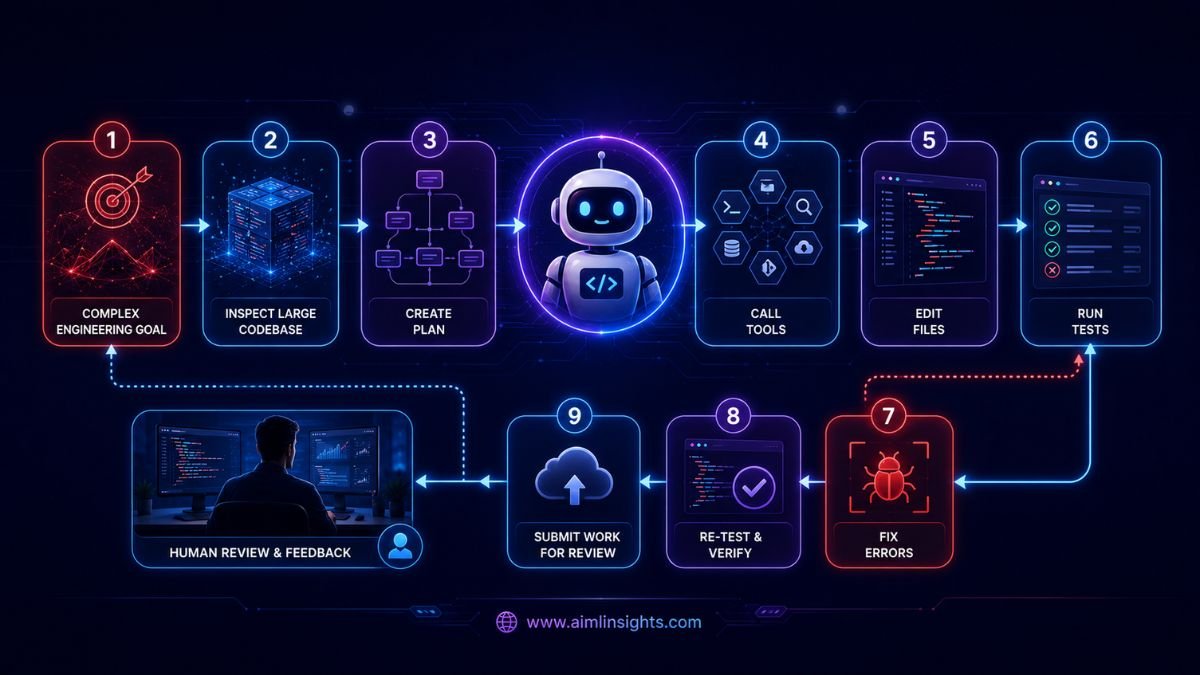
A coding agent may inspect dozens of files, call tools repeatedly, produce tests and retry failed approaches. Lower pricing can make those workflows more affordable.
For startups and independent developers, this could reduce the cost of experimenting with autonomous coding systems.
Who Should Consider Using GLM-5.2?
GLM-5.2 may be attractive to several groups.
Developers may use it for repository analysis, code generation, debugging and long-running agent tasks.
AI startups may consider it when they need a lower-cost model with open deployment options.
Enterprises may value the ability to self-host or customize an open-weight model, particularly when data control matters.
Researchers may use the open weights to study model behavior, fine-tuning and agent design.
Small businesses may benefit indirectly when software products use GLM-5.2 to reduce AI operating costs.
However, non-technical users may still find Claude or ChatGPT easier because those products offer polished interfaces, integrations and support without requiring model hosting or developer configuration.
Risks and Limitations
GLM-5.2 has several limitations users should consider.
The first is verification. Many performance claims come from Z.ai’s own benchmarks or early reports. Independent evaluations are still needed.
The second is infrastructure. Open-weight access does not mean a large model is easy or inexpensive to run locally.
The third is data governance. Companies must examine where API data is processed, how long it is retained and whether deployment meets local privacy or compliance requirements.
The fourth is reliability. Coding agents can introduce security flaws, delete files or make broad changes based on incorrect assumptions.
The fifth is product maturity. Claude Code and other established coding platforms include interfaces, permissions, integrations and workflow tools around the model. A strong base model does not automatically provide an equally complete product experience.
Simple Explanation for Beginners
Think of GLM-5.2 as a powerful AI engine designed mainly for developers and AI agents.
Claude is both an AI model family and a polished product with apps and coding tools.
GLM-5.2 gives developers more freedom because its weights are open. It may also cost less through an API.
But open access does not mean everything is free or easy. Someone still needs computers to run the model, software to connect it to tools and people to check its work.
So GLM-5.2 is not automatically a free replacement for Claude. It is a serious new option that could make advanced AI coding more affordable and customizable.
What This Means for the Global AI Race
GLM-5.2 reflects a wider shift in the AI industry.
Chinese AI companies are increasingly competing through open models, lower pricing and efficient deployment. Reuters previously reported that Z.ai’s GLM-5 was built using domestically produced chips and had gained attention for competing with major Western models on selected benchmarks.
The growing quality of open Chinese models creates pressure on U.S. companies to justify premium prices and closed ecosystems.
For developers, more competition is beneficial. It can lower costs, widen access and create more choices.
For Anthropic, OpenAI and Google, it means strong proprietary models may no longer be enough. They must also compete on tools, reliability, distribution, privacy and user experience.
Conclusion: GLM-5.2 Explained: China’s New Open AI Model vs Claude
China’s new GLM-5.2 AI model is putting pressure on Claude by offering open weights, a one-million-token context window, strong coding capabilities and lower hosted-model pricing.
It may outperform Claude on selected coding or agent benchmarks, but there is not yet enough independent evidence to declare it universally better.
The more important story is that open models are closing the gap.
Developers can now choose between premium proprietary platforms and increasingly capable open alternatives. GLM-5.2 may not replace Claude for everyone, but it gives developers and businesses another credible option for coding, long-context work and autonomous AI agents.
Final Takeaways
- GLM-5.2 is Z.ai’s new open-weight model for coding and long-running agent tasks.
- It supports a context window of up to one million tokens.
- Z.ai lists GLM-5.2 API pricing at $1.40 per million input tokens and $4.40 per million output tokens.
- Open-weight access does not make infrastructure or hosted usage completely free.
- GLM-5.2 appears competitive with Claude on selected coding benchmarks.
- Company benchmark results should be treated carefully until more independent testing appears.
- Claude may still offer a more polished product ecosystem for non-technical users.
- GLM-5.2 increases pricing and innovation pressure across the global AI market.
Suggested Read:
- China’s Cheap AI Model Is Making Claude Look Expensive
- Claude Cowork Explained
- AI Agents Can Now Work for Hours
- Best AI Coding Tools
- OpenAI Codex Explained
- Latest AI News Today
FAQ: GLM-5.2 Explained: China’s New Open AI Model vs Claude
What is GLM-5.2?
GLM-5.2 is an open-weight language model from Chinese AI company Z.ai. It is designed for coding, long-context reasoning, tool use and long-running agent workflows.
Is GLM-5.2 free?
Its open weights may be downloaded and self-hosted, subject to its license and hardware requirements. Z.ai’s hosted API is not free and currently costs $1.40 per million input tokens and $4.40 per million output tokens.
Does GLM-5.2 beat Claude?
GLM-5.2 appears to outperform Claude models on some company-reported or early coding benchmarks, but this does not prove it is better on every task. Independent testing is still emerging.
How much does GLM-5.2 cost?
Z.ai lists the hosted API at $1.40 per million input tokens, $0.26 per million cached input tokens and $4.40 per million output tokens.
What is GLM-5.2 best used for?
It is designed for software engineering, large-codebase analysis, long-running coding agents, tool use and other tasks requiring extensive context.
Can developers run GLM-5.2 locally?
As an open-weight model, it is intended to support self-hosting. However, the hardware and technical requirements may be substantial for the full model.
Is GLM-5.2 a good Claude alternative?
It may be a strong Claude alternative for developers who prioritize open weights, customization and lower model costs. Claude may be preferable for users who want an established app, integrations and simpler setup.
References:
- Z.ai’s official GLM-5.2 announcement.
- Z.ai official API pricing.
- Z.ai GLM API and coding-plan page.
- Z.ai release notes for GLM-5.2.
- Business Insider overview of GLM-5.2.
- Economic Times coverage of GLM-5.2 benchmark claims.
- Anthropic Claude plans and pricing.
- Reuters coverage of Z.ai and the earlier GLM-5 release.