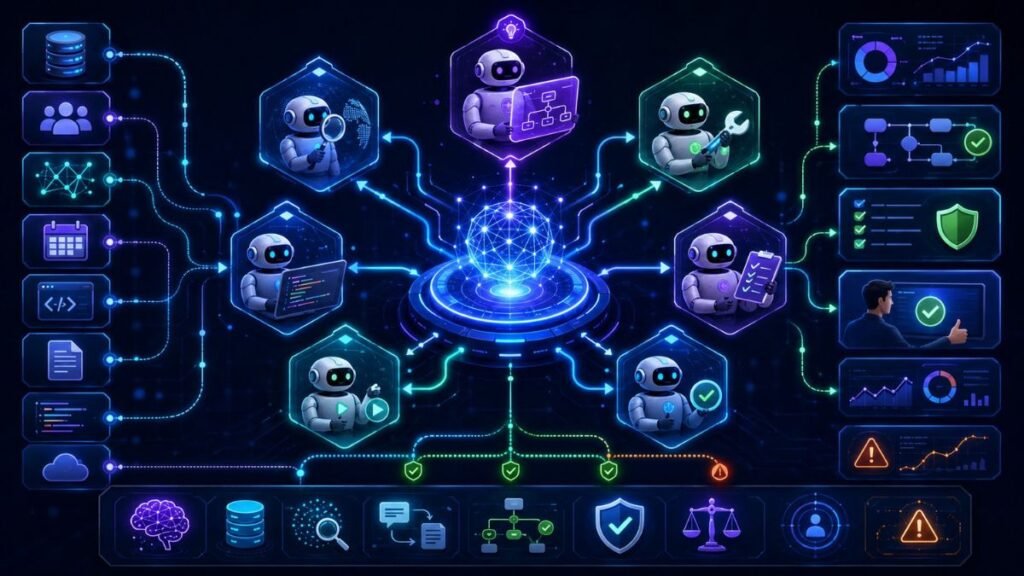
Agentic AI


Agentic AI: Guides, Use Cases, Frameworks & Trends | AIML Insights


Agentic AI is quickly becoming one of the most important topics in modern AI because it moves beyond simple prompting into planning, memory, tool use, orchestration, and action. In this category, AIML Insights covers practical guides on agentic AI architecture, single-agent and multi-agent systems, evaluation, observability, governance, security, frameworks, and real-world business use cases. Whether you are a beginner, developer, researcher, or decision-maker, these articles will help you understand how agentic systems work and where they fit in real production workflows.

Explore practical guides on agentic AI, including AI agents, orchestration, memory, planning, tool use, observability, evaluation, governance, frameworks, and real-world business use cases. This category covers how agentic systems work, where they create value, and what teams need to know before deploying them in production.

Stay informed. Stay ahead.


Agentic AI Design Patterns Explained: How to Build Reliable AI Agent Applications
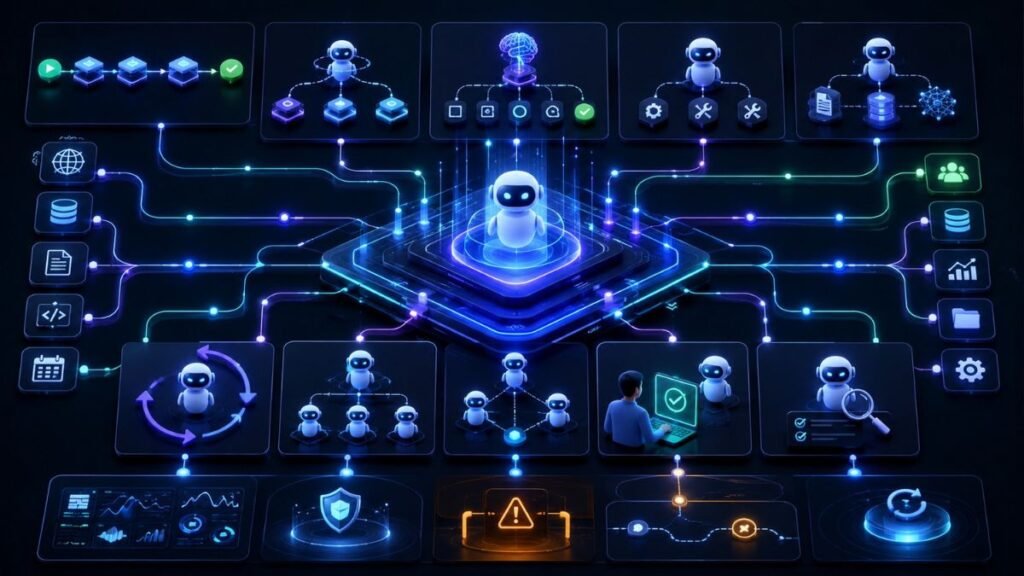
Agentic AI design patterns dashboard showing workflows, routers, planning loops, tools, multi-agent systems, human review, observability, and safety controls

Design Patterns for Building Agentic AI Applications: Workflows, Routers, Planning Loops, Tools, Memory, Multi-Agent Systems, Human Review, and Safety Controls Design patterns for building agentic AI applications are reusable architecture choices that help developers structure agents, workflows, tools, memory, handoffs, loops, and human review. They matter because agentic AI apps are harder than simple chatbots: […]

Agentic AI Design Patterns Explained: How to Build Reliable AI Agent Applications Read More »

How Long-Running Agentic AI Systems Stay on Track

how long-running agentic AI systems stay on track:Long-running agentic AI workflow showing state checkpoints, memory updates, tool calls, drift warnings, monitoring, recovery, and human approval

How Long-Running Agentic AI Systems Stay on Track: State, Checkpoints, Memory, Monitoring, Recovery, Human Review, and Safe Stopping Conditions Long-running agentic AI systems stay on track by preserving state, using checkpoints, managing memory, controlling context, monitoring traces, validating tool calls, limiting loops, recovering from failures, and escalating risky decisions to humans. Without these controls, long-running

How Long-Running Agentic AI Systems Stay on Track Read More »

Tool Use in Agentic AI: Functions, APIs, Actions

Tool Use in Agentic AI:Agentic AI tool use dashboard showing function calling, API connectors, databases, code tools, external actions, permissions, audit logs, and human approval

Tool Use in Agentic AI: Function Calling, APIs, External Actions, Tool Routing, Permissions, Risks, and Safe Workflow Design Tool use in agentic AI is how AI agents move from generating answers to performing useful work. Through function calling, APIs, databases, code tools, search, calendars, CRMs, and workflow systems, agents can retrieve data, update systems, trigger

Tool Use in Agentic AI: Functions, APIs, Actions Read More »

Memory in Agentic AI Systems Explained

Memory in Agentic AI Systems:Agentic AI memory architecture showing short-term context, long-term memory, retrieved documents, tool results, user preferences, and governance controls

Memory in Agentic AI Systems: Short-Term Context, Long-Term Memory, State, Retrieval, Personalization, Risks, and Design Patterns Memory in agentic AI systems is the mechanism that helps AI agents keep track of task context, previous steps, tool results, user preferences, and reusable knowledge. Short-term memory supports the current session or workflow. Long-term memory persists useful information

Memory in Agentic AI Systems Explained Read More »

The Core Building Blocks of an Agentic AI System

core building blocks of an agentic AI system: Agentic AI system architecture showing goals, context, memory, planning, tools, action, feedback, observability, safety, and human approval

The Core Building Blocks of an Agentic AI System: Goals, Context, Planning, Memory, Tools, Feedback, Observability, and Safety Controls The core building blocks of an agentic AI system include a goal layer, input or perception layer, context engine, memory, planning module, reasoning model, tool router, action executor, feedback loop, evaluation, observability, and safety controls. Together,

The Core Building Blocks of an Agentic AI System Read More »

Scroll to Top