
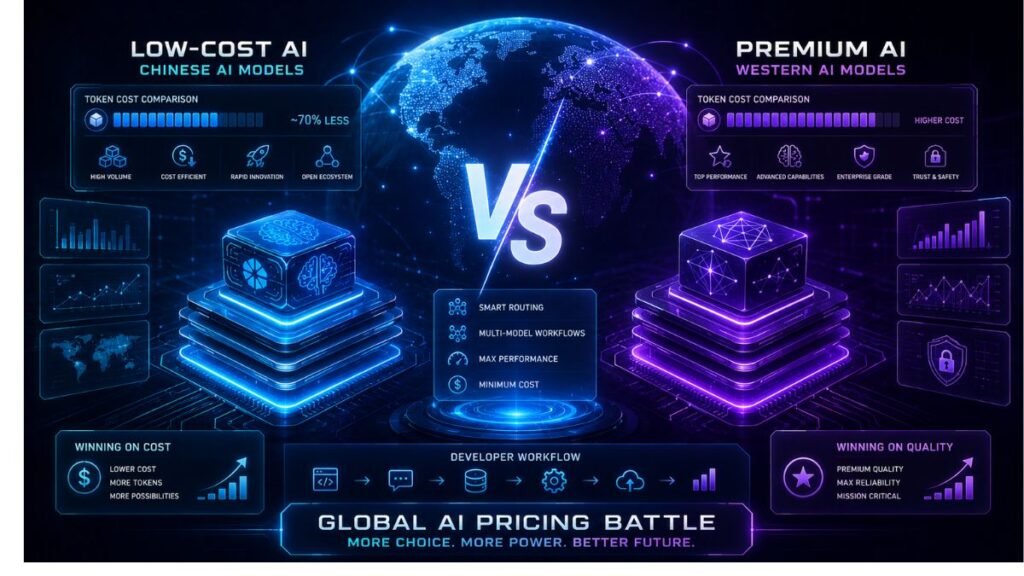
China’s cheap AI model race is becoming one of the biggest stories in artificial intelligence right now.
For the past year, many developers and businesses have treated premium Western AI models such as Claude, ChatGPT, and Gemini as the safest default choices. But Chinese AI labs are now pushing powerful models at much lower prices, and that is starting to change the conversation.
The question is no longer only “Which AI model is smartest?” It is also “Which AI model gives the best performance for the money?”
China’s Cheap AI Model Race Is Changing AI Pricing
The biggest reason Chinese AI models are getting attention is cost.
Reuters reported that Chinese models from companies such as DeepSeek, Alibaba’s Qwen, and Zhipu’s ChatGLM can cost 10 to 20 times less than U.S. counterparts, as Chinese AI companies use cost-effectiveness to expand global market share.
That price pressure matters because AI usage is no longer limited to casual chat.
Developers use AI for coding. Startups use AI for customer support. Creators use AI for scripts, images, and research. Businesses use AI to summarize documents, analyze data, write reports, and build internal tools.
When a team sends millions of tokens every month, model pricing becomes a serious business decision.
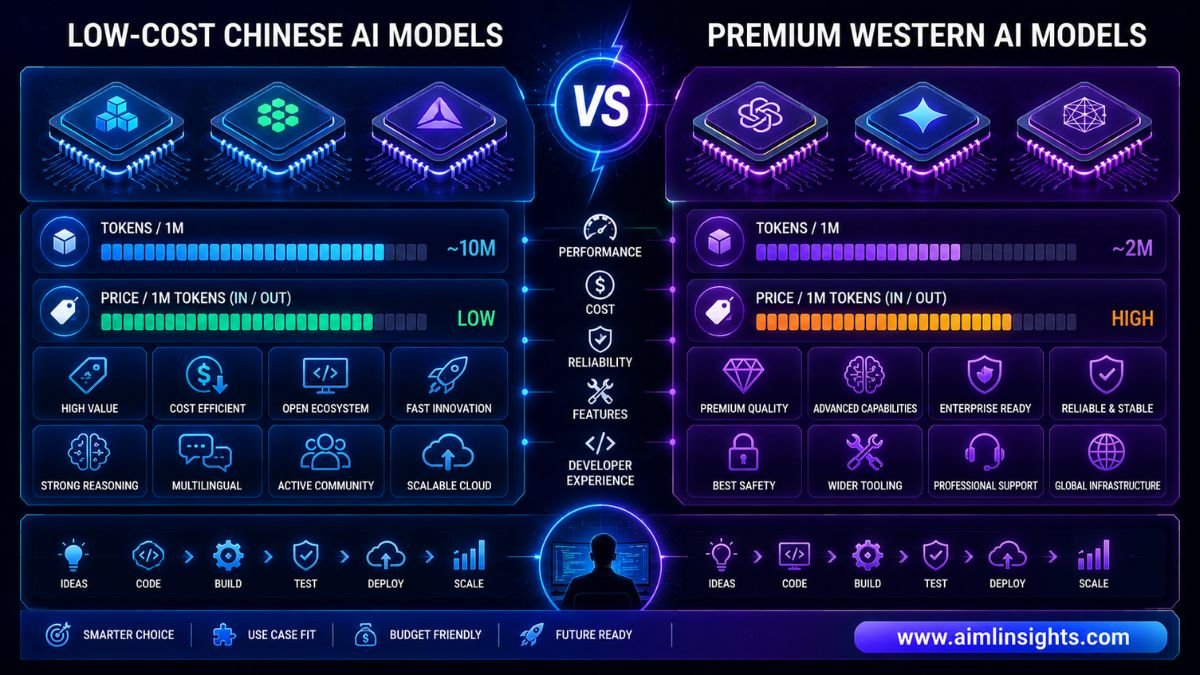
A cheaper model does not automatically mean a better model. But if the quality is good enough for many tasks, the cost difference can be hard to ignore.
Alibaba Qwen Is Becoming a Serious AI Platform
One of the biggest names in this shift is Alibaba Qwen.
Qwen is Alibaba Cloud’s large language model family, and it has been expanding across chat, coding, multimodal tasks, enterprise workflows, and e-commerce. Alibaba’s official Qwen page says Qwen3.7-Max is its latest proprietary model designed for the “agent era,” while Qwen3.7-Plus is positioned as a cost-effective model with text and image input support, coding ability, tool use, and productivity workflows.
That matters because Qwen is not just another chatbot. Alibaba is building it as a platform.
Reuters recently reported that Alibaba is preparing to integrate Qwen with Taobao so consumers can browse, compare, and buy products through conversations with an AI agent. The report said Qwen would have access to Taobao and Tmall’s catalog of more than 4 billion products, along with a skills library for logistics and after-sales services.
This shows the real direction of AI in China. AI models are being connected directly to commerce, shopping, sourcing, logistics, and business workflows.
Why Qwen Is Being Seen as a Claude Alternative
Claude has become popular with developers, writers, analysts, and teams because of its strong reasoning, long-context abilities, and coding performance. But price-sensitive users are now looking closely at Claude alternatives, especially when they need to run large workloads.
Alibaba Cloud’s model pricing page lists some Qwen Plus versions at $0.115 per million input tokens and $0.287 per million output tokens. It also shows low-cost Qwen Flash tiers for large-context use, with some input prices starting at just a few cents per million tokens depending on model and request size.
By comparison, Anthropic’s Claude pricing page lists Haiku at $1 per million input tokens and $5 per million output tokens, while Anthropic says Claude Opus 4.8 starts at $5 per million input tokens and $25 per million output tokens.
This is why the “cheap AI model” story matters. A business may not need the most expensive model for every task. It may use a premium model for high-stakes reasoning, but route simpler work to lower-cost models.
That is how AI model selection is changing.
What Makes Chinese AI Models So Cheap?
There are several reasons Chinese AI models are becoming cheaper.
First, domestic competition is intense. Reuters reported that Chinese firms offering open-source AI models have seen token prices drop sharply because of competition among leading tech companies.
Second, many Chinese AI labs are using open-weight or open-source strategies to gain adoption. Open models can spread faster because developers can test, fine-tune, and deploy them more flexibly.
Third, companies such as Alibaba have strong cloud and commerce ecosystems. That gives them a reason to offer cheaper AI models: the model may drive usage of cloud services, e-commerce tools, developer platforms, and business applications.
Fourth, some models use more efficient architectures. The Economic Times reported that Alibaba’s Qwen3.5 uses a mixture-of-experts-style approach where the model has more than 397 billion total parameters but activates only 17 billion parameters per response, making it faster and cheaper to run.
For beginners, this means the model does not use its full “brain” for every question. It activates only the most relevant parts, which can reduce compute costs.
Why This Matters for Developers
Developers may feel the impact first.
Coding, testing, documentation, debugging, and agent workflows can consume a lot of tokens. If a coding agent reads many files, writes code, checks errors, and repeats the process, the cost can rise quickly.
This is where a low-cost Chinese AI model can become attractive.
A developer could use Qwen or another cheaper model for routine coding help, documentation drafts, test generation, or simple refactoring. Then they could use Claude, ChatGPT, or another premium model for difficult architecture decisions, complex debugging, or sensitive production work.
This “model routing” approach may become common. Instead of using one AI model for everything, developers may choose different models based on cost, speed, privacy, and quality.
The winning workflow may not be “Claude vs Qwen.” It may be “Claude plus Qwen, used intelligently.”
Why Businesses Should Care About AI Model Pricing
For businesses, AI model pricing affects margins.
A customer support tool answering thousands of queries per day cannot ignore token costs. A legal document assistant, e-commerce recommendation engine, or enterprise search tool may process huge amounts of text.
If a cheaper model handles 70% of routine requests well, the savings can be significant.
This is why China’s cheap AI model race matters beyond developers. It affects SaaS pricing, customer support automation, internal knowledge tools, AI agents, and content workflows.
But businesses should avoid making decisions based only on listed API prices. A cheaper model may use more tokens, make more mistakes, or require extra verification. Stanford-linked research on reasoning model costs has warned that listed API prices can be an unreliable proxy for real task cost because models may consume very different amounts of “thinking” tokens.
The practical rule is simple: test total cost per completed task, not just price per million tokens.
The Bigger Trend: Agentic AI Is Driving Demand
The timing is important because AI is moving into agentic AI.
Agentic AI means systems that can plan, use tools, take steps, and work toward goals with less manual prompting. That can be useful for coding, research, business operations, shopping assistants, and workflow automation.
Alibaba’s Qwen strategy is moving in this direction. Reuters reported that Alibaba created a new AI-focused business group, combining Qwen and other AI units, with CEO Eddie Wu leading the group directly to coordinate AI work platforms for enterprises.
Alibaba’s planned Taobao integration also shows how agentic AI could move from answering questions to completing real shopping tasks.
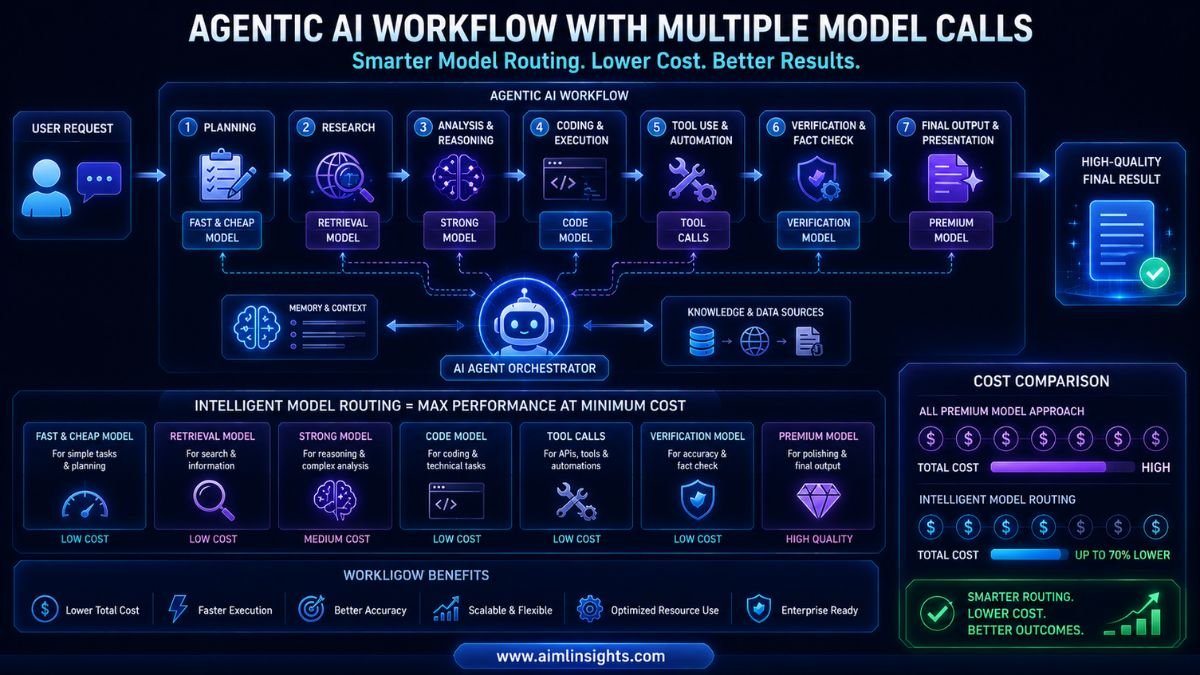
This is where low-cost models become powerful. Agents may need to run many steps. Every step costs tokens. Cheaper models can make agent workflows more practical for startups and small businesses.
Risks and Limitations Users Should Understand
Cheap AI is useful, but it is not risk-free.
First, model quality can vary by task. A model that performs well in coding may not be best for legal analysis, medical information, financial decisions, or creative writing.
Second, data privacy matters. Businesses should carefully review where data is processed, how it is stored, and whether the provider meets their compliance needs.
Third, geopolitical concerns can affect adoption. Reuters and other coverage have noted growing tension around Chinese and Western AI platforms, including restrictions and security concerns in both directions.
Fourth, benchmarks do not always reflect real work. A model may score well in tests but struggle with a company’s messy internal documents, unusual coding style, or niche business process.
The best approach is not blind trust. Users should test models on real tasks, review outputs, and keep humans in control of important decisions.
Simple Explanation for Beginners
Think of AI models like different types of workers.
Some are expensive experts. They are useful when the task is hard and accuracy matters.
Others are cheaper assistants. They may be very good for routine work such as summarizing, drafting, translating, coding small functions, or answering common questions.
China’s cheap AI model race is important because it gives users more low-cost options. That can make AI tools cheaper for businesses, developers, students, and creators.
But cheaper does not always mean better. The smart move is to match the model to the job.
What Comes Next
The next phase of AI competition will likely be about cost, agents, and distribution.
Alibaba is connecting Qwen to commerce. DeepSeek is pushing low-cost model competition. Zhipu and other Chinese labs are competing aggressively. Western companies such as Anthropic and OpenAI still lead in many premium workflows, but they are facing stronger price pressure.
For users, this is good news. More competition can mean cheaper tools, faster innovation, and more choices.
For AI companies, it is harder. They must prove why their models are worth premium prices.
Conclusion: Chinas Cheap AI Model Is Putting Pressure on Claude
China’s cheap AI model push is making Claude and other premium Western AI tools look more expensive, especially for high-volume users.
Alibaba Qwen, DeepSeek, and other Chinese AI models are changing the economics of artificial intelligence. They may not replace Claude for every task, but they are forcing developers and businesses to think more carefully about cost, performance, and model routing.
The biggest takeaway is simple: the future of AI may not belong to one model. It may belong to the teams that know when to use the expensive model, when to use the cheaper model, and how to combine both safely.
Key Takeaways
- China’s cheap AI model race is putting pressure on Western AI pricing.
- Reuters reports Chinese models such as DeepSeek, Qwen, and ChatGLM can cost 10 to 20 times less than U.S. counterparts.
- Alibaba Qwen is expanding from chatbot use into commerce, agents, coding, and productivity workflows.
- Qwen can be a Claude alternative for some lower-cost tasks, but not every use case.
- Businesses should compare total cost per completed task, not just token pricing.
- Agentic AI makes cheaper models more important because agents may run many steps.
- Users should review privacy, accuracy, compliance, and reliability before switching models.
Suggested Read:
- Latest AI News Today
- AI Agents Explained Simply
- OpenAI News: Latest ChatGPT Updates
- Claude AI Updates
- Google Gemini AI Updates
- Best AI Tools for Productivity
- AI Agents Are Becoming Digital Workers
FAQ: Chinas Cheap AI Model Is Putting Pressure on Claude
What is China’s cheap AI model?
China’s cheap AI model usually refers to low-cost models from Chinese AI labs such as Alibaba Qwen, DeepSeek, and Zhipu ChatGLM. These models are gaining attention because they can offer much lower token prices than many U.S. AI models.
Why are Chinese AI models cheaper than Claude?
Chinese AI models are cheaper because of intense domestic competition, open-source strategies, efficient architectures, and ecosystem-driven pricing. Reuters reported that Chinese AI token prices have dropped sharply as companies compete for global market share.
Is Qwen a Claude alternative?
Qwen can be a Claude alternative for some tasks, especially where cost matters, such as summarization, coding support, translation, product research, and routine automation. Claude may still be preferred for certain premium reasoning, writing, or enterprise workflows.
How does Alibaba Qwen compare with Claude?
Alibaba Qwen is generally positioned as a lower-cost model ecosystem with strong links to Alibaba Cloud and commerce. Claude is known for premium reasoning, writing, and coding use cases. The better choice depends on task quality, privacy needs, pricing, and workflow.
What is agentic AI?
Agentic AI refers to AI systems that can plan, use tools, take steps, and work toward a goal instead of only answering one prompt. This matters because cheaper models can make multi-step agent workflows more affordable.
Are cheap AI models good for developers?
Yes, cheap AI models can be useful for developers handling routine coding, documentation, testing, and code review. Developers should still test outputs carefully because low cost does not guarantee correctness.
What are the risks of using Chinese AI models?
The risks include data privacy concerns, compliance questions, geopolitical restrictions, variable quality, and overreliance on benchmark claims. Businesses should test models on real tasks before using them in production.
References: