

AI Agents Can Now Work for Hours: Codex, Claude, and Gemini Explained
AI agents can now work for hours, and that changes what people should expect from tools like OpenAI Codex, Claude Code, Claude Cowork, and Gemini Spark.
Until recently, most AI tools worked like chatbots. You asked a question, got an answer, and then had to keep prompting. Now, AI agents are starting to run longer tasks in the background, follow goals, use apps, manage files, and return finished work after extended periods.
This is one of the most important AI shifts happening right now: AI is moving from quick replies to long-running execution.
AI Agents Can Now Work for Hours, Not Just Answer Prompts
The biggest change is that AI agents are becoming more persistent.
A normal chatbot stops after one answer. A long-running AI agent can keep working toward a larger goal. That goal might be fixing a software bug, researching a topic, preparing a report, building a prototype, checking a codebase, or organizing work across different apps.
OpenAI’s Codex documentation explains this clearly. When Codex follows a goal, it can work independently for many hours without the user checking in, and it stops when it is confident it has reached the stopping condition. OpenAI describes /goal as a background task that does not need constant monitoring.
That is a major difference from traditional AI chat. The user is no longer managing every small step. Instead, the user defines the outcome, and the AI agent plans and executes more of the work.
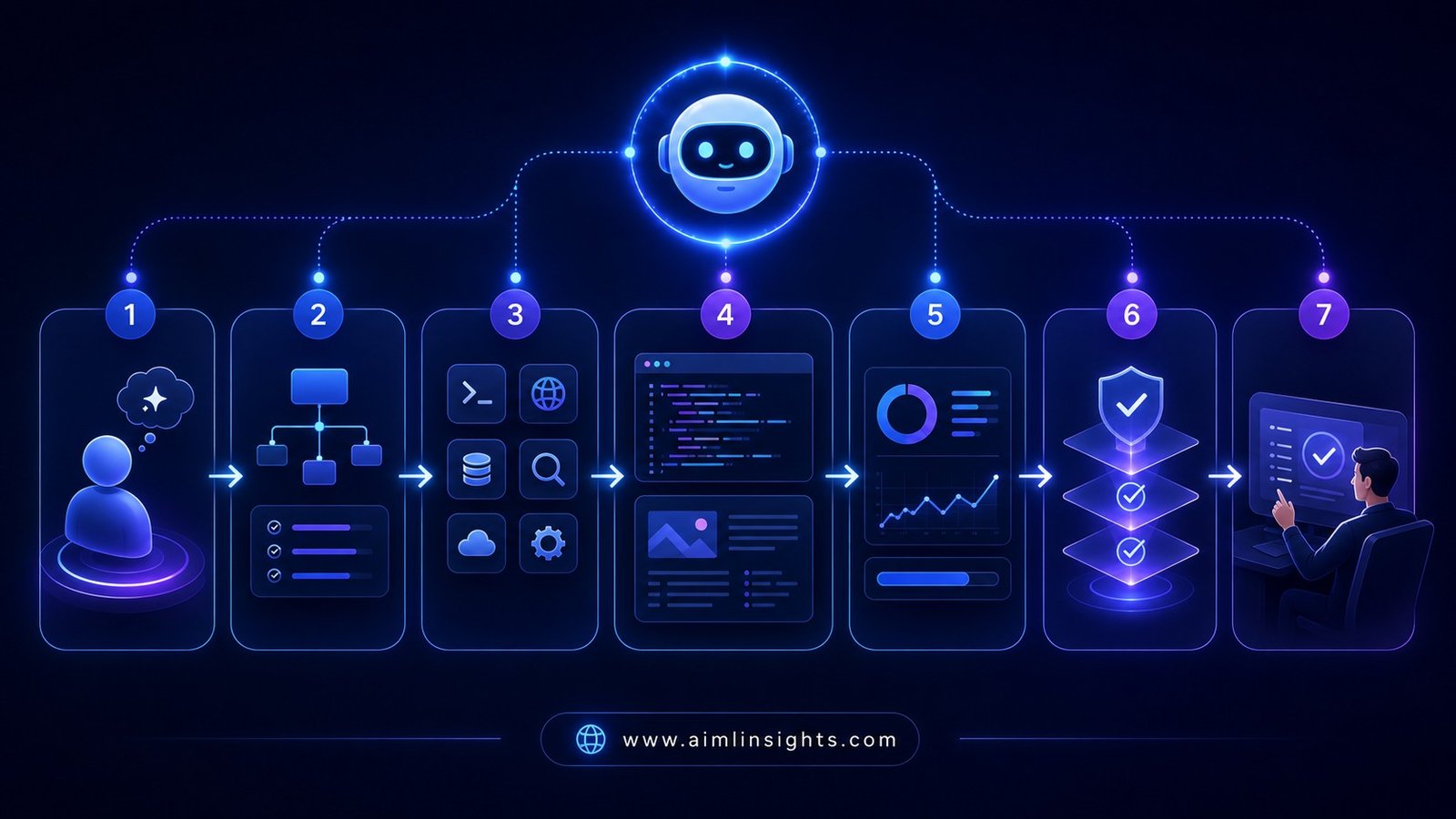
For developers, this can mean longer coding tasks. For businesses, it can mean automated research or workflow support. For creators, it can mean help turning scattered ideas into structured outputs.
OpenAI Codex Goal Mode Shows Where AI Work Is Heading
OpenAI Codex is becoming more than a coding assistant.
The new Codex goal mode matters because it changes the relationship between the user and the agent. Instead of saying, “write this function,” a user can give Codex a broader objective such as “investigate this bug, test possible fixes, and prepare a pull request.”
That is why Codex goal mode is important for developers and technical teams. It encourages outcome-based work, not command-by-command prompting.
OpenAI has also added Appshots, a feature that lets Mac users send context from any open app or window into Codex using a hotkey. OpenAI’s documentation says users can open the Codex app, choose the app or window they want to share, press both Command keys or a custom hotkey, and ask Codex to perform a task with that appshot.
This makes Codex feel closer to a work assistant that understands what you are looking at on your computer.
For example, a developer could show Codex an error screen and ask it to investigate. A product manager could show a document and ask for a structured task list. A user could bring in context from a webpage, app, or internal tool without manually copying everything.
The trend is clear: AI agents are becoming more context-aware and more capable of acting across workflows.
Claude Code Is Moving Toward Parallel AI Work
Claude Code is also becoming more agentic.
Anthropic’s Claude Code desktop app gives users a graphical interface for running multiple sessions side by side. Its official documentation describes features such as a sidebar for managing parallel work, an integrated terminal and file editor, visual diff review, live app preview, GitHub pull request monitoring, auto-merge, and scheduled tasks.
This matters because serious work is rarely one linear task.
A developer may need one agent checking a bug, another reviewing a pull request, another improving documentation, and another testing the app preview. A researcher may need multiple threads collecting information, organizing notes, and preparing a final summary.
Parallel AI work is one reason agent platforms are starting to feel like operating systems for productivity.
Instead of having one assistant answer one question, users may soon manage several specialized agents working at the same time.
Claude Cowork Expands the Idea Beyond Coding
Claude Cowork shows that Anthropic is not limiting agents to software development.
Anthropic describes Claude Cowork as an agentic AI system for knowledge work. It says users can give Claude a goal, and Claude works on the user’s computer, local files, and applications to return a finished deliverable.
That is important because long-running AI agents are not only for developers.
Knowledge workers also deal with messy, repetitive, multi-step work. This includes reading files, preparing documents, creating reports, analyzing notes, updating spreadsheets, and summarizing research.
Claude Cowork points toward a future where AI agents can operate across normal desktop work, not just code repositories.
The challenge is trust. If an AI agent can access files and applications, users need strong permissions, clear activity logs, and human approval for sensitive actions.
Gemini Spark Shows the 24/7 Agent Trend
Google is also entering the long-running agent race through Gemini Spark.
Google describes Gemini Spark as a 24/7 personal AI agent that can work in the background even when a user’s phone or laptop is turned off. Google says Spark operates autonomously but under the user’s direction, and it is designed to check before taking major actions.
This is a big signal.
AI agents are moving from “open this app and ask a question” to “assign a task and let it keep working.” That could include tracking opportunities, organizing plans, preparing summaries, monitoring updates, or helping with recurring tasks.
Google’s Gemini app update also describes Gemini Spark as a 24/7 personal AI agent designed to proactively manage tasks and help users navigate their digital lives under their direction.
For users, the idea is attractive. For privacy and safety, it also requires caution. A 24/7 AI agent needs clear boundaries around what it can see, what it can change, and when it must ask permission.
The AI Talent Race Is Heating Up Too
The agent platform race is not only about product features. It is also about talent.
Reuters reported that Andrej Karpathy, a co-founder of OpenAI and former Tesla AI executive, joined Anthropic’s pretraining team. The move is significant because Karpathy is one of the most recognized AI researchers in the field, and his move highlights the competition among frontier AI labs.
This matters because better agents depend on better models.
Long-running agents need stronger reasoning, better planning, improved tool use, safer permissions, and more reliable execution. The companies building these systems are competing not only for users, but also for researchers and engineers who can improve the models behind them.
That competition is one reason AI agent platforms are improving so quickly.
Why Long-Running AI Agents Matter for Developers
Developers may feel the impact first.
Coding is full of tasks that take time but follow clear patterns: debugging, writing tests, refactoring code, checking documentation, reviewing pull requests, and building small features.
Long-running AI agents can help by doing the slow first pass.
For example, instead of asking an AI tool for one code snippet, a developer can assign a broader task: inspect the project, identify the issue, propose a fix, run tests, and summarize what changed.
This does not remove the developer. It changes the developer’s role.
The human becomes more like a reviewer, architect, and decision-maker. The AI agent becomes a tireless assistant that handles repetitive investigation and execution.
But the human still needs to verify the final result. AI-generated code can contain bugs, security problems, or wrong assumptions.
What This Means for Businesses
For businesses, long-running AI agents could change productivity.
A company may use agents for market research, customer support preparation, internal documentation, software maintenance, competitor monitoring, or weekly reporting.
The real advantage is not only speed. It is continuity.
A chatbot waits for input. A long-running AI agent can keep working on a defined task, update progress, and return with a more complete deliverable.
This could help small teams compete with larger teams. A startup may not need a full operations team for every recurring report. A solo founder may use agents to monitor leads, prepare outreach drafts, or organize customer feedback.
But businesses should be careful. Agents need access controls, approval steps, and clear rules. They should not be allowed to send emails, change production systems, access financial information, or approve transactions without human oversight.
Simple Explanation for Beginners
Think of a normal chatbot like a helpful person at a desk. You ask a question, and it answers.
Think of an AI agent like a worker with a task list. You give it a goal, and it tries to complete the steps.
A long-running AI agent is like giving that worker a bigger project and saying, “Work on this in the background and come back when you have something useful.”
That is why tools like Codex, Claude, and Gemini Spark are important. They are not only answering questions. They are starting to work across time, apps, files, and tasks.
Benefits, Risks, and Limitations
The benefits are clear.
Long-running AI agents can save time, reduce repetitive work, help developers move faster, support research, and make small teams more productive.
But the risks are also serious.
Agents can misunderstand goals. They can make changes users did not expect. They can use outdated or incorrect information. They can create security issues in code. They can expose private data if permissions are too broad.
There is also a reliability problem. An AI agent that runs for hours may still produce an incorrect result. Longer work does not automatically mean better work.
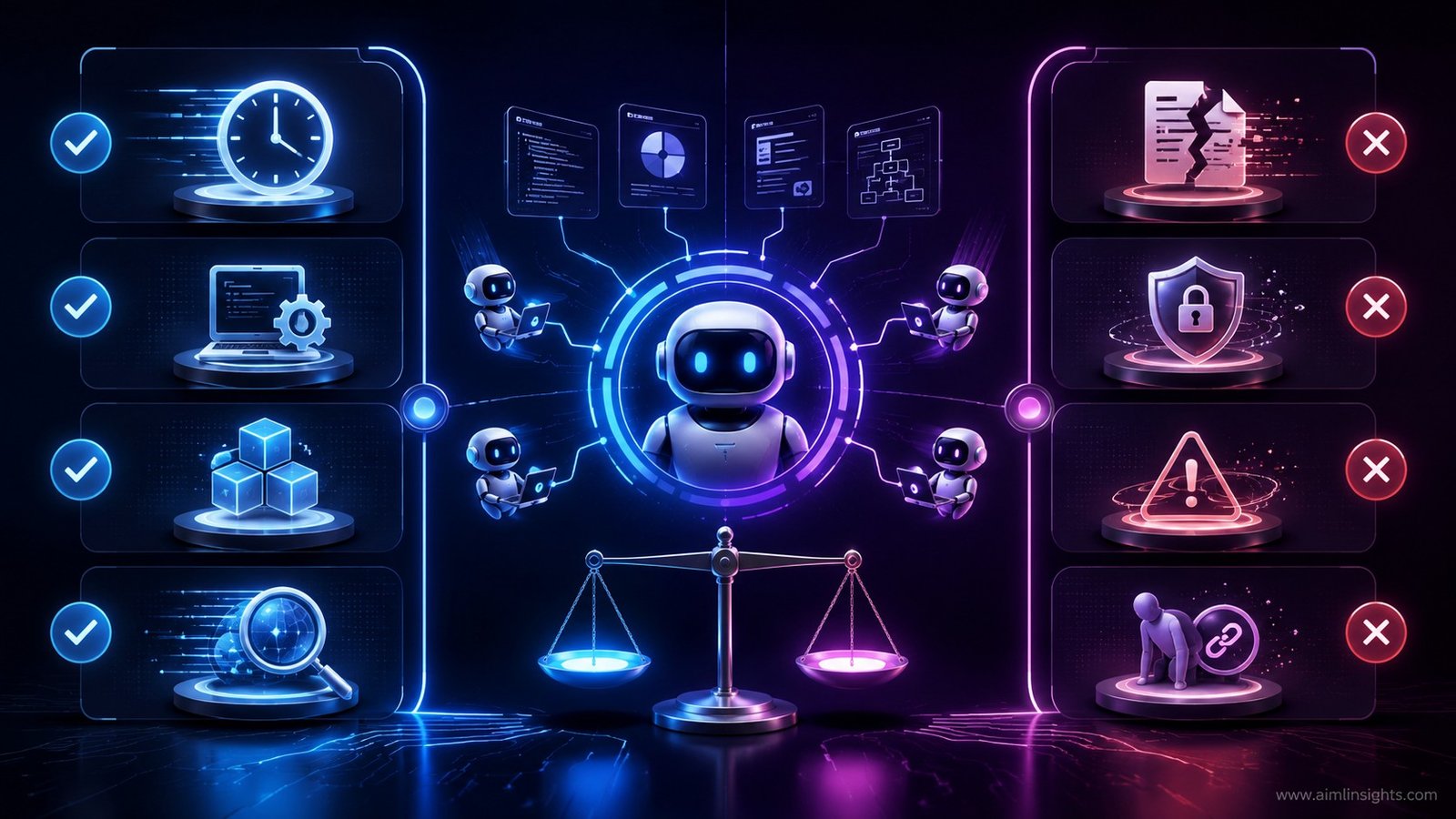
The best approach is human plus AI. Let agents do the heavy lifting, but keep people responsible for review, approval, and final decisions.
What Comes Next
The next phase of AI agent platforms will likely focus on three things: longer task duration, better app connections, and safer control systems.
OpenAI is improving Codex as a coding and work platform. Anthropic is expanding Claude into desktop and knowledge work. Google is pushing Gemini Spark as a 24/7 personal agent.
The direction is clear. AI agents are becoming background workers.
For users, the smartest move is to learn how to assign clear goals, set limits, review outputs, and protect sensitive data.
Conclusion: AI Agents Can Now Work for Hours
AI agents can now work for hours, and that is a major shift for coding, business, research, and everyday productivity.
OpenAI Codex goal mode shows how agents can follow larger outcomes. Claude Code and Claude Cowork show how AI can support parallel work and knowledge tasks. Gemini Spark shows the move toward 24/7 personal AI agents.
The future of AI may not be one chatbot waiting for prompts. It may be a set of agents working quietly in the background while humans guide, review, and approve the important decisions.
That future is powerful, but it must be used carefully.
Key Takeaways
- AI agents are moving from short replies to long-running background tasks.
- OpenAI Codex goal mode allows agents to work independently for many hours.
- Codex Appshots helps users bring real app context into AI tasks.
- Claude Code desktop supports multiple sessions, parallel work, app preview, and scheduled tasks.
- Claude Cowork expands agents into broader knowledge work.
- Gemini Spark shows the rise of 24/7 personal AI agents.
- Human review, permissions, and safety controls remain essential.
Suggested Read:
- AI Agents Explained Simply
- OpenAI News: Latest ChatGPT Updates
- Claude AI Updates
- Google Gemini AI Updates
- AI Agents Are Becoming Digital Workers
FAQ: AI Agents Can Now Work for Hours
What are long-running AI agents?
Long-running AI agents are AI systems that can work toward a larger goal for an extended period instead of only answering one prompt at a time.
How does Codex goal mode work?
Codex goal mode lets users define a larger objective. OpenAI says Codex can then work independently for many hours and stop when it believes the goal has been reached.
Can AI agents work for hours?
Yes. OpenAI’s Codex documentation says Codex can work independently for many hours when following a goal. Google also describes Gemini Spark as a 24/7 personal AI agent that can work in the background.
What is Claude Cowork?
Claude Cowork is Anthropic’s agentic AI system for knowledge work. Anthropic says users can give it a goal, and Claude can work on local files and applications to return a finished deliverable.
What is Gemini Spark?
Gemini Spark is Google’s 24/7 personal AI agent designed to work in the background under user direction and check before taking major actions.
How will AI agents change work?
AI agents may help people delegate repetitive tasks, run research, support coding, prepare reports, and automate parts of workflows. Human review will still be needed for important decisions.
Are autonomous AI agents safe to use?
They can be useful, but users should set permissions carefully, review outputs, avoid giving unnecessary access, and require approval for sensitive actions.
Refrences: