Blog

Your blog category

Document Understanding AI Explained Simply

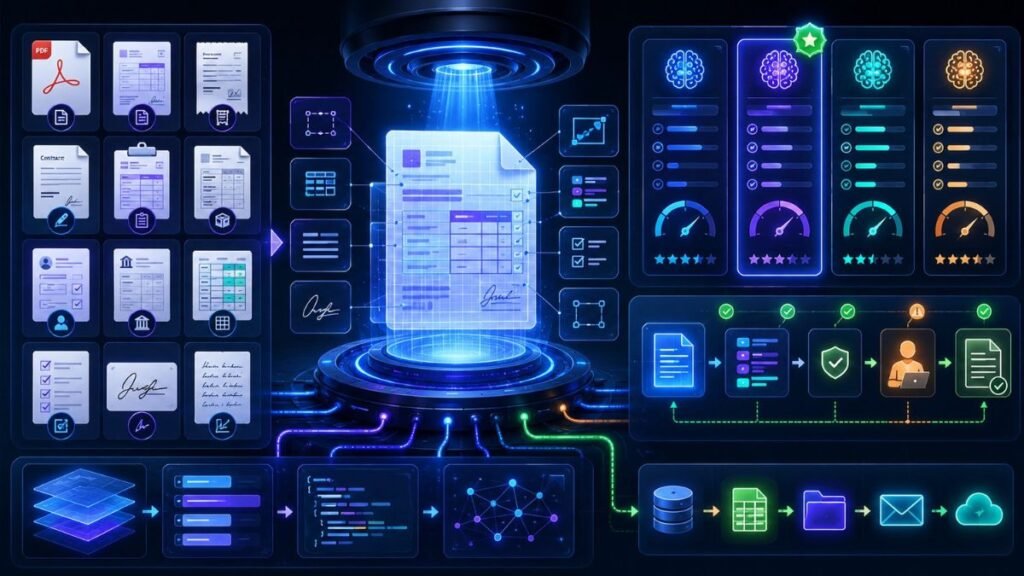
Document understanding AI workflow showing PDFs, scanned forms, OCR extraction, layout analysis, tables, fields, and structured data output

Document Understanding AI Explained: How AI Reads, Extracts, and Interprets Documents Document understanding AI is technology that reads, extracts, structures, and interprets information from documents such as PDFs, forms, invoices, receipts, contracts, scanned files, and reports. Unlike basic OCR, modern document AI can understand layout, tables, key-value pairs, entities, and business context. In Simple Terms […]

Document Understanding AI Explained Simply Read More »

RAG With PDFs: Complete Guide to PDF AI Retrieval Systems

RAG with PDFs architecture showing semantic document retrieval, vector databases, embeddings, and grounded AI generation

RAG With PDFs: How to Build AI Systems That Understand Documents Modern enterprises manage enormous collections of PDF documents every day. These include: contracts policies compliance reports research papers invoices manuals healthcare records technical documentation financial reports legal documents As organizations adopt AI systems, one major challenge quickly appears: Large Language Models cannot reliably understand

RAG With PDFs: Complete Guide to PDF AI Retrieval Systems Read More »

RAG vs Tool Calling: Complete Enterprise AI Architecture Guide

RAG vs tool calling comparison showing semantic retrieval systems, AI agents, API orchestration, vector databases, and grounded AI generation

RAG vs Tool Calling: Which AI Architecture Works Better? Modern enterprise AI systems are evolving rapidly beyond simple chatbots and standalone Large Language Models. Organizations increasingly deploy advanced AI architectures across: enterprise AI assistants autonomous AI agents customer support copilots research automation systems enterprise workflow orchestration AI engineering assistants healthcare AI systems intelligent enterprise search

RAG vs Tool Calling: Complete Enterprise AI Architecture Guide Read More »

Agentic AI Architecture: Components, Workflow, Tools, Memory, and Safety

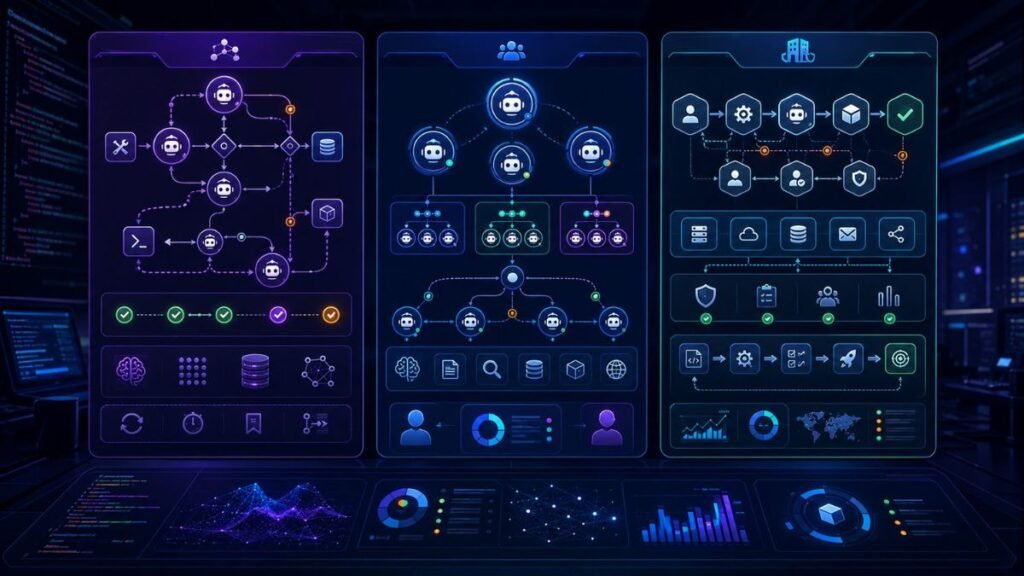
Agentic AI architecture: Agentic AI architecture diagram showing perception, planning, memory, tool use, action, feedback, evaluation, and human approval

Agentic AI Architecture Explained Simply Agentic AI architecture is the design of an AI system that can receive a goal, understand context, plan steps, use memory, call tools, take actions, check results, and escalate when needed. It is the structure that turns an AI model from a passive responder into a controlled task-completing system. In

Agentic AI Architecture: Components, Workflow, Tools, Memory, and Safety Read More »

Image to Text AI Explained: OCR and VLM Guide

Image to text AI workflow showing screenshots, scanned documents, receipts, forms, OCR extraction, text recognition, and document understanding

Image to Text AI Explained: How AI Reads and Converts Images Into Text Image to text AI is technology that extracts readable text from images, screenshots, scanned documents, forms, labels, receipts, and visual files. Traditional systems use OCR, while newer multimodal AI systems can also understand layout, context, tables, and visual meaning beyond simple character

Image to Text AI Explained: OCR and VLM Guide Read More »

RAG vs Prompt Engineering: Complete Enterprise AI Optimization Guide

RAG vs prompt engineering comparison showing semantic retrieval systems, prompt optimization workflows, vector databases, and grounded AI generation

RAG vs Prompt Engineering: Which AI Optimization Method Works Better? Large Language Models changed enterprise AI by enabling systems capable of: conversational AI enterprise search document summarization coding assistance customer support automation workflow orchestration research automation intelligent reasoning However, organizations quickly realized something important: raw LLM performance alone is often not enough for production-grade AI

RAG vs Prompt Engineering: Complete Enterprise AI Optimization Guide Read More »

LLM Plus RAG vs Standalone LLM: Complete AI Architecture Guide

LLM plus RAG vs standalone LLM comparison showing semantic retrieval systems, grounded AI generation, vector databases, and hallucination reduction

LLM Plus RAG vs Standalone LLM: Which AI Architecture Works Better? Large Language Models transformed enterprise AI by enabling systems capable of: conversational AI document summarization coding assistance customer support automation enterprise search research automation workflow orchestration intelligent reasoning However, organizations quickly discovered a major limitation with standalone LLMs: they often hallucinate and lack access

LLM Plus RAG vs Standalone LLM: Complete AI Architecture Guide Read More »

Agentic AI vs Generative AI: Key Differences

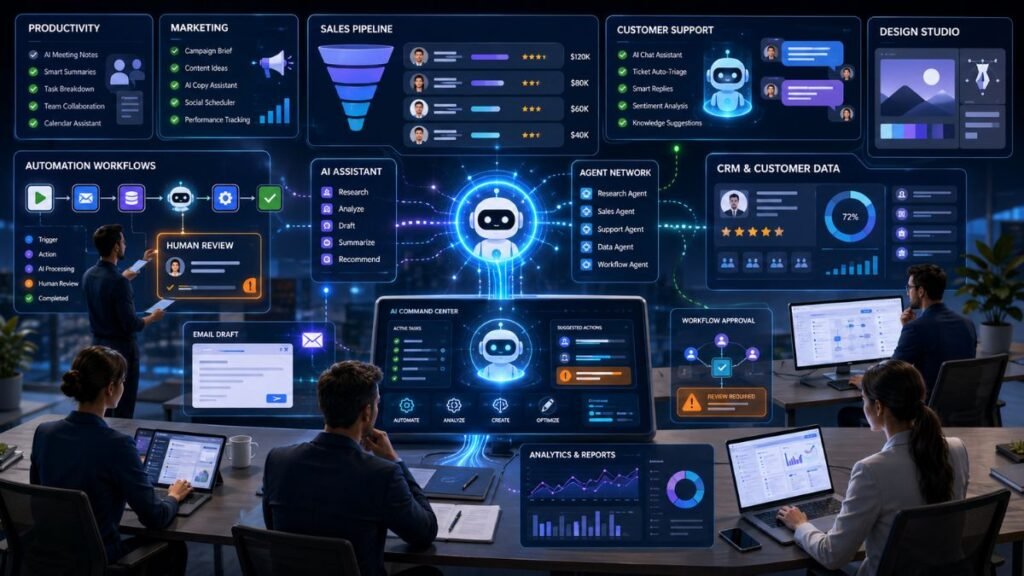
Agentic AI vs generative AI : Agentic AI vs generative AI comparison showing generative AI creating content and agentic AI planning tasks, using tools, and completing workflows

Agentic AI vs Generative AI: What’s the Difference? Agentic AI vs generative AI is the difference between AI that mainly creates content and AI that can pursue goals through actions. Generative AI writes, summarizes, codes, or creates images from prompts. Agentic AI plans steps, uses tools, checks progress, and completes workflows with limited human supervision.

Agentic AI vs Generative AI: Key Differences Read More »

Scroll to Top