How to Choose the Right Agentic AI Framework: A Practical Developer Guide

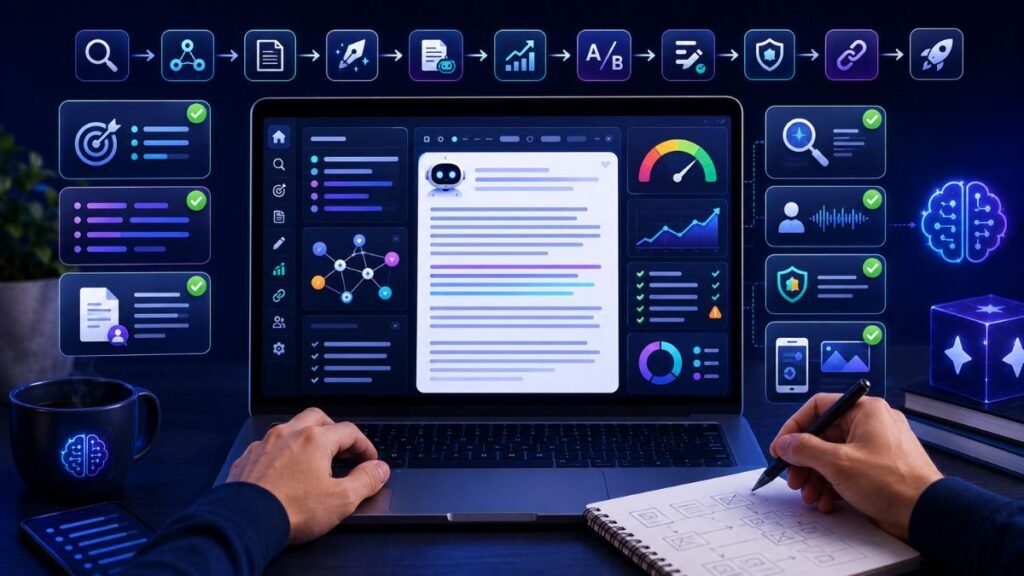
How to Choose the Right Agentic AI Framework: Agentic AI framework selection dashboard showing agents, tools, memory, RAG, orchestration, observability, security, and deployment criteria

How to Choose the Right Agentic AI Framework How to choose the right agentic AI framework depends on what your agent must do: follow a fixed workflow, use tools, retrieve documents, remember context, coordinate multiple agents, pause for human approval, or run in production. The best framework is the one that matches your workflow complexity, […]

How to Choose the Right Agentic AI Framework: A Practical Developer Guide Read More »

Multimodal AI in Customer Support: Use Cases and Benefits

Multimodal AI in customer support visual showing chat, voice calls, screenshots, product images, support tickets, customer data, and AI agent workflows

Multimodal AI in Customer Support: How AI Handles Text, Voice, Screenshots, and Video Multimodal AI in customer support uses text, voice, screenshots, product photos, videos, tickets, customer history, and knowledge-base content together to understand customer problems more clearly. Instead of forcing users to explain everything in words, multimodal support AI lets customers show, speak, upload,

Multimodal AI in Customer Support: Use Cases and Benefits Read More »

Multimodal AI in Education: Use Cases and Risks

Multimodal AI in education visual showing text lessons, diagrams, voice inputs, videos, student dashboards, AI tutors, and interactive learning workflows

Multimodal AI in Education: How AI Supports Visual, Audio, and Interactive Learning Multimodal AI in education uses text, images, voice, video, diagrams, documents, quizzes, and learning data together to support teaching and learning. Instead of only answering typed questions, it can explain a diagram, summarize a lecture, listen to a spoken question, analyze notes, and

Multimodal AI in Education: Use Cases and Risks Read More »

Best Agentic AI Frameworks for Developers in 2026

Best Agentic AI Frameworks: Agentic AI frameworks comparison dashboard showing AI agents, tools, memory, RAG, multi-agent orchestration, observability, evaluation, and deployment workflows

Best Agentic AI Frameworks for Developers: Tools for Building AI Agents in 2026 The best agentic AI frameworks in 2026 help developers build AI agents that can plan, use tools, remember context, retrieve data, collaborate, and run safely in production. Top choices include LangGraph, OpenAI Agents SDK, Google ADK, Microsoft Agent Framework, CrewAI, LlamaIndex, Haystack,

Best Agentic AI Frameworks for Developers in 2026 Read More »

Agentic AI Security Risks Explained

Agentic AI Security Risks Explained: Agentic AI security dashboard showing prompt injection, tool misuse, data leakage, agent identity, access control, monitoring, and human approval

Agentic AI Security Risks You Should Understand Agentic AI security risks are different from ordinary chatbot risks because AI agents can use tools, access data, call APIs, remember context, browse websites, and take actions. The biggest risks include prompt injection, tool misuse, privilege abuse, data leakage, memory poisoning, unsafe autonomy, weak observability, and poor accountability.

Agentic AI Security Risks Explained Read More »

Multimodal AI in Retail: Use Cases and Benefits

Multimodal AI in retail visual showing product images, voice search, customer data, shelf cameras, smart stores, visual search, and AI shopping assistants

Multimodal AI in Retail: How AI Combines Images, Text, Voice, and Customer Data Multimodal AI in retail combines product images, text searches, voice requests, customer behavior, inventory data, shelf visuals, reviews, receipts, and support messages to create smarter shopping experiences. Retailers use it for visual search, AI shopping assistants, personalization, inventory monitoring, customer support, fraud

Multimodal AI in Retail: Use Cases and Benefits Read More »

Multimodal AI in Healthcare: Use Cases and Risks

Multimodal AI in healthcare visual showing medical scans, clinical notes, lab results, voice data, patient records, and AI decision support

Multimodal AI in Healthcare: How AI Combines Medical Images, Records, Voice, and Patient Data Multimodal AI in healthcare uses multiple types of clinical data together, such as medical images, doctor notes, lab results, patient history, voice recordings, and sensor data. The goal is not to replace clinicians, but to help healthcare teams connect scattered information

Multimodal AI in Healthcare: Use Cases and Risks Read More »

RAG Security Risks: Threats, Attacks, and Protection Guide

RAG security risks architecture showing prompt injection attacks, vector database threats, semantic retrieval vulnerabilities, and enterprise AI protection

RAG Security Risks: Hidden Threats in Retrieval-Augmented Generation Systems Retrieval-Augmented Generation (RAG) has rapidly become one of the most important architectures in modern AI systems. Organizations increasingly use RAG for: enterprise search AI copilots customer support assistants healthcare retrieval financial intelligence legal AI systems document intelligence operational knowledge systems AI analytics assistants RAG improves Large

RAG Security Risks: Threats, Attacks, and Protection Guide Read More »

RAG Cost Optimization: Reduce Production AI Costs

RAG cost optimization visual showing vector database tuning, caching, LLM inference savings, and enterprise AI infrastructure

RAG Cost Optimization: How to Reduce AI Retrieval Costs Without Losing Quality Retrieval-Augmented Generation is powerful, but production RAG systems can become expensive quickly. Costs come from embeddings, vector databases, reranking, storage, retrieval calls, context tokens, LLM inference, monitoring, and cloud infrastructure. RAG cost optimization helps teams reduce waste while keeping retrieval quality, answer faithfulness,

RAG Cost Optimization: Reduce Production AI Costs Read More »

Agentic AI Governance: Risks and Controls

Agentic AI Governance : Agentic AI governance dashboard showing AI agent risks, controls, permissions, human approval, audit logs, monitoring, and accountability checks

Agentic AI Governance: Risks, Controls, and Accountability Agentic AI governance is the set of policies, controls, approvals, monitoring practices, and accountability rules used to manage AI agents safely. It matters because agentic AI systems can plan, use tools, access data, call APIs, update workflows, and take actions that may affect users, customers, systems, or business

Agentic AI Governance: Risks and Controls Read More »

Scroll to Top