Best Free AI Tools in 2026: 12 Useful Picks to Start With

Best free AI tools in 2026 grouped by writing research design and productivity

Best Free AI Tools in 2026 Optimizing your daily workflow requires a deliberate shift from fragmented, manual task execution to integrated machine assistance. Staying aligned with the latest ai productivity tools updates 2026 brings to the market ensures you don’t fall behind the corporate software adoption curve. In this guide, we evaluate the absolute best […]

Best Free AI Tools in 2026: 12 Useful Picks to Start With Read More »

How LLMs Work: Tokens in the context of large language models training

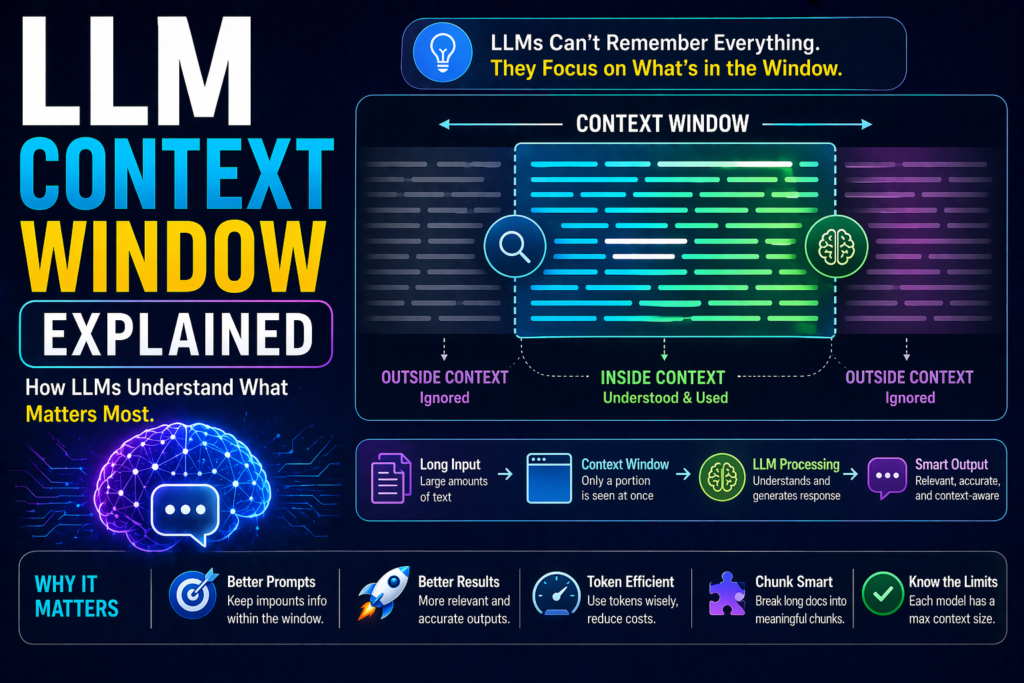
Diagram showing how LLMs work with tokens context and inference

How LLMs Work: Tokens, Context, and Inference Large language models (LLMs) work by turning text into tokens, reading those tokens within a limited context window, and predicting what token should come next. That prediction process is called inference. In simple terms, an LLM does not retrieve meaning the way a person does. It processes patterns

How LLMs Work: Tokens in the context of large language models training Read More »

10 Best Prompt Templates for Summarization and Research With Examples

Best Prompt templates for summarization and research: Best prompt engineering templates for summarization and research paper summary templates.

Best Prompt Templates for Summarization and Research The best prompt templates for summarization and research help AI turn messy information into something usable. A strong template does not just ask for a summary. It defines the goal, audience, depth, format, and limits. That is what makes the output more reliable for study notes, literature reviews,

10 Best Prompt Templates for Summarization and Research With Examples Read More »

RAG vs Fine-Tuning: Which One Should You Use in AI?

RAG vs fine-tuning comparison diagram for AI systems

RAG vs Fine-Tuning: Which One Should You Use? RAG and fine-tuning solve different AI problems. RAG improves answers by retrieving relevant external information before generation, while fine-tuning changes the model’s behavior through additional training. In simple terms, choose RAG when your system needs access to changing or private knowledge, and choose fine-tuning when you need

RAG vs Fine-Tuning: Which One Should You Use in AI? Read More »

Open Source LLMs vs Closed Models: Key Differences Explained

Open source LLMs vs closed models: open-weight model versus hosted closed API

Open Source LLMs vs Closed Models Open source LLMs and closed models solve different problems. In general, open-weight models give you more control, customization, and deployment flexibility, while closed models usually offer easier access, strong managed infrastructure, and faster path-to-production through hosted APIs. In 2026, that trade-off matters more than ever because both camps are

Open Source LLMs vs Closed Models: Key Differences Explained Read More »

What Is a Large Language Model? Explained Simply for Beginners

what is a large language model: LLM pipeline for beginner understanding

What Is a Large Language Model? Explained Simply The field of artificial intelligence is moving forward at an unprecedented pace, driven by software systems that talk, reason, and draft documents like humans. If you are entering this technical space for the first time, securing the official full name and definition of llm in ai ml

What Is a Large Language Model? Explained Simply for Beginners Read More »

Scroll to Top