RAG vs Database Lookup: Complete Enterprise AI Retrieval Guide

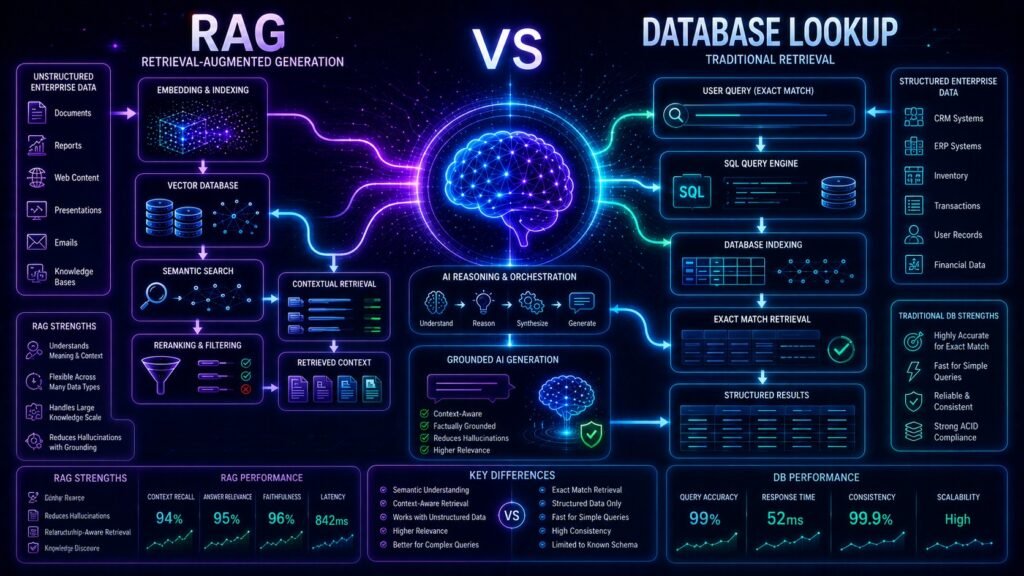
RAG vs database lookup comparison showing semantic retrieval systems, SQL databases, vector databases, and enterprise AI architectures

Modern enterprise AI systems increasingly depend on intelligent retrieval architectures to power: AI assistants enterprise search systems customer support copilots document intelligence platforms healthcare AI systems legal retrieval systems ecommerce AI platforms workflow automation systems However, as organizations scale AI adoption, a major architectural question continues to appear: Should you use Retrieval-Augmented Generation (RAG) or […]

RAG vs Database Lookup: Complete Enterprise AI Retrieval Guide Read More »
Best AI Tools for Product Marketing in 2026

The best AI tools for product marketing help PMMs research buyers, analyze competitors, sharpen positioning, write launch messaging, create sales enablement assets, repurpose campaigns, and connect GTM feedback back into strategy. The right stack is not one generic chatbot. It is a workflow that supports research, messaging, launch execution, and sales alignment. In Simple Terms

Best AI Tools for Product Marketing in 2026 Read More »

Agentic RAG Explained: Complete Guide to Autonomous AI Retrieval

Agentic RAG explained architecture showing autonomous AI agents, semantic retrieval systems, vector databases, and grounded AI reasoning workflows

Modern AI systems are evolving far beyond simple chatbots and static retrieval pipelines. Organizations increasingly deploy intelligent AI architectures across: enterprise AI assistants customer support copilots autonomous research systems software engineering agents legal AI platforms healthcare AI systems AI workflow orchestration systems enterprise automation platforms However, as enterprise AI becomes more sophisticated, traditional Retrieval-Augmented Generation

Agentic RAG Explained: Complete Guide to Autonomous AI Retrieval Read More »

Multimodal Reasoning Explained: How AI Thinks Across Data

Multimodal reasoning visual showing AI connecting text, images, audio, video, documents, charts, embeddings, and reasoning paths into one answer

Multimodal reasoning is the AI ability to connect information from different data types, such as text, images, audio, video, documents, and charts, to reach a more useful conclusion. It goes beyond recognizing inputs separately and focuses on reasoning across them together. In Simple Terms Multimodal reasoning means an AI system can combine clues from different

Multimodal Reasoning Explained: How AI Thinks Across Data Read More »

Multimodal Agents Explained: AI That Sees, Hears, and Acts

Multimodal agents visual showing AI processing text, images, audio, video, documents, memory, planning, tools, and actions in one workflow

Multimodal agents are AI systems that can understand multiple data types, reason over them, and take actions. Unlike simple chatbots, they can process text, images, audio, video, documents, and sometimes sensor data before planning what to do next. This makes them important for customer support, robotics, document workflows, healthcare, and enterprise automation. In Simple Terms

Multimodal Agents Explained: AI That Sees, Hears, and Acts Read More »

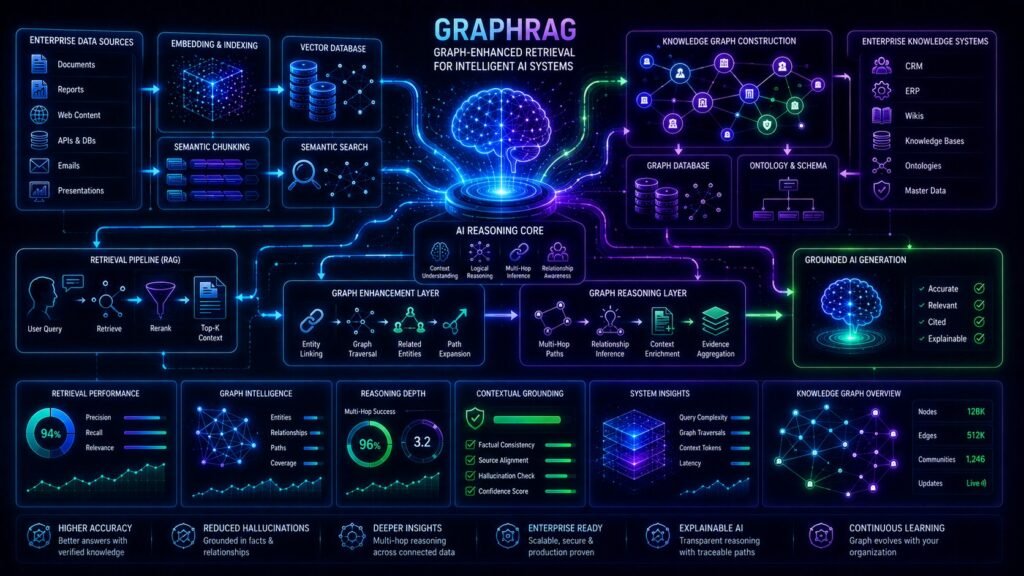
GraphRAG Explained: Complete Guide to Graph-Based AI Retrieval

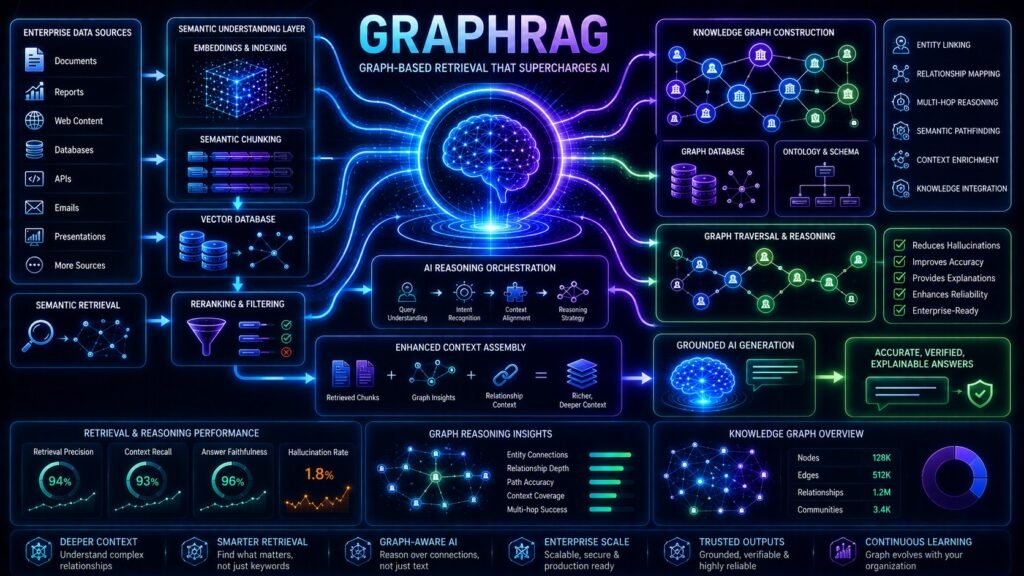
GraphRAG explained architecture showing knowledge graph reasoning, semantic retrieval systems, vector databases, and grounded AI generation

Modern enterprise AI systems are evolving rapidly beyond traditional chatbots and standalone Large Language Models. Organizations increasingly deploy advanced AI architectures across: enterprise search systems AI assistants customer support copilots legal intelligence platforms healthcare AI systems research automation tools document intelligence systems enterprise knowledge management platforms However, as AI systems scale, organizations encounter a major

GraphRAG Explained: Complete Guide to Graph-Based AI Retrieval Read More »

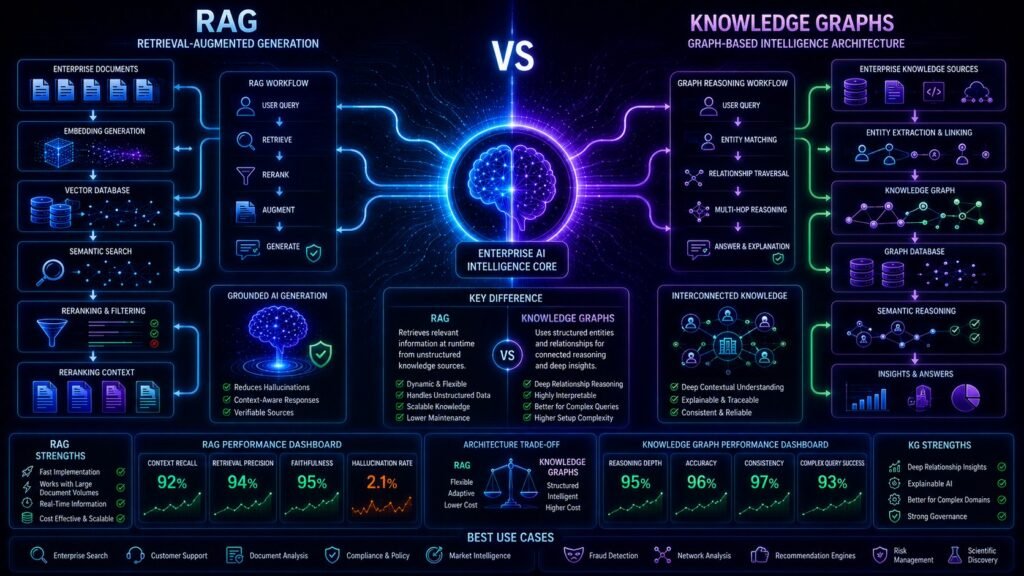
RAG vs Knowledge Graphs: Complete Enterprise AI Guide

RAG vs knowledge graphs comparison showing semantic retrieval systems, graph databases, entity relationships, and grounded AI architectures

Modern enterprise AI systems are evolving rapidly beyond traditional search engines and standalone Large Language Models. Organizations increasingly deploy advanced AI architectures across: enterprise knowledge systems semantic search platforms AI assistants customer support copilots healthcare AI systems legal intelligence platforms research automation systems intelligent document retrieval systems However, as enterprise AI becomes more sophisticated, organizations

RAG vs Knowledge Graphs: Complete Enterprise AI Guide Read More »

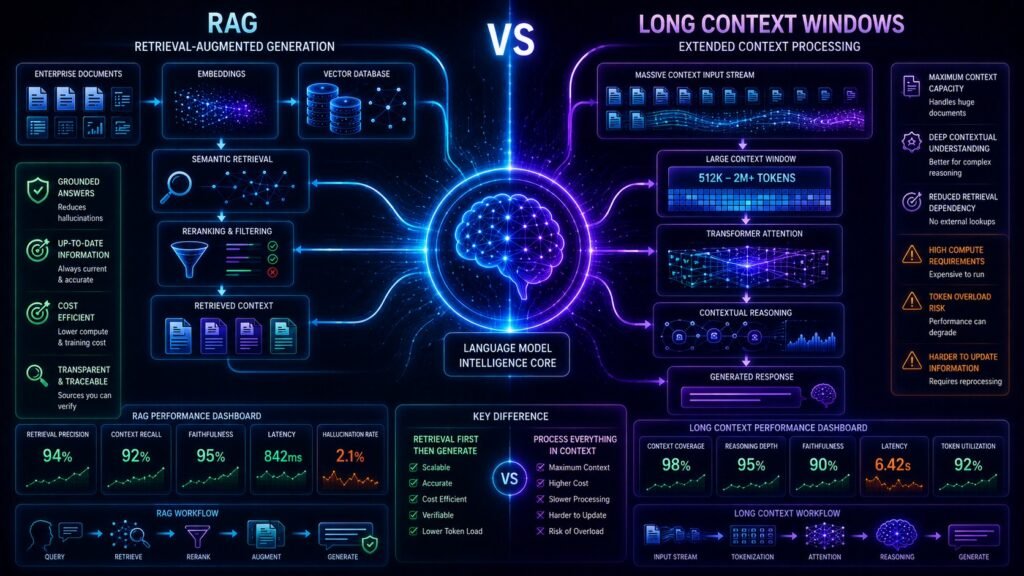
RAG vs Long Context Windows: Complete AI Architecture Guide

RAG vs long context windows comparison showing semantic retrieval systems, transformer attention layers, vector databases, and grounded AI architectures

Modern enterprise AI systems are rapidly evolving beyond simple chatbot architectures. Organizations increasingly deploy Large Language Models across: enterprise search systems AI assistants customer support copilots document intelligence platforms legal AI systems healthcare AI systems coding assistants research automation platforms However, as enterprise AI adoption grows, organizations encounter a major architectural decision: Should you use

RAG vs Long Context Windows: Complete AI Architecture Guide Read More »

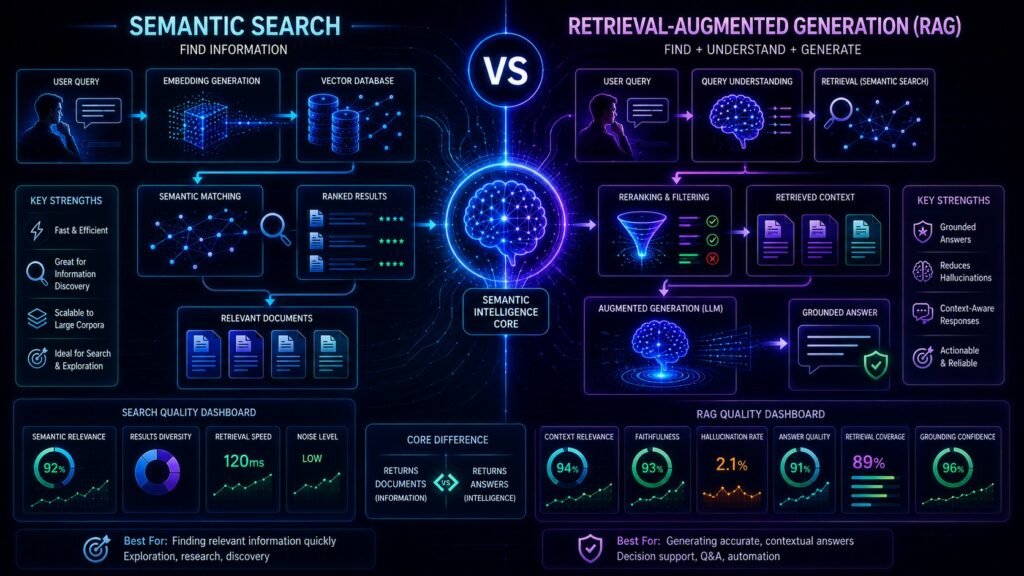
RAG vs Semantic Search: Complete AI Retrieval Guide

RAG vs semantic search comparison showing vector databases, semantic retrieval workflows, grounded AI generation, and enterprise search systems

Modern enterprise AI systems increasingly depend on intelligent retrieval architectures to power: AI assistants enterprise search systems customer support copilots document intelligence platforms legal AI systems healthcare retrieval systems knowledge management tools research assistants However, as organizations adopt Large Language Models and AI retrieval pipelines, many teams encounter a major source of confusion: Is semantic

RAG vs Semantic Search: Complete AI Retrieval Guide Read More »

Scroll to Top