Multimodal Embeddings Explained Simply

Multimodal embeddings visual showing text, images, audio, video, PDFs, vectors, semantic clusters, and cross-modal search in a shared vector space

Multimodal embeddings are vector representations that let AI compare different data types, such as text, images, audio, video, PDFs, and documents, inside a shared semantic space. They help power multimodal search, visual search, recommendation systems, document retrieval, and multimodal RAG applications. In Simple Terms Multimodal embeddings turn different kinds of information into numbers that AI

Multimodal Embeddings Explained Simply Read More »

RAG With Spreadsheets: Complete Excel and CSV AI Retrieval Guide

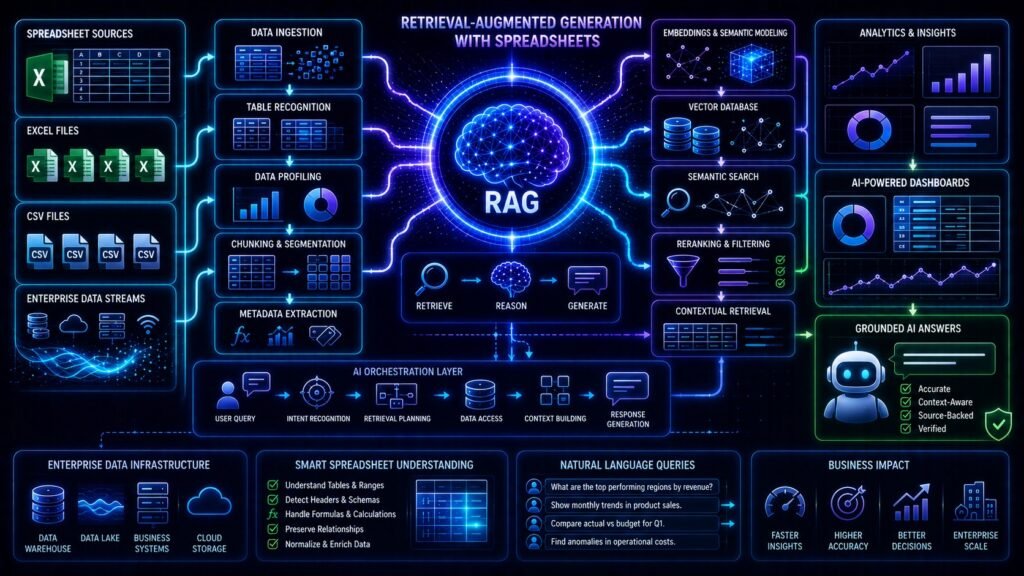
RAG with spreadsheets architecture showing Excel files, CSV retrieval, vector databases, semantic search, and grounded AI analytics

Modern enterprises rely heavily on spreadsheets for operational decision-making. Across industries, organizations store critical business information inside: Excel files CSV datasets financial spreadsheets analytics sheets operational trackers inventory reports sales dashboards forecasting models compliance spreadsheets customer data tables Even in large enterprises with advanced databases, spreadsheets remain one of the most widely used operational tools.

RAG With Spreadsheets: Complete Excel and CSV AI Retrieval Guide Read More »

RAG With Structured Data: Complete Enterprise AI Database Guide

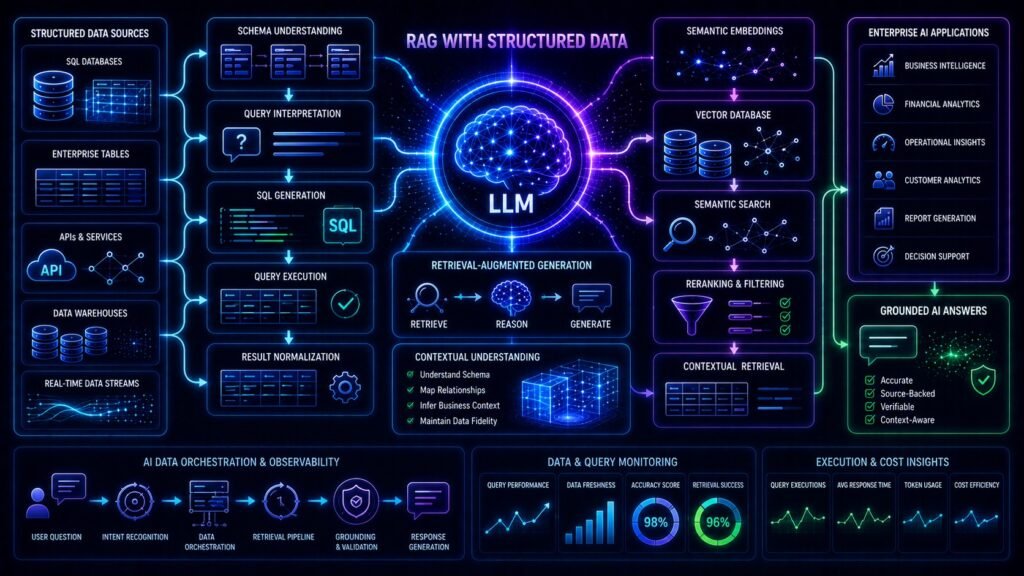
RAG with structured data architecture showing SQL databases, semantic retrieval, vector databases, APIs, and grounded AI generation

Modern enterprises generate enormous volumes of structured data every day. This data exists across: SQL databases CRM systems ERP platforms analytics warehouses APIs spreadsheets transactional systems customer records operational dashboards financial reporting systems As organizations adopt AI systems, a major challenge quickly appears: Large Language Models cannot reliably reason over structured enterprise data on their

RAG With Structured Data: Complete Enterprise AI Database Guide Read More »

What Is Context Engineering in Agentic AI?

Context engineering in agentic AI workflow showing documents, memory, tool results, policies, constraints, and examples selected for an AI agent

Context engineering in agentic AI is the practice of selecting, organizing, filtering, and updating the information an AI agent needs to complete a task. It goes beyond writing a good prompt by managing memory, retrieved documents, tool results, user preferences, rules, examples, and constraints inside an agent workflow. In Simple Terms Context engineering means giving

What Is Context Engineering in Agentic AI? Read More »

Document Understanding AI Explained Simply

Document understanding AI workflow showing PDFs, scanned forms, OCR extraction, layout analysis, tables, fields, and structured data output

Document understanding AI is technology that reads, extracts, structures, and interprets information from documents such as PDFs, forms, invoices, receipts, contracts, scanned files, and reports. Unlike basic OCR, modern document AI can understand layout, tables, key-value pairs, entities, and business context. In Simple Terms Document understanding AI helps computers read documents more like people do.

Document Understanding AI Explained Simply Read More »

RAG With PDFs: Complete Guide to PDF AI Retrieval Systems

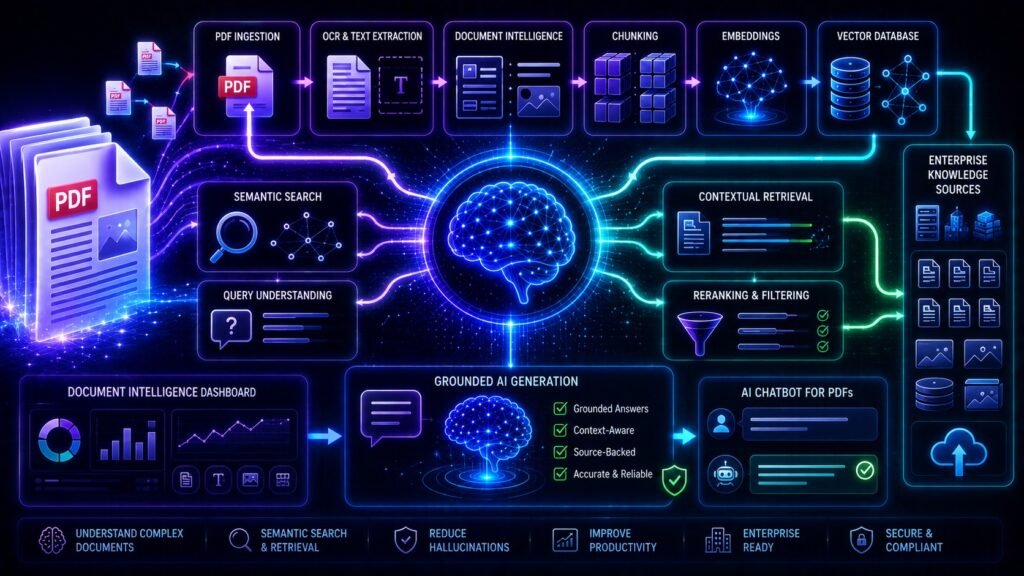
RAG with PDFs architecture showing semantic document retrieval, vector databases, embeddings, and grounded AI generation

Modern enterprises manage enormous collections of PDF documents every day. These include: contracts policies compliance reports research papers invoices manuals healthcare records technical documentation financial reports legal documents As organizations adopt AI systems, one major challenge quickly appears: Large Language Models cannot reliably understand massive PDF collections on their own. Standalone LLMs struggle because: PDFs

RAG With PDFs: Complete Guide to PDF AI Retrieval Systems Read More »

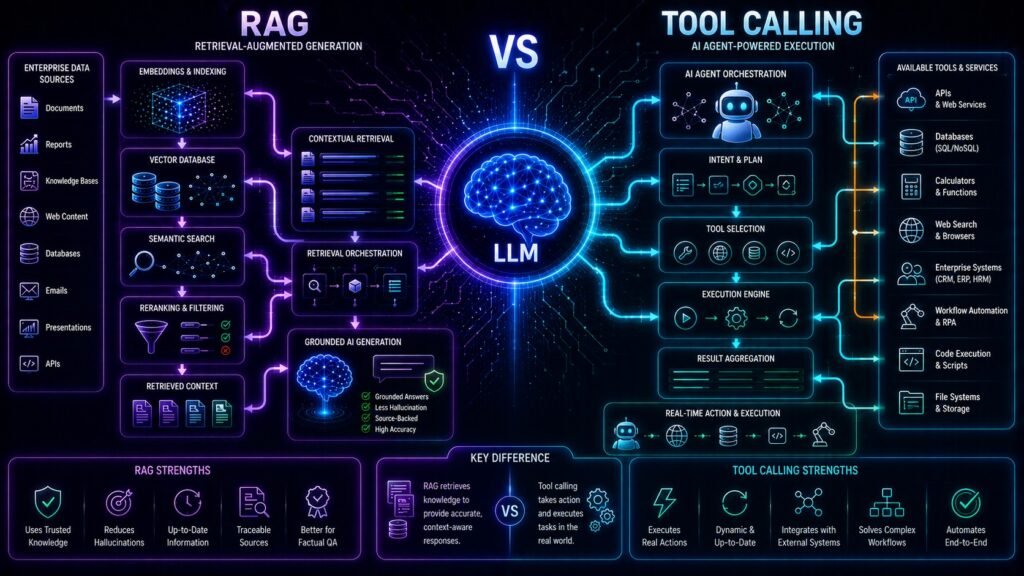
RAG vs Tool Calling: Complete Enterprise AI Architecture Guide

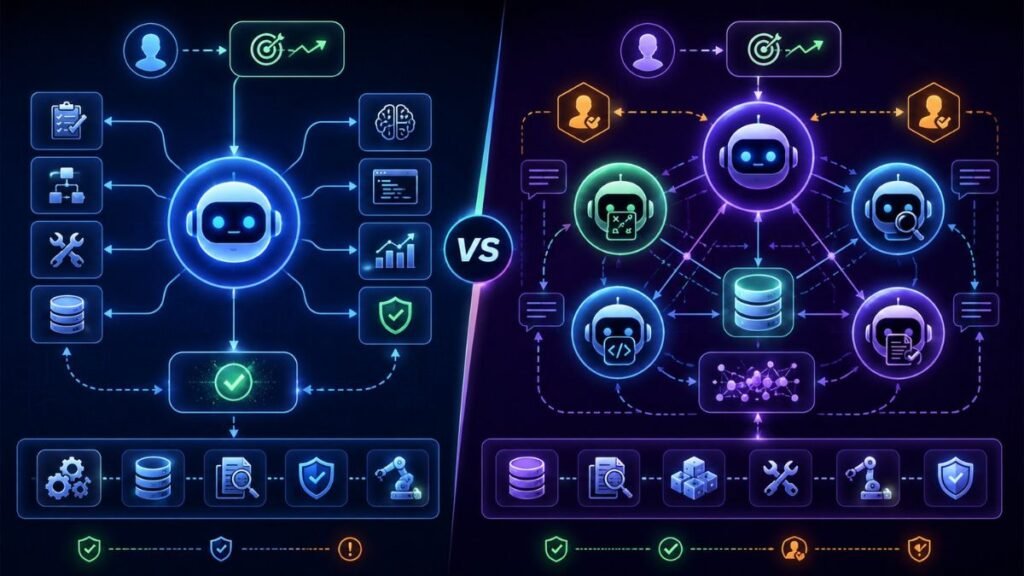
RAG vs tool calling comparison showing semantic retrieval systems, AI agents, API orchestration, vector databases, and grounded AI generation

Modern enterprise AI systems are evolving rapidly beyond simple chatbots and standalone Large Language Models. Organizations increasingly deploy advanced AI architectures across: enterprise AI assistants autonomous AI agents customer support copilots research automation systems enterprise workflow orchestration AI engineering assistants healthcare AI systems intelligent enterprise search platforms As AI systems become more capable, enterprises face

RAG vs Tool Calling: Complete Enterprise AI Architecture Guide Read More »

Scroll to Top