Vikash P

Vikash Pal is an AI/ML Engineer at ScholarEase and Editor for AIML Insights, focusing on machine learning, applied AI workflows, and practical implementation.

Embeddings for RAG: Semantic Search and AI Retrieval
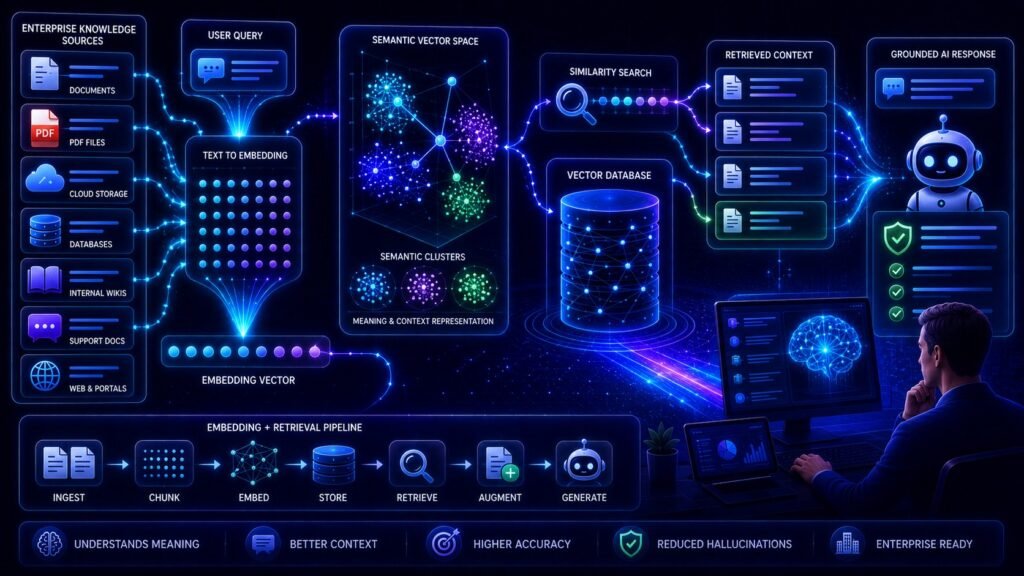
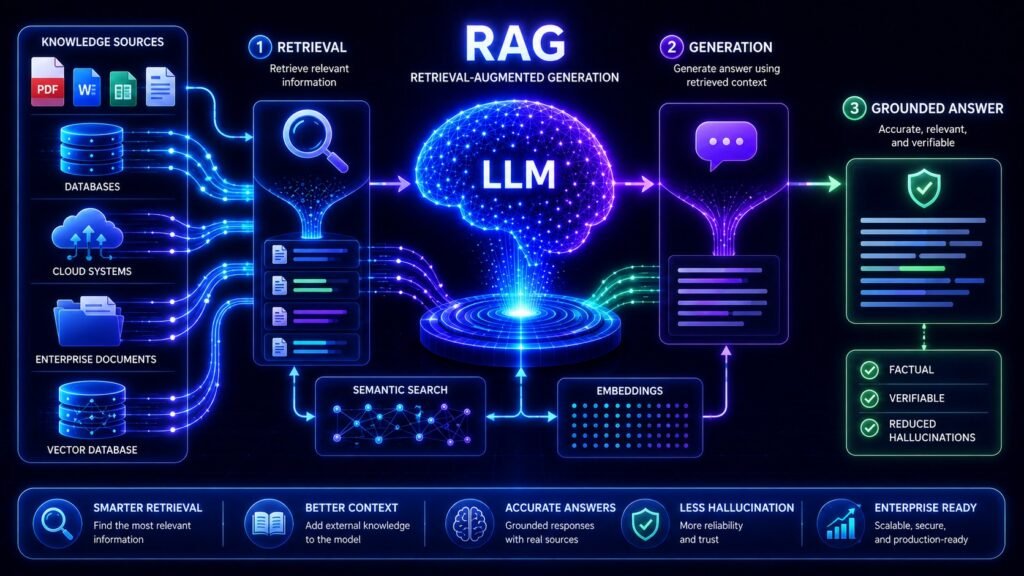
Embeddings for RAG visual showing semantic search, vector embeddings, AI retrieval systems, and contextual document retrieval

Embeddings for RAG: How AI Retrieval Systems Understand Meaning Retrieval-Augmented Generation (RAG) has become one of the most important architectures in modern Artificial Intelligence systems. Enterprises increasingly rely on RAG-powered AI assistants, enterprise search systems, document retrieval platforms, and intelligent chatbots to deliver more accurate and grounded responses. But one core technology powers nearly every […]

Embeddings for RAG: Semantic Search and AI Retrieval Read More »

LLM Truthfulness Evaluation: Metrics and Testing Guide

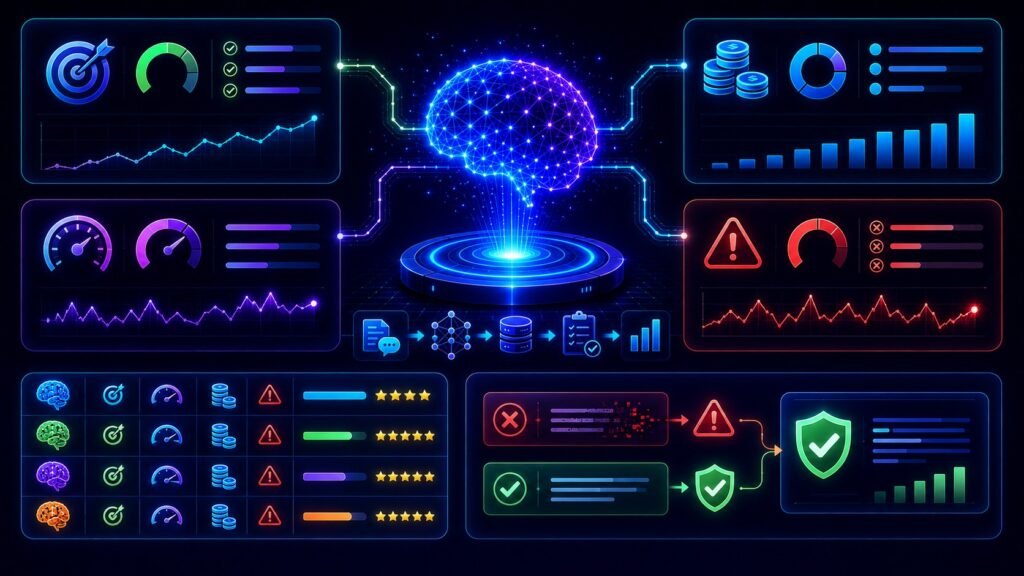
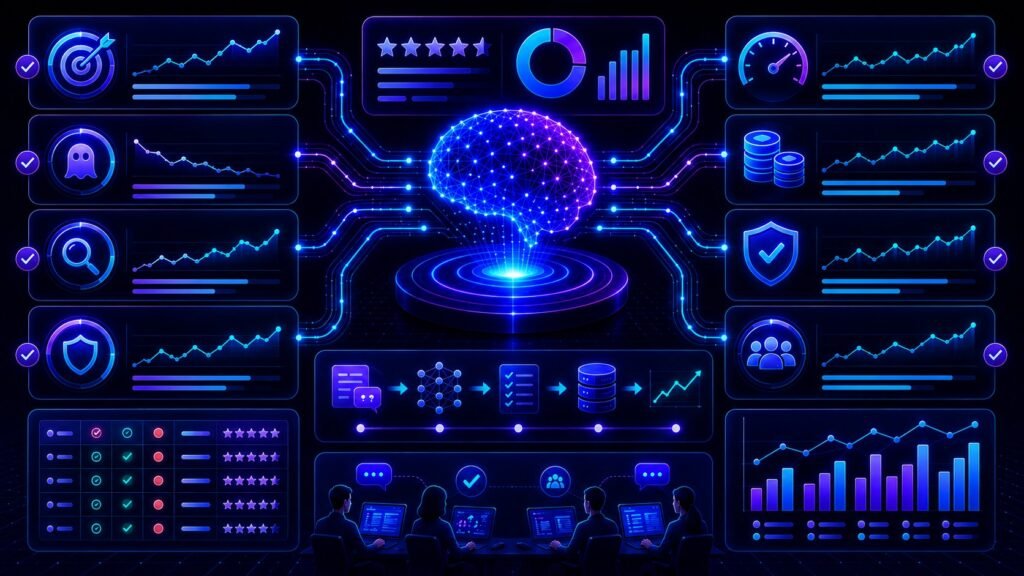
llm truthfulness evaluation explained: LLM truthfulness evaluation dashboard showing fact checking, accuracy metrics, verified sources, and hallucination detection

LLM Truthfulness Evaluation: How to Measure Honest AI Outputs in 2026 Large Language Models (LLMs) can generate fluent answers in seconds, but fluency does not always equal truth. A response may sound confident while containing false facts, invented sources, or misleading reasoning. That is why LLM truthfulness evaluation has become a major priority for AI

LLM Truthfulness Evaluation: Metrics and Testing Guide Read More »

LLM Monitoring Guide: Track AI Performance Better

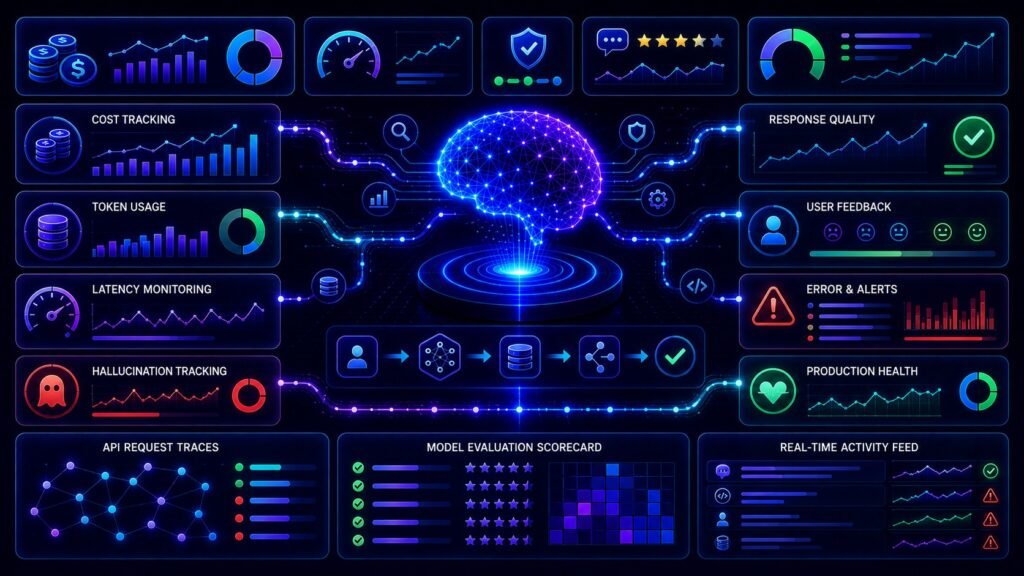
LLM monitoring dashboard: LLM monitoring dashboard tracking cost, quality, latency, hallucinations, token usage, and production health

LLM Monitoring Explained: How to Track AI Performance in 2026 Launching a Large Language Model (LLM) application is only the beginning. Once users start interacting with your AI system, performance can change quickly. Costs may rise. Responses may slow down. Hallucinations may increase. User satisfaction may drop. That is why LLM monitoring is essential. This

LLM Monitoring Guide: Track AI Performance Better Read More »

RAG for Beginners: Learn Retrieval-Augmented Generation

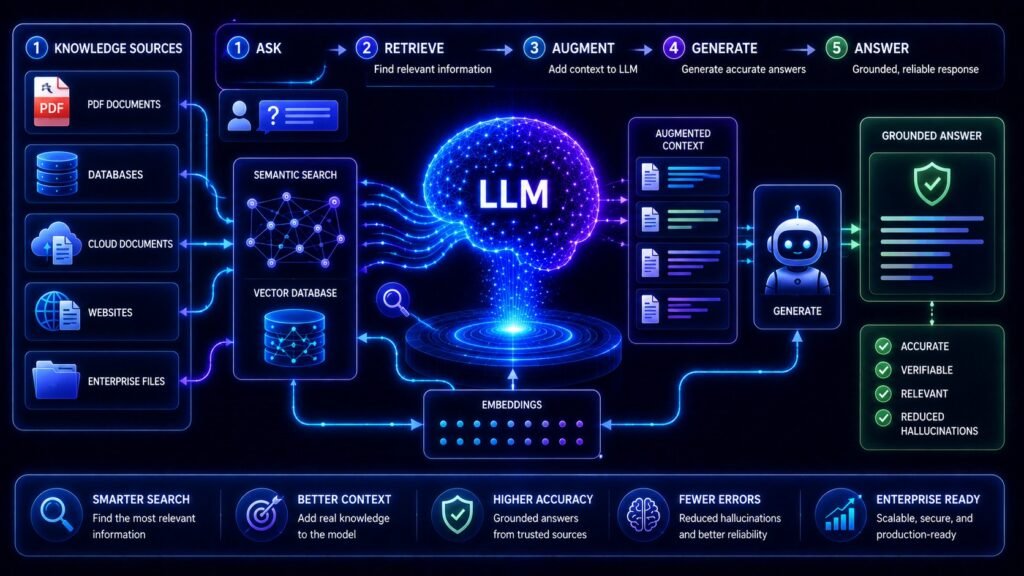
RAG for beginners visual showing retrieval pipelines, embeddings, vector databases, and grounded AI answer generation

RAG for Beginners: Complete Beginner Guide to Retrieval-Augmented Generation Artificial Intelligence is evolving rapidly, especially with the rise of Large Language Models (LLMs). Modern AI systems can answer questions, generate content, summarize reports, write code, and automate workflows at an impressive level. But despite these capabilities, traditional AI systems still face a major problem: they

RAG for Beginners: Learn Retrieval-Augmented Generation Read More »

What Is RAG in AI Explained Simply With Real Examples

What is RAG in AI visual showing retrieval pipelines, vector databases, document search, and grounded AI response generation

What Is RAG in AI? Complete Beginner Guide to Retrieval-Augmented Generation Artificial Intelligence has evolved rapidly in recent years, especially with the rise of Large Language Models (LLMs). Modern AI systems can write articles, summarize documents, answer questions, generate code, and even simulate human conversations. But despite these impressive capabilities, traditional AI models still face

What Is RAG in AI Explained Simply With Real Examples Read More »

LLM Guardrails Explained: Safer AI Systems Guide

LLM Guardrails Explained: LLM guardrails visual showing safer AI systems with filtering, validation, policy checks, and human oversight

LLM Guardrails Explained: How to Make AI Safer in 2026 Large Language Models (LLMs) are now used for customer support, coding, search, writing, enterprise automation, and decision support. But powerful AI systems can also create risks. They may: hallucinate facts reveal sensitive information generate harmful content ignore business rules be manipulated by malicious prompts That

LLM Guardrails Explained: Safer AI Systems Guide Read More »

LLM Benchmarking Explained: Complete Beginner Guide

LLM Benchmarking Explained: LLM benchmarking dashboard showing accuracy, speed, cost, and hallucination testing

LLM Benchmarking Explained: How AI Models Are Tested in 2026 Large Language Models (LLMs) are improving rapidly. New models appear regularly, each claiming to be faster, smarter, cheaper, or more accurate. But how do we know whether one model is actually better than another? That is where LLM benchmarking becomes important. Benchmarking helps researchers, developers,

LLM Benchmarking Explained: Complete Beginner Guide Read More »

LLM Evaluation Metrics Explained: Complete 2026 Guide

LLM evaluation metrics dashboard showing benchmarking, testing, and performance measurement for teams

LLM Evaluation Metrics Explained: How to Measure AI Model Quality in 2026 Choosing a Large Language Model (LLM) is no longer just about popularity. Businesses, developers, and AI teams need to know which model performs best for their actual tasks. That requires evaluation. Without the right metrics, teams may choose models that look impressive in

LLM Evaluation Metrics Explained: Complete 2026 Guide Read More »

Why LLMs Hallucinate: Causes, Fixes and Examples

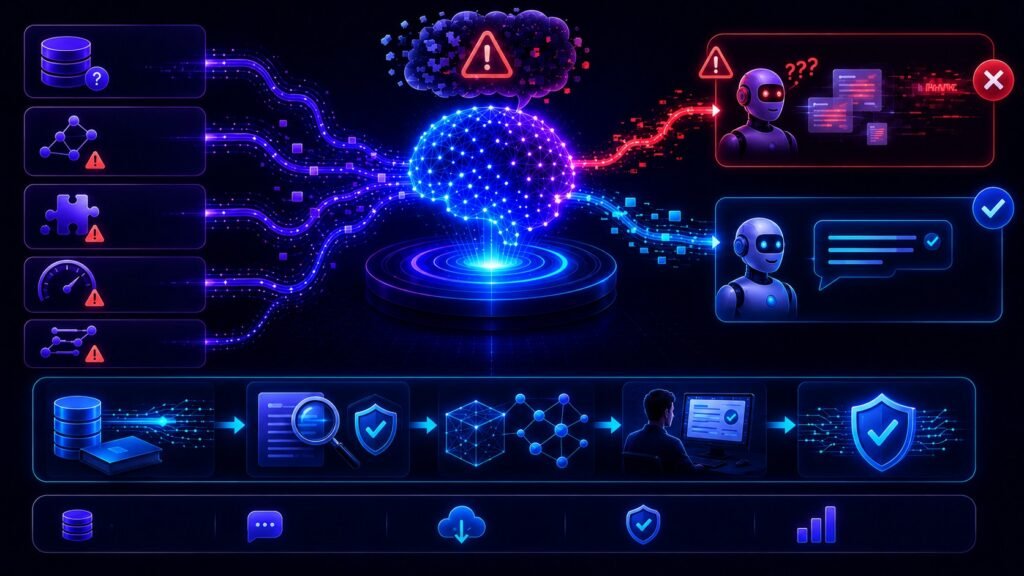
Why llms Hallucinate: LLM hallucination visual showing incorrect AI outputs, fact checking, and reliability fixes

Why LLMs Hallucinate: Causes, Examples & How to Reduce It Large Language Models (LLMs) can answer questions, summarize reports, generate code, and write content in seconds. But they also have a known weakness: Sometimes they produce answers that sound confident—but are wrong. This behavior is called hallucination. Understanding why LLMs hallucinate is essential for users,

Why LLMs Hallucinate: Causes, Fixes and Examples Read More »

What Are Multimodal LLMs? Beginner Guide With Examples in 2026

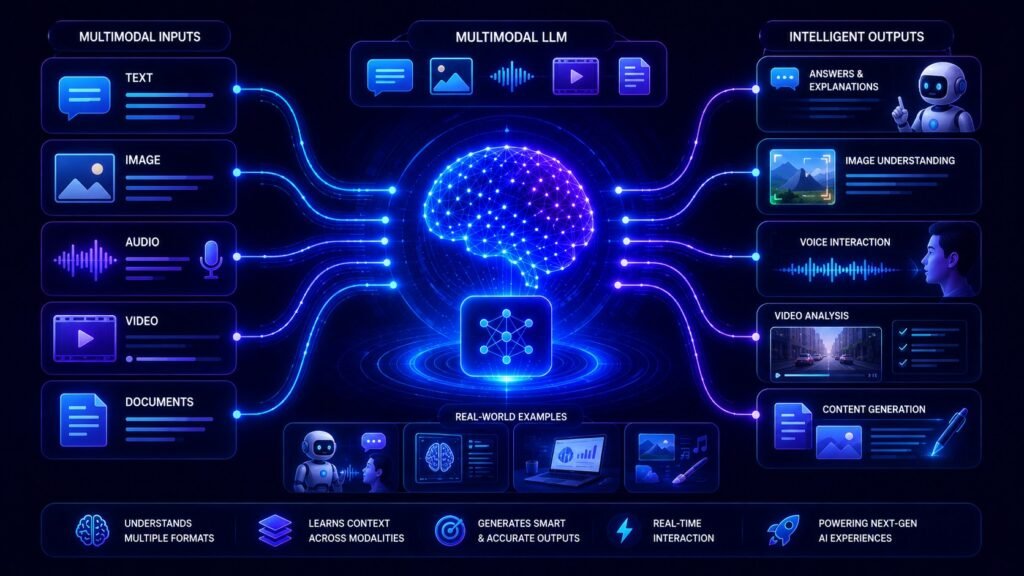
Multimodal llms: Multimodal LLM visual showing AI processing text, images, audio, video, and documents

Multimodal LLMs Explained: How AI Understands Text, Images & More Traditional Large Language Models (LLMs) became popular by understanding and generating text. They can answer questions, summarize content, write code, and help with research. But AI is moving beyond text. Today, many advanced systems can process images, audio, video, documents, and text together. These are

What Are Multimodal LLMs? Beginner Guide With Examples in 2026 Read More »

Scroll to Top