Deepak K

Deepak Kumar is a Project Manager at ScholarEase and Editor for AIML Insights. He writes and edits content on AI, machine learning, data science, statistical analysis, data engineering, and practical technology workflows.

How to Reduce LLM Hallucinations in 2026 (Prompting, RAG & Testing Guide)
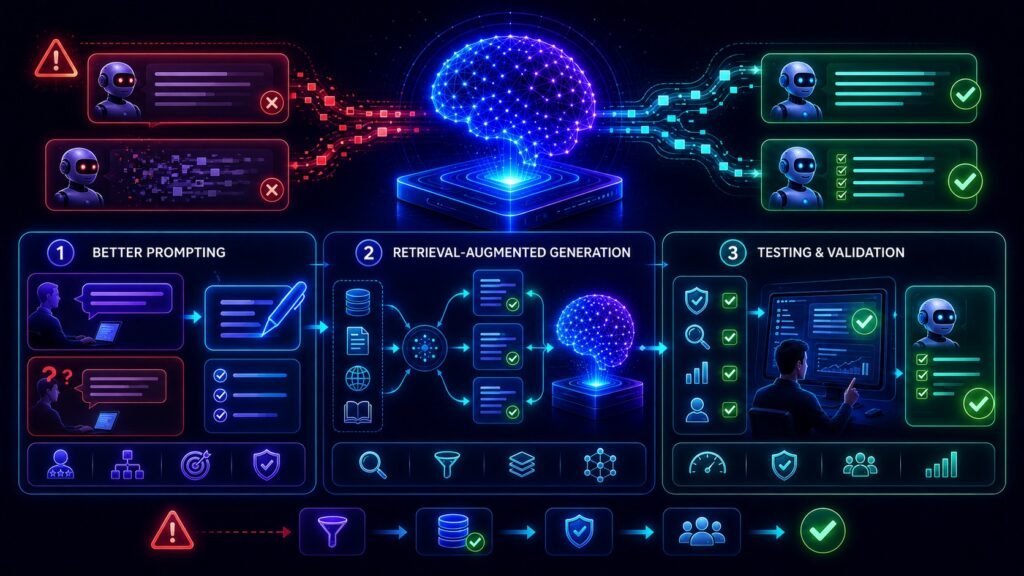
LLM hallucination reduction workflow using prompting, RAG, testing, and verified sources: how to reduce llm hallucinations

How to Reduce LLM Hallucinations: 15 Practical Fixes That Work Deploying large language models into enterprise workflows requires structural guardrails to preserve data integrity. When evaluating engineering techniques, developers consistently ask: which prompt design choice most effectively reduces hallucination in factual Q&A systems? Leaving a model’s parameters unconstrained inevitably leads to fabricated data points. In […]

How to Reduce LLM Hallucinations in 2026 (Prompting, RAG & Testing Guide) Read More »

Domain Specific Language Models Explained (Use Cases & Benefits)

Domain specific language models connected to healthcare, finance, law, education, and business use cases

Domain Specific Language Models Explained: Industry AI Models in 2026 Large Language Models (LLMs) are powerful general-purpose AI systems. They can write, summarize, answer questions, and generate code across many topics. But many businesses need more than general intelligence. A hospital may need medical terminology accuracy. A law firm may need contract understanding. A bank

Domain Specific Language Models Explained (Use Cases & Benefits) Read More »

Smallest LLMs for Low Resource Systems in 2026 Compared

smallest llms for low resource systems: Small LLMs compared on low resource systems and lightweight devices in 2026

Smallest LLMs for Low Resource Systems in 2026: Best Lightweight Models Compared Not everyone has a high-end GPU or expensive workstation. Many users want AI that works on everyday laptops, budget desktops, mini PCs, or embedded devices. That is why demand is growing for the smallest LLMs for low resource systems. Modern compact language models

Smallest LLMs for Low Resource Systems in 2026 Compared Read More »

LLM API Pricing Comparison: OpenAI vs Anthropic vs Google vs Others

LLM API pricing comparison dashboard for OpenAI, Anthropic, Google, and other AI models

LLM API Pricing Comparison in 2026: Best Value Models Ranked Choosing an LLM API is no longer only about model quality. For startups, SaaS teams, and enterprise buyers, pricing often becomes the deciding factor. Two models may perform similarly, but one could cost far more at scale. That is why searches for LLM API pricing

LLM API Pricing Comparison: OpenAI vs Anthropic vs Google vs Others Read More »

Best Open Source LLMs for Local Use in 2026 Compared

Open source LLMs running locally on a private computer setup in 2026

Best Open Source LLMs for Local Use in 2026: Top Models Compared Running your own artificial intelligence infrastructure offline guarantees complete data privacy, eliminates API subscription overhead, and allows for deep workflow customization. However, keeping up with local llms updates may 2026 benchmarks requires tracking how frontier open-weights architectures perform on consumer-grade chips. In this

Best Open Source LLMs for Local Use in 2026 Compared Read More »

7 Best LLMs for Coding: Beginners and Developers

Featured image showing AI coding assistants and language models for beginners and developers

Best LLMs for Coding in 2026: Top AI Models Compared AI coding tools are now part of daily developer workflows. From debugging to writing boilerplate code, Large Language Models (LLMs) can save hours every week. But not every model performs equally well for programming tasks. Some are better at: code generation debugging refactoring explaining logic

7 Best LLMs for Coding: Beginners and Developers Read More »

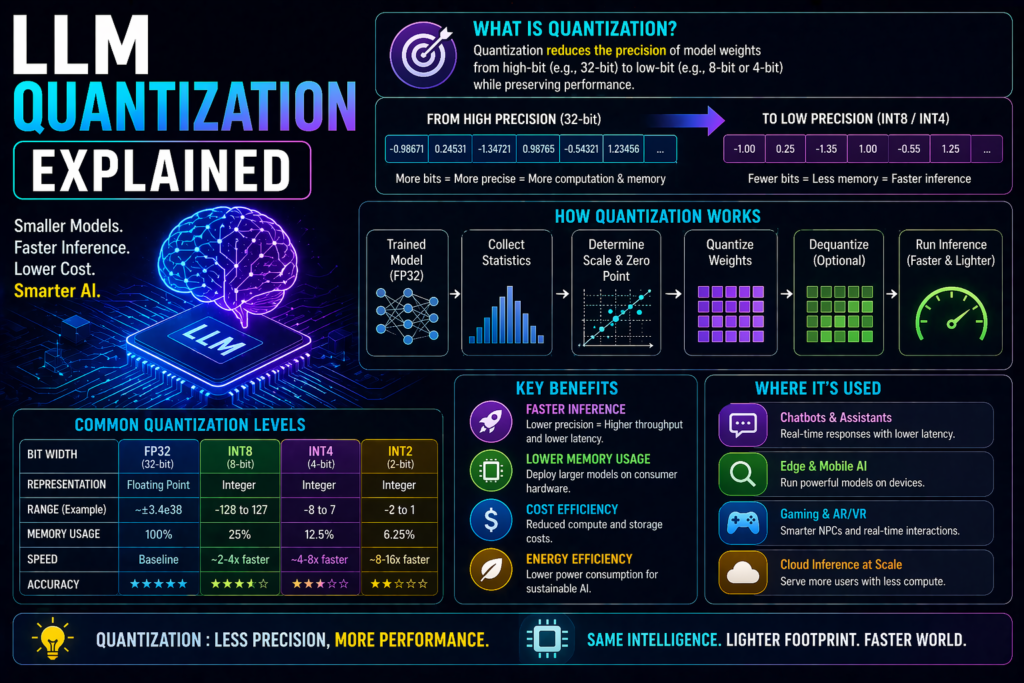
LLM Quantization Explained: 4-bit, 8-bit & AI Speed Guide

llm quantization explained simply

LLM Quantization Explained: What It Is and Why It Matters Large Language Models (LLMs) are powerful, but they can also be expensive to run. Bigger models often require more memory, stronger GPUs, and higher infrastructure costs. That is why one optimization method has become very important: quantization. Quantization helps make AI models smaller, faster, and

LLM Quantization Explained: 4-bit, 8-bit & AI Speed Guide Read More »

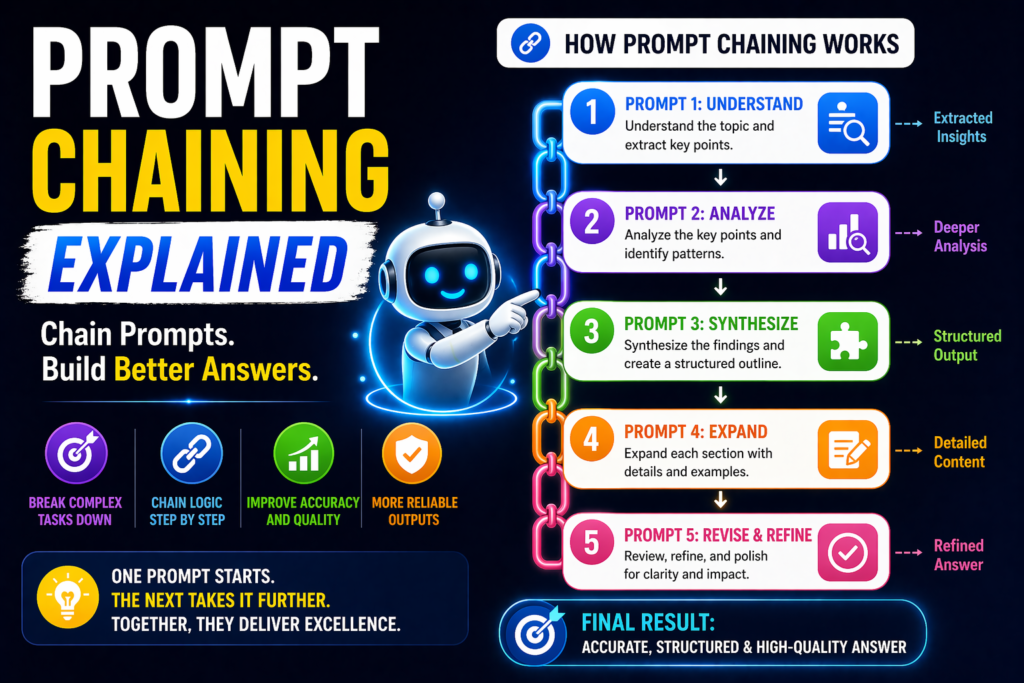
Prompt Chaining Explained: Examples & Best Practices

prompt chaining explained diagram

Prompt Chaining Explained: How to Build Better AI Workflows Prompt chaining is a powerful way to get better AI outputs by breaking one large task into smaller connected prompts. Instead of asking AI to do everything in one request, you create a sequence where each output becomes the input for the next step. This method

Prompt Chaining Explained: Examples & Best Practices Read More »

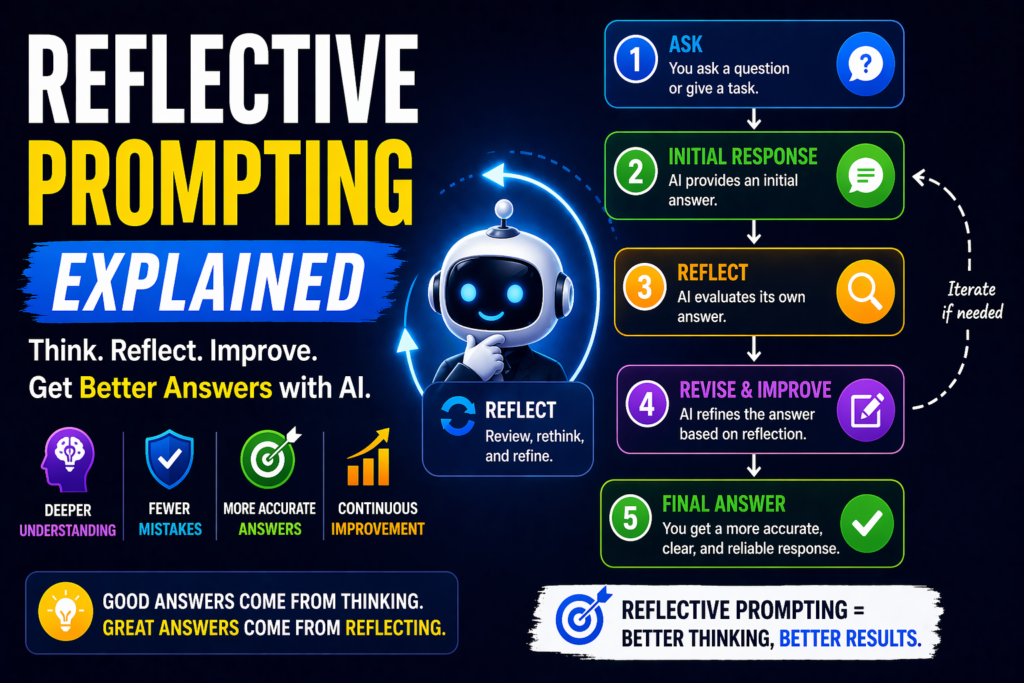
Reflective Prompting Explained: Examples & Guide

reflective prompting explained diagram

Reflective Prompting Explained: How It Works With Examples Reflective prompting is a smart AI prompting method where the model reviews its first response, identifies weaknesses, and improves the final answer. Instead of accepting the first output, you ask the AI to critique and refine its own work. This often leads to clearer, more accurate, and

Reflective Prompting Explained: Examples & Guide Read More »

Scroll to Top