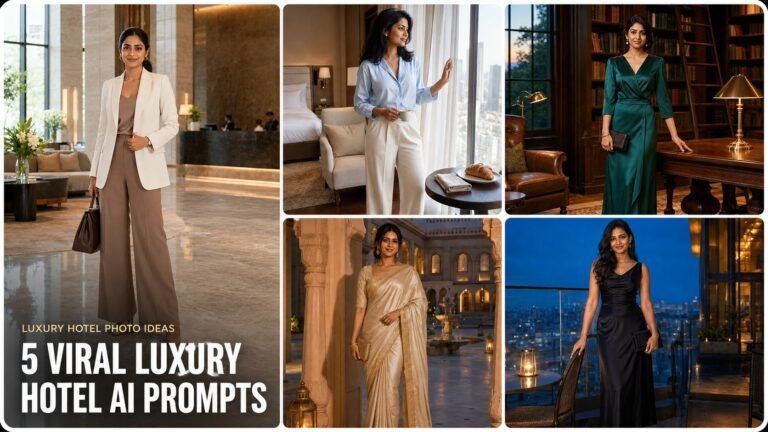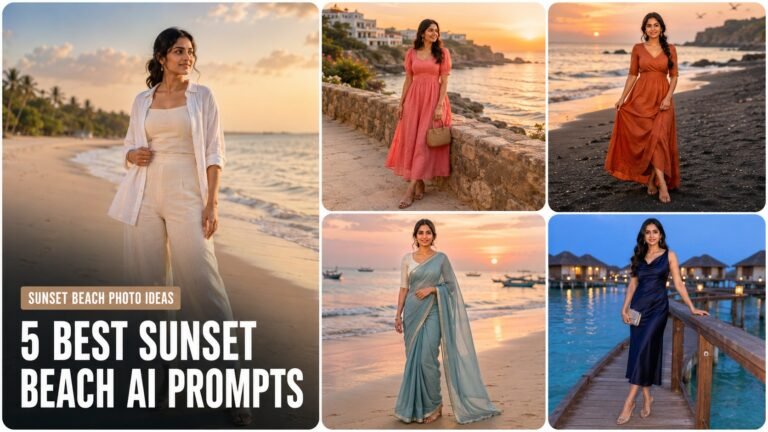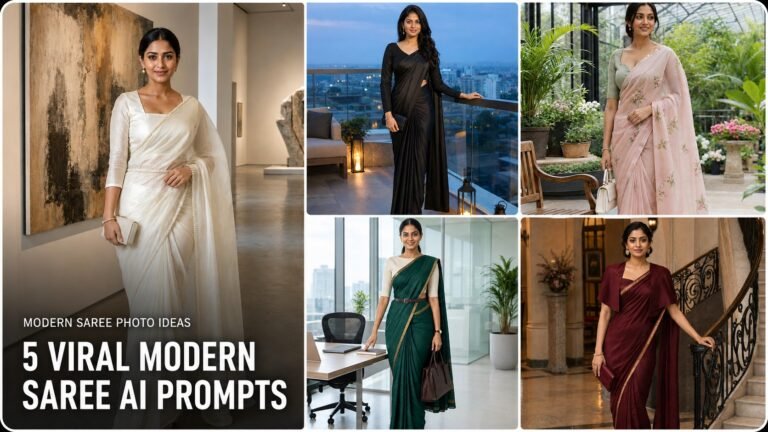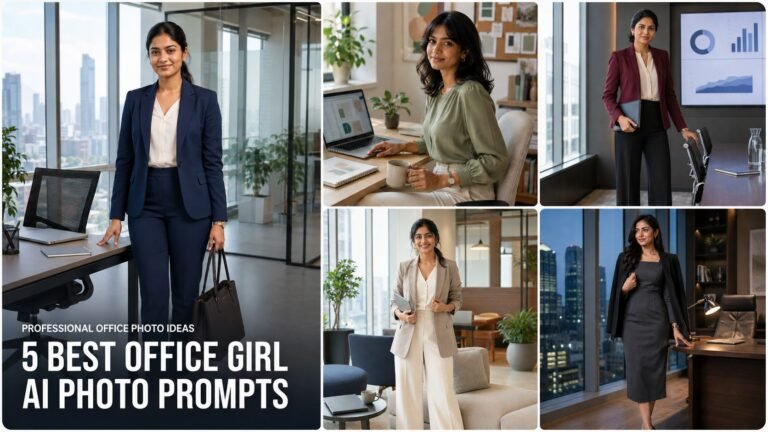
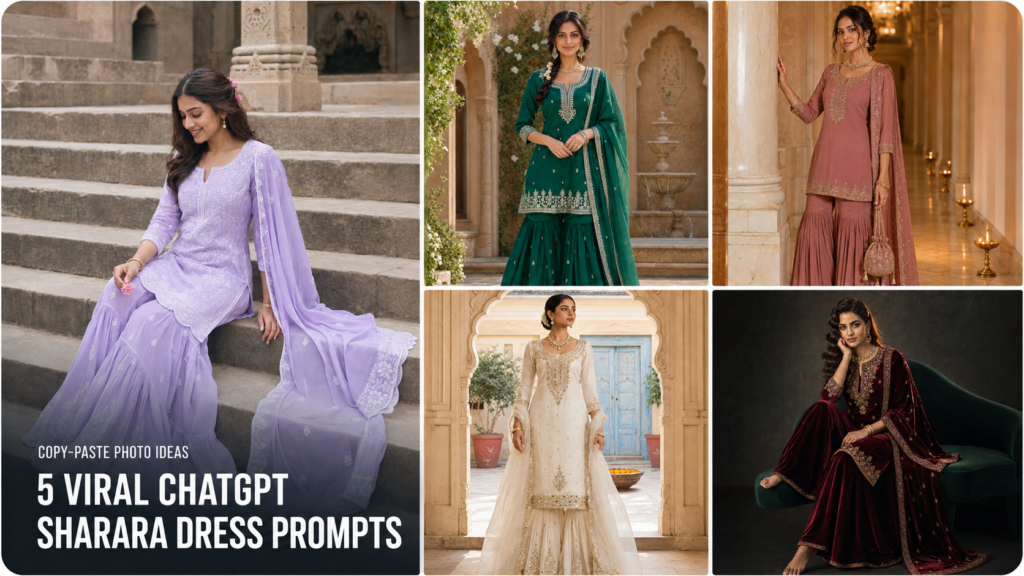
Sharara dress portraits look simple until you begin writing the actual image prompt.
A beautiful outfit description alone is not enough. If the pose is unclear, the hands can look awkward. If the background contains too many decorative elements, the sharara stops being the focus. Adding excessive jewelry, embroidery, lighting effects and camera terminology can also make the result feel artificial rather than elegant.
While developing this collection, I kept refining the prompts around five important elements: a clear pose, realistic fabric texture, controlled jewelry, flattering lighting and a background that supports the outfit instead of competing with it.
Each prompt is written as a complete copy-paste template. You can also upload a clear reference photograph and use the optional identity-preservation instructions provided below.
Royal Dusty-Rose Sharara Portrait Inside a Marble Palace
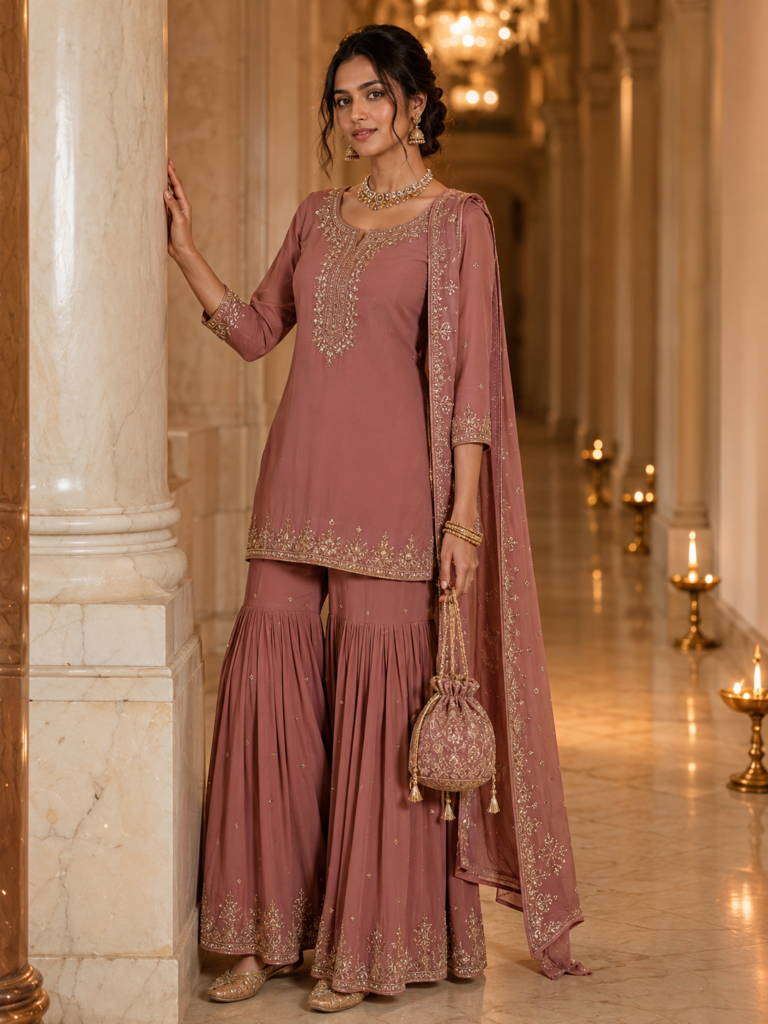
I would begin with this concept when the goal is a rich, traditional portrait that still feels modern enough for Instagram. The dusty-rose palette, warm diya lighting and pale marble environment create an elegant contrast without making the scene overwhelmingly colourful.
The most important part of this prompt is the separation between the subject and the palace. The corridor should frame the model, while the sharara remains the centre of attention.
Copy-Paste ChatGPT Prompt
Create an ultra-realistic full-length fashion portrait of a young Indian woman wearing a dusty-rose sharara set made from flowing georgette fabric. The short kurta features refined antique-gold zardozi embroidery around the neckline, sleeve cuffs and lower border. The wide sharara trousers fall naturally toward the floor with realistic pleats and fabric weight. A lightweight embroidered dupatta is draped over one shoulder and falls behind her without covering the outfit.

Place her inside a grand but uncluttered marble-palace corridor with tall ivory columns, polished cream flooring and a softly blurred chandelier in the distance. A few brass diyas are arranged along the sides of the corridor, creating warm points of light without overcrowding the background.

She stands in a graceful three-quarter pose with her body turned slightly away from the camera. One hand rests lightly against a marble column, while the other holds a small embroidered potli bag near her hip. Keep both hands natural, anatomically correct and clearly visible. Her expression is calm and confident with relaxed lips and soft eye contact toward the camera.

Style her hair in a low textured bun with two subtle face-framing strands. Add a delicate polki necklace, medium-sized jhumka earrings and a controlled number of gold bangles. Avoid oversized or excessive jewelry.

Use warm cinematic indoor lighting with a soft key light illuminating her face from the front-left and a gentle golden glow from the diyas. Preserve realistic skin texture, natural facial proportions, detailed embroidery and believable georgette fabric. Use shallow background depth without blurring the sharara itself.

Compose the scene as a premium Indian fashion editorial, full body visible from head to footwear, balanced vertical framing, natural posture, realistic anatomy and no extra fingers or distorted limbs.
Generated Example 1
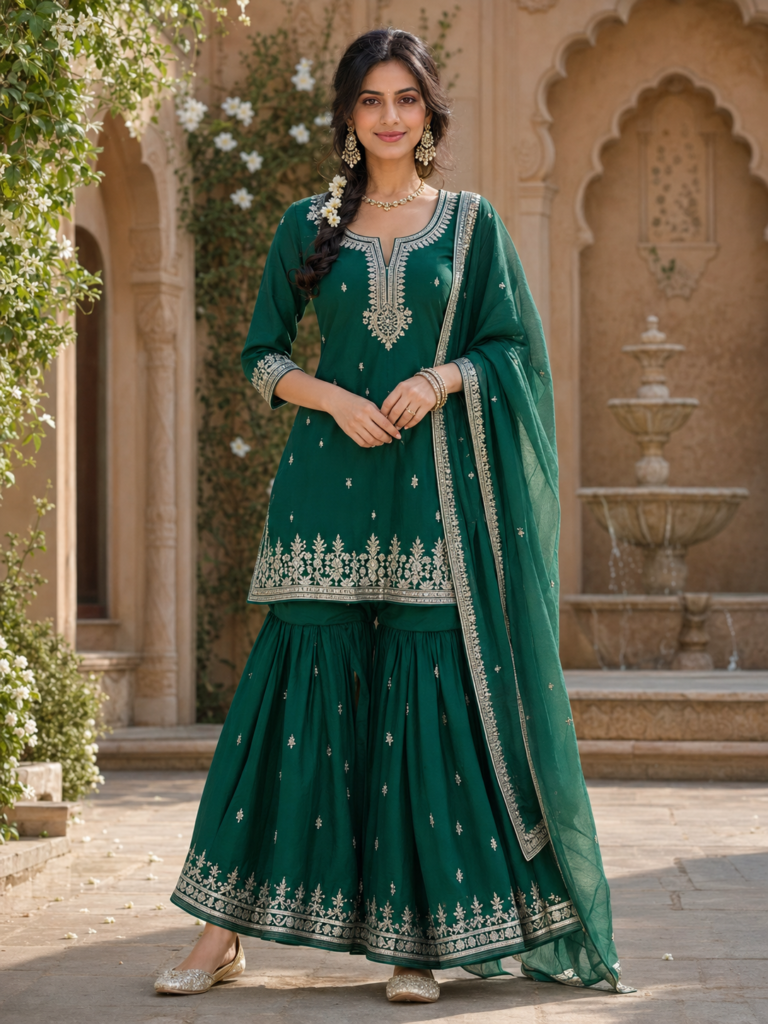
Emerald Sharara Portrait in a Mughal Garden
This prompt is designed for a softer outdoor result. I kept the environment structured rather than describing an enormous garden filled with fountains, birds, flowers and architecture. A smaller number of intentional elements usually creates a more convincing fashion photograph.
The emerald outfit should remain visually distinct from the surrounding greenery, which is why the prompt uses warm sandstone and pale jasmine flowers as supporting colours.
Copy-Paste ChatGPT Prompt
Create a photorealistic full-length fashion portrait of a young Indian woman wearing a deep emerald-green sharara set with fine silver gota-patti embroidery. The kurta has a clean fitted upper silhouette, three-quarter sleeves and detailed embroidery concentrated around the neckline, cuffs and hem. The wide sharara trousers should show realistic fabric folds and movement. A matching lightweight dupatta is draped neatly over her left shoulder.

Place her in an elegant Mughal-inspired garden courtyard with warm sandstone walls, two arched niches, a few flowering jasmine plants and a shallow stone fountain softly visible in the background. Keep the garden refined and uncluttered. Do not add large crowds, excessive flowers or unrelated decorative objects.

She stands upright with one foot placed slightly forward. Both hands meet naturally at waist level as if she has just finished adjusting the edge of her dupatta. Keep the fingers relaxed, separate and anatomically correct. She looks directly toward the camera with a subtle, warm smile.

Style her hair in a loose side braid decorated with a small number of fresh jasmine flowers. Add medium-sized kundan earrings, a slim necklace and a few coordinated bangles. Keep the styling elegant rather than bridal-heavy.

Use soft diffused morning daylight coming from camera-left. Create gentle facial shadows, natural skin texture and realistic highlights on the silver embroidery. Allow the garden to soften into a mild background blur while keeping the face, outfit and hands sharply defined.

The final result should resemble a premium Indian fashion campaign photographed outdoors: natural skin, believable fabric, balanced colours, correct body proportions, realistic hands and a clean 3:4 vertical composition.
Generated Example 2
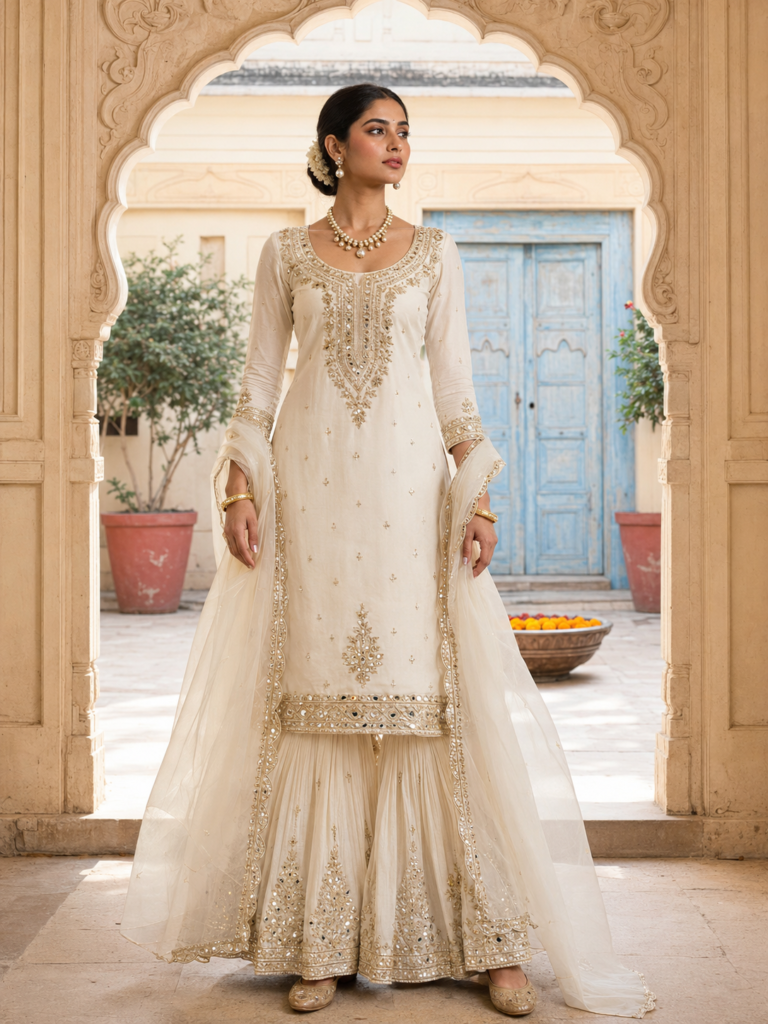
Ivory-and-Gold Sharara Framed by a Rajasthani Haveli Arch
This is the cleanest concept in the collection. It is intended for readers who prefer a light, polished and Pinterest-friendly portrait rather than a heavily dramatic scene.
The haveli arch does most of the compositional work. It naturally frames the model, which means the prompt does not need many additional props.
Copy-Paste ChatGPT Prompt
Generate an ultra-realistic full-length editorial portrait of a young Indian woman wearing an ivory sharara set with antique-gold mirror-work embroidery. The fitted kurta has elegant embroidery across the neckline, bodice and sleeve borders. The wide sharara trousers should display realistic pleats, fabric weight and delicate movement. A sheer organza dupatta with a narrow scalloped gold border rests across both forearms and trails softly behind her.

Position her in the centre of a large carved sandstone arch inside a traditional Rajasthani haveli. Through the arch, show a softly lit inner courtyard with a weathered blue wooden door, two terracotta planters and a small arrangement of marigolds. Keep the architecture authentic but visually clean.

She stands tall with her chin slightly raised and shoulders relaxed. Her arms rest naturally near her sides while supporting the light dupatta. Her gaze is directed just beyond the camera, creating a thoughtful and graceful expression. Avoid an exaggerated fashion pose.

Style her hair in a sleek low bun decorated with a small cluster of white mogra flowers. Add pearl-drop earrings, a refined pearl-and-gold necklace and two simple gold kada bangles. Keep the makeup soft and luminous with natural skin texture, a warm peach blush and a muted rose lip.

Use bright but diffused courtyard daylight. Let pale stone surfaces reflect soft light onto her face, reducing harsh shadows. Maintain detail in the ivory fabric so it does not become overexposed. Preserve visible embroidery, natural skin texture and realistic folds in the dupatta.

Compose the image as a premium Pinterest-style Indian fashion editorial, complete outfit visible, symmetrical arch framing, natural anatomy, correctly formed hands and feet, no duplicated accessories and a clean 3:4 vertical frame.
Generated Example 3
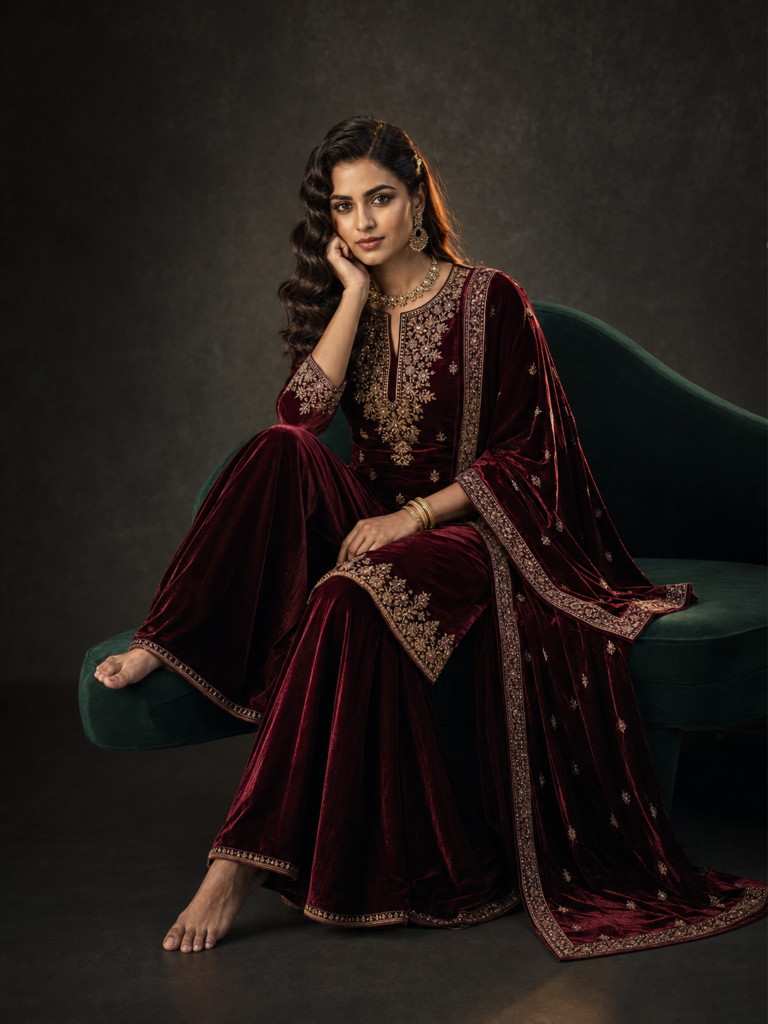
Burgundy Velvet Sharara in a Dramatic Fashion Studio
Not every sharara photograph needs a palace or garden. This prompt moves the traditional outfit into a controlled studio environment and creates a deeper, more editorial mood.
The risk with this style is losing detail in the dark fabric and background. To avoid that, the prompt separates the burgundy outfit from the charcoal backdrop using directional light and warm highlights.
Copy-Paste ChatGPT Prompt
Create a high-fashion portrait of a young Indian woman wearing a deep burgundy velvet sharara set with controlled antique-gold zardozi embroidery. The velvet kurta has a structured neckline, fitted sleeves and rich embroidery across the upper bodice and cuffs. The sharara trousers should show realistic velvet texture, soft directional highlights and natural folds. A matching dupatta is placed loosely over one shoulder.

Set the scene inside a premium fashion studio with a dark charcoal textured backdrop and a low emerald-green velvet chaise. Keep the studio minimal. Do not add chandeliers, palace architecture or unnecessary decorative objects.

She is seated sideways on the chaise in a composed three-quarter pose. One foot rests naturally on the floor while the other leg is positioned comfortably toward the side. One hand rests gently on her lap, and the other lightly supports her cheek without covering the face. Keep the fingers relaxed and anatomically accurate.

Her expression is confident and slightly intense, with direct eye contact. Style her hair in polished vintage-inspired side-parted waves. Add a statement pair of earrings, one coordinated necklace and a limited number of bangles. Avoid excessive jewelry layering.

Use one large soft directional studio light from camera-left and a subtle warm rim light behind her. The key light should reveal the velvet texture, facial structure and embroidery while preserving deep cinematic shadows on the opposite side. Do not crush all detail into black.

Apply a rich editorial colour treatment with burgundy midtones, warm skin highlights and deep charcoal shadows. Preserve natural skin texture, realistic body proportions, correct hands and believable fabric.

Compose the final portrait as a luxury fashion-magazine image in a 3:4 vertical frame, with the subject clearly separated from the background and the outfit remaining the visual focus.
Generated Example 4
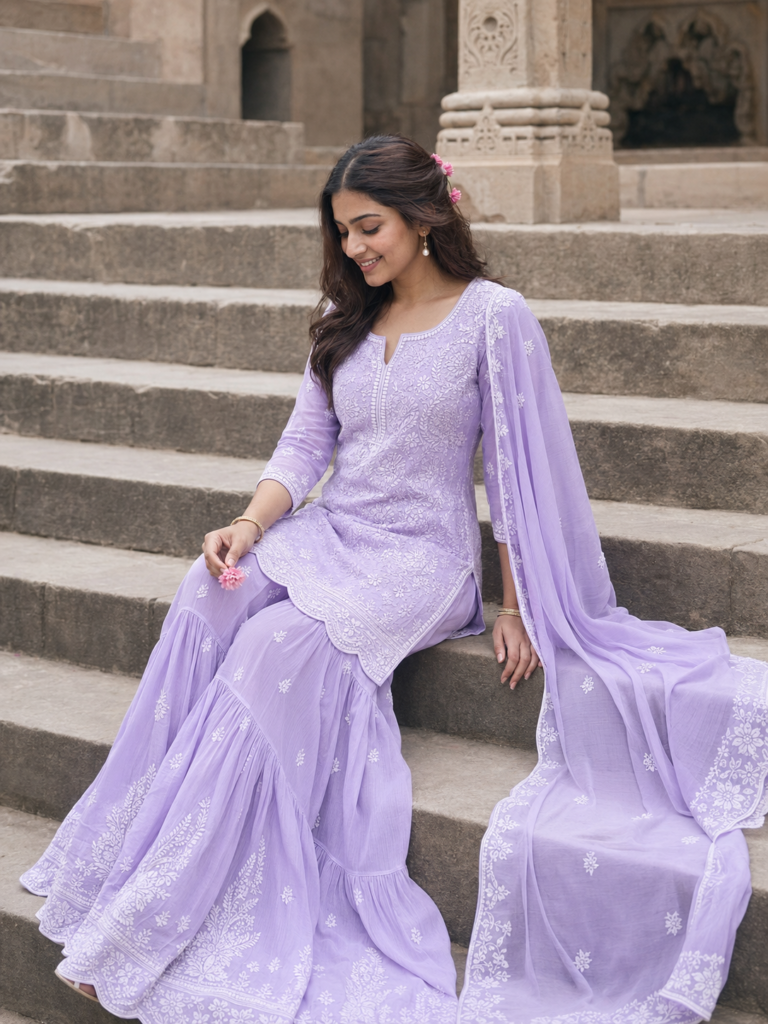
Pastel-Lavender Sharara on Heritage Stone Steps
This prompt is for a softer, more relaxed portrait. The lavender fabric and neutral stone environment create a gentle contrast, while the seated pose adds variety to a collection that might otherwise contain only standing portraits.
The scene should feel candid, but the positioning still needs to be described carefully. A vague seated prompt can easily produce uncomfortable body angles or hidden hands.
Copy-Paste ChatGPT Prompt
Create an ultra-realistic editorial portrait of a young Indian woman wearing a pastel-lavender sharara set with delicate white chikankari embroidery. The fabric should appear light, breathable and softly textured. The kurta has a refined neckline and three-quarter sleeves, while the wide sharara trousers create gentle folds around her seated position. A light matching dupatta is draped over one shoulder and trails along the step beside her.

Place her on wide, weathered stone steps inside a quiet heritage fort or historic stepwell. Include one carved stone pillar in the upper background and a few subtle architectural details, but keep the setting calm and uncluttered.

She sits sideways on one of the broad steps with a comfortable upright posture. One hand rests openly on her knee while holding a small pale-pink flower. The other hand rests flat on the step beside her for support. Keep both arms, hands and fingers completely visible and anatomically natural.

Her gaze is directed downward toward the flower, with a soft, almost private smile. Style her hair in loose natural waves with a centre part and two small pink flowers placed subtly near the back. Add delicate pearl-drop earrings and thin gold bangles without heavy bridal jewelry.

Use soft overcast daylight with even illumination and no harsh facial shadows. Apply a light pastel editorial colour treatment that preserves natural skin tone and keeps the stone background slightly muted so the lavender outfit remains prominent.

Focus on realistic skin texture, visible chikankari embroidery, natural fabric folds, correct seated anatomy and a gentle Pinterest-style atmosphere. Compose the photograph vertically from head to the full trailing sharara hem in a 3:4 frame.
Generated Example 5
How to Customize These ChatGPT Sharara Prompts
You do not need to rewrite the complete prompt every time. Start by changing one or two variables while keeping the main composition intact.
Change the Outfit Colour
Replace the original colour with:
- Emerald green
- Wine red
- Royal blue
- Mustard yellow
- Ivory
- Champagne gold
- Powder blue
- Blush pink
- Peach
- Black and gold
Change the Location
Suitable alternatives include:
- Rajasthani haveli
- Mughal garden
- Palace corridor
- Luxury studio
- Heritage fort
- Stepwell
- Floral courtyard
- Marble terrace
- Lakeside palace
- Traditional Indian home
Change the Mood
Add a clear emotional direction such as:
- Calm and elegant
- Cheerful and candid
- Regal and composed
- Dreamy and romantic
- Confident and editorial
- Festive and joyful
- Soft and thoughtful
Why Important Prompt Instructions Are Included
Facial-Identity Preservation: When you upload a reference image, a clear identity instruction tells ChatGPT which facial characteristics should remain recognizable. It does not guarantee pixel-perfect duplication, but it helps prevent unnecessary changes to the subject.
Clear Hand Placement: Hands are more likely to look natural when each hand has one simple action. Instructions such as “one hand rests on her lap” are clearer than vague phrases such as “an elegant fashion pose.”
Fabric Names: Words such as georgette, velvet, organza, silk and chikankari provide information about texture, weight, reflection and movement.
Controlled Jewelry: Long lists of necklaces, earrings, bangles, rings, hair accessories and forehead jewelry can introduce errors. A smaller number of clearly described accessories generally produces a cleaner portrait.
One Main Lighting Style: Using candlelight, daylight, neon light, moonlight and studio light in the same prompt creates conflicting directions. Each prompt above uses one main lighting concept with limited supporting light.
Aspect Ratio: A full sharara outfit requires enough vertical space. A square frame may crop the trousers or force the subject into an awkward composition.
What Worked Best While Refining the Prompt Structure
The strongest prompt-writing choices in this collection were:
- Naming the fabric rather than saying only “beautiful sharara”
- Giving each hand a simple, specific position
- Limiting the background to a few meaningful elements
- Describing the lighting direction clearly
- Keeping jewelry controlled
- Specifying full-body composition
- Asking for natural skin texture rather than excessive smoothing
- Separating the subject’s colours from the background colours
- Using one dominant mood for each scene
These changes make the prompts easier for the image model to interpret and easier for readers to customize.
What Usually Does Not Work Well
The following instructions commonly make an image prompt less reliable:
Too Many Style Words: Combining “cinematic, vintage, dreamy, HDR, pastel, dark, moody, colourful and minimalist” gives the model conflicting visual goals.
Complicated Hand Gestures: Detailed dance poses, moving dupattas, jewelry adjustments and hair-touching gestures in one image can result in distorted fingers or unnatural arms.
Overloaded Backgrounds: Palaces filled with fountains, flowers, chandeliers, crowds, birds, candles and fireworks may distract from the outfit.
Excessive Jewelry: Every additional necklace, ring or bracelet creates another small object the model must render accurately.
Conflicting Camera Instructions: Listing several different cameras, lenses and aperture settings does not necessarily improve the result. Composition, lighting, pose and material descriptions are usually more important.
Repeated Quality Buzzwords: Repeating “8K,” “ultra-realistic,” “masterpiece” and “high quality” throughout the same prompt adds length without always adding clarity.
Common Mistakes to Avoid
- Uploading a dark or blurred reference image
Use a clear face with natural lighting whenever possible. - Requesting a front-facing result from a heavily angled reference
A closer match between the reference angle and requested pose can improve consistency. - Leaving the hands undefined
Give each hand one simple action. - Using multiple outfit colours in one request
Choose one primary colour and one embroidery or accessory colour. - Making the background more detailed than the subject
The location should support the fashion concept. - Asking for too many accessories
Start with earrings, one necklace and a small number of bangles. - Forgetting the crop or ratio
Mention 3:4, 4:5 or 2:3 depending on the publishing platform. - Mixing illustration and photography styles
Decide whether the image should be photorealistic, illustrated or painterly. - Expecting perfectly rendered text or logos
Add website branding later in Canva or another editing application. - Publishing the first output without reviewing it
Check the hands, face, clothing details, jewelry and background before using the image publicly.
AIML Insights Test Verdict
| Test Category | Editorial Assessment |
| Prompt clarity | 4.8/5 |
| Customization potential | 4.8/5 |
| Beginner friendliness | 4.7/5 |
| Outfit-detail instructions | 4.8/5 |
| Pose complexity | Low to medium |
| Hand-error risk | Lowest in Prompts 2 and 3 |
| Background complexity | Controlled |
| Best Instagram concept | Royal Palace |
| Best Pinterest concept | Ivory Haveli |
| Best dramatic concept | Burgundy Studio |
| Best soft-fashion concept | Lavender Heritage Steps |
This collection provides five noticeably different ChatGPT sharara dress photo prompts for girls rather than repeating the same outfit against five similar palace backgrounds.
The prompts are detailed enough to produce a clear visual direction but still organized so that colours, locations, poses and accessories can be replaced easily. The ivory haveli and emerald garden concepts are the simplest starting points for beginners, while the burgundy studio prompt offers the boldest editorial look.
For the best results, generate each prompt more than once, review the hands and facial identity carefully, and simplify any section that introduces unnecessary visual clutter.
Frequently Asked Questions
Can I copy and paste these sharara prompts directly into ChatGPT?
Yes. You can paste the complete prompt into ChatGPT and request an image. Where facial identity matters, upload a clear reference photograph before submitting the prompt.
Do I need to upload my photograph?
A reference image is optional for a fictional model. It is recommended when you want the generated portrait to resemble a particular person.
Which aspect ratio is best for sharara dress photos?
A 3:4 vertical ratio works well for full-body portraits. A 4:5 ratio is suitable for Instagram posts, while a 2:3 vertical ratio works well for Pinterest.
Why does the generated face sometimes change?
Facial consistency can be affected by reference-image quality, pose changes, lighting differences and the complexity of the requested scene. Use a clear reference and avoid changing the head angle too dramatically.
Can I change the sharara colour?
Yes. Replace the colour and embroidery description while keeping the rest of the prompt unchanged. For example, change “dusty-rose georgette with antique-gold embroidery” to “emerald silk with silver gota-patti embroidery.”
Can I use these prompts for bridal images?
Yes. Add heavier embroidery, bridal jewelry, a veil or dupatta over the head and a more formal palace or wedding setting. Avoid adding too many accessories in the first generation.
Which prompt is easiest for beginners?
The ivory haveli and emerald garden prompts have straightforward standing poses and balanced backgrounds, making them easier to customize.
Which prompt is best for a dramatic portrait?
The burgundy velvet studio prompt is designed specifically for a deeper, high-fashion editorial result.
What should I do when the hands look incorrect?
Simplify the pose, keep both hands visible and assign one basic action to each hand. You can also regenerate the image with an added instruction to preserve anatomically correct hands and fingers.
Can I use these images commercially?
Commercial use depends on the platform’s current terms, your rights to the uploaded reference photograph and the way the final image is used. Review the applicable terms before using generated images in advertising, products or paid campaigns.
Final Recommendation
Begin with the prompt that most closely matches your intended social-media use.
Choose the royal palace prompt for a festive Instagram portrait, the ivory haveli prompt for a clean Pinterest aesthetic, the burgundy studio prompt for a dramatic fashion result or the lavender heritage prompt for a softer feminine style.
Generate the image, review the hands and outfit details, and then customize only one or two elements at a time. Small controlled changes usually produce more predictable results than rewriting the entire prompt.
Related Posts