
ChatGPT vs Perplexity vs Claude for Research Tasks
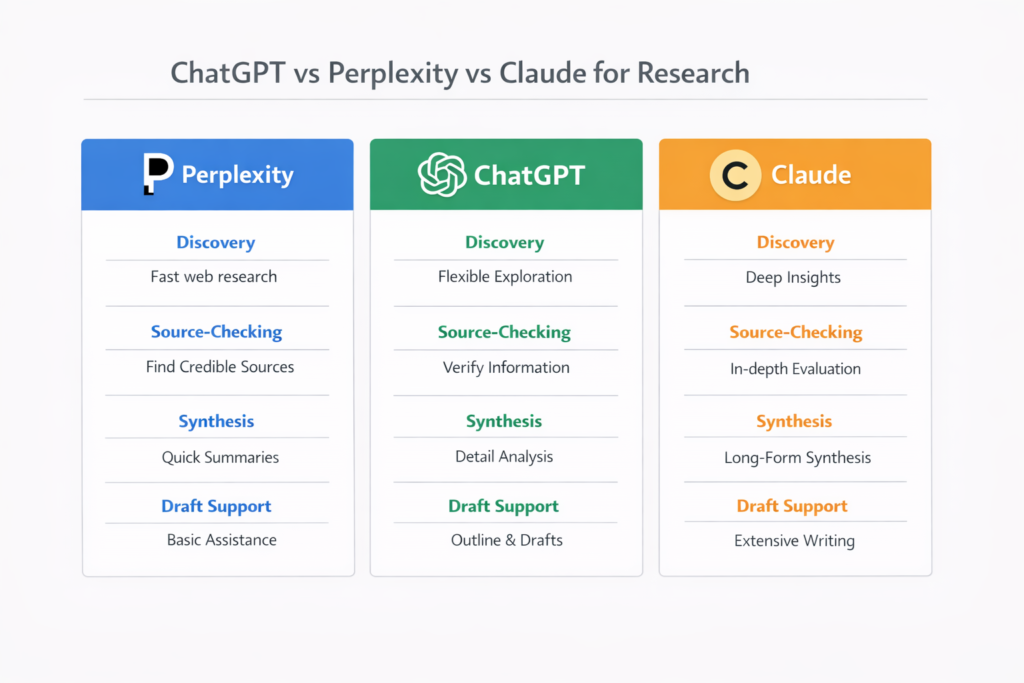
If your main goal is research, these three tools do different jobs. Perplexity is usually the best starting point for fast source-backed discovery, ChatGPT is the most flexible all-purpose research assistant, and Claude is often the strongest for turning research into thoughtful long-form synthesis. The right choice depends less on which model is “smartest” and more on which stage of research is slowing you down.
In simple terms
Perplexity is the clearest fit when you want to search, compare, and verify sources quickly because it is built as an answer engine with visible citations. ChatGPT is better when you want one tool that can move from research to outlining to drafting, especially since free users can search the web, upload files, and analyze content. Claude is strongest when the research stage is mostly done and you need calm, structured synthesis or long-form writing from the material you already have.
How I’m comparing them
For research tasks, the useful criteria are not the same as for general chat. The big questions are: how well does the tool surface sources, how easy is it to work with files or documents, how useful is it for synthesis, and how much friction it adds between “I need information” and “I can use this.” Those criteria also match the emphasis in current high-visibility comparison pages, which increasingly separate search-first research from drafting-first research instead of treating all AI assistants as interchangeable.
ChatGPT vs Perplexity vs Claude :Quick comparison table
| Tool | Best for | Biggest strength | Main weakness |
| Perplexity | Fast web research | Built around real-time answers with sources | Less natural as a full drafting workspace |
| ChatGPT | Flexible research workflow | Web search, file uploads, and broad task support in one place | Still needs source checking and discipline |
| Claude | Deep synthesis and long-form writing | Strong structured analysis and calmer drafting | Research features are stronger on paid plans |
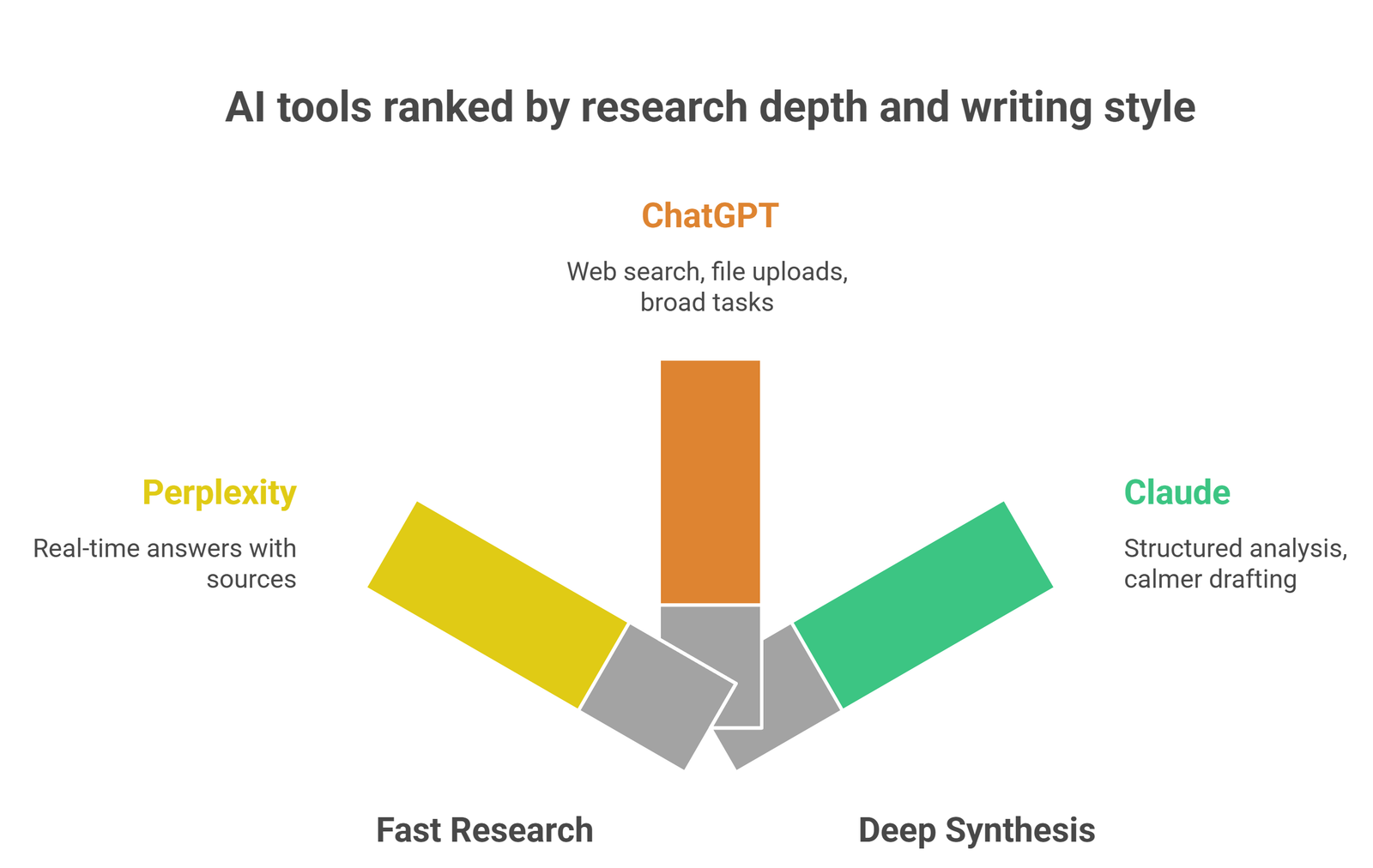
This is the practical summary. If you are choosing only one tool for research-heavy work, your decision should depend on whether you need discovery, workflow flexibility, or synthesis quality most.
Perplexity: Best For Source-Backed Research Discovery
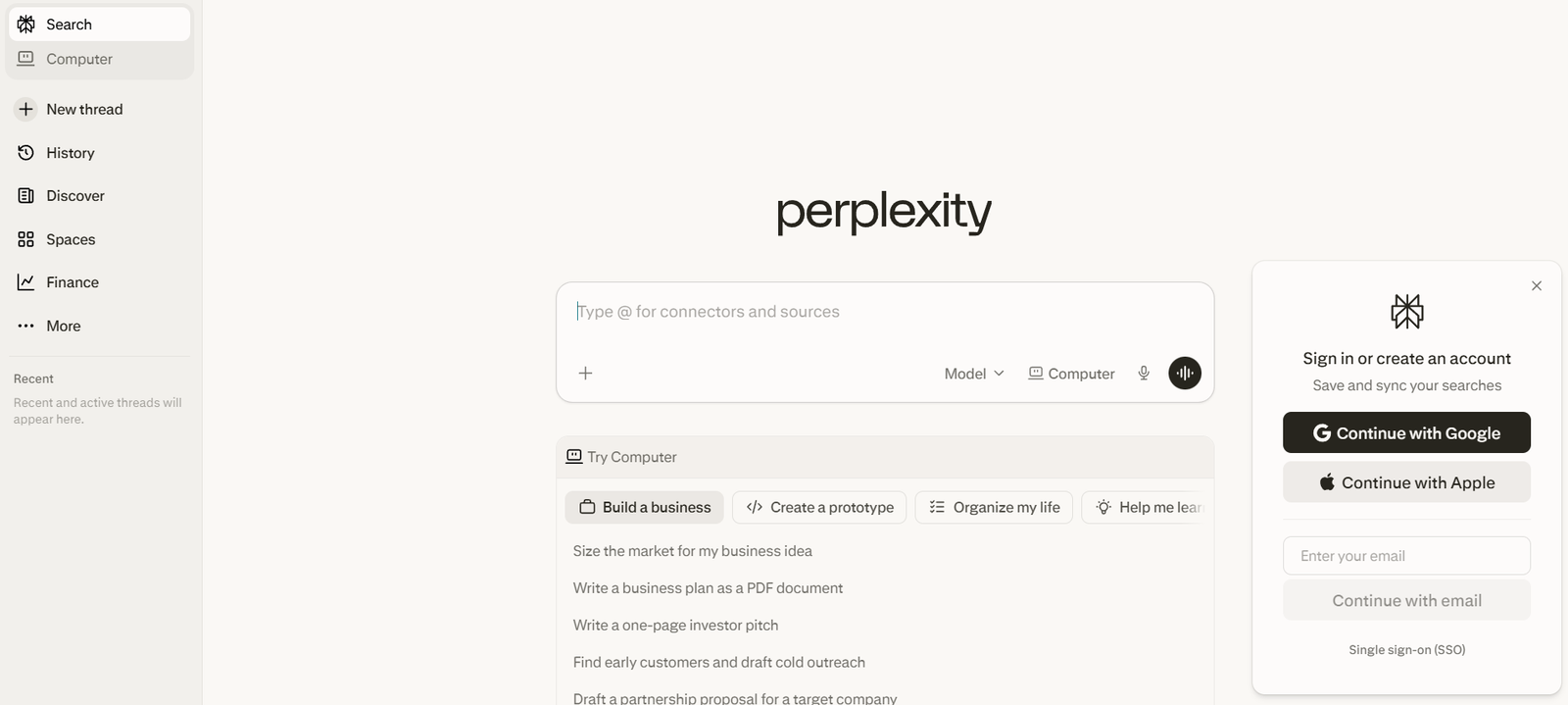
Perplexity describes itself as a free AI-powered answer engine that provides accurate, trusted, and real-time answers, and that positioning is exactly why it works so well for research-first tasks. It is strongest when you are exploring a topic, building a reading list, comparing viewpoints, or trying to find starting sources fast. The biggest advantage is clarity: Perplexity feels less like “generate something for me” and more like “help me find and navigate useful information.”
For researchers, analysts, students, and writers, this matters because early-stage research is usually about finding trustworthy direction, not producing final prose. That is also why comparison pages keep placing Perplexity ahead of broader chat tools for live research. Its weakness is that once you move into deep note synthesis, rewriting, or multi-stage drafting, it feels less like a workspace and more like a very good research layer.
ChatGPT: Best For All-Purpose Research Workflows
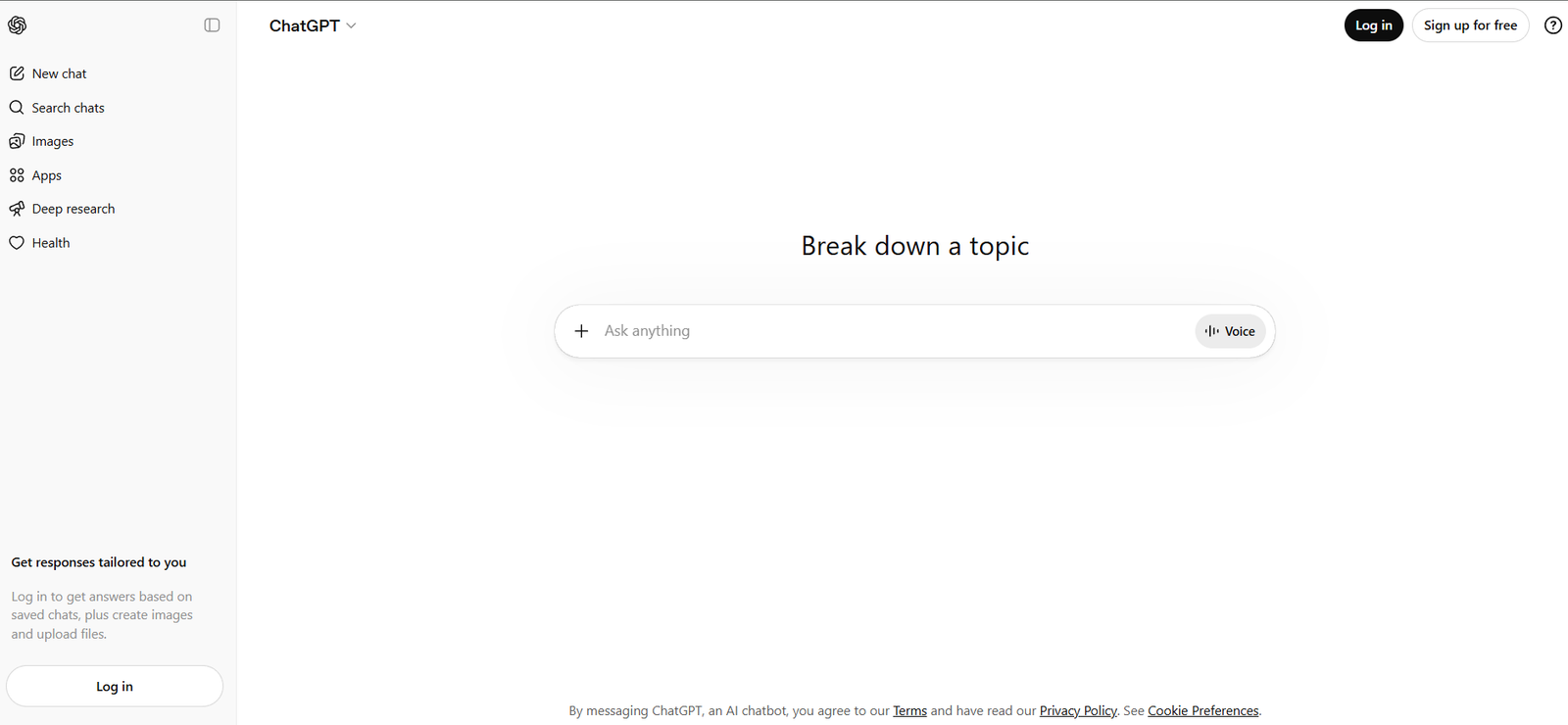
ChatGPT is the strongest choice if you want one tool that can handle multiple parts of the research workflow. OpenAI’s free tier now includes web search, file uploads, data analysis, and access to a wider toolset, while the capabilities overview also highlights image and file understanding. That makes ChatGPT more than a chatbot for research. It can help gather current information, summarize documents, compare notes, shape outlines, and start draft writing in the same environment.
This flexibility is ChatGPT’s biggest advantage and biggest risk. It is easier to stay in one workflow without switching tabs, but that convenience can tempt users to treat it like an authority instead of an assistant. For research tasks, ChatGPT works best when you use it as a workflow tool: gather, summarize, compare, and structure, then verify important claims. That is why many comparison articles frame ChatGPT as the best overall or most versatile option, even when they give Perplexity the edge for pure research discovery.
Claude: Best For Deep Synthesis and Long-form Research Writing
Claude is strongest when the research material is already in front of you and the next task is synthesis. Anthropic positions Claude for writing, research, and problem-solving, and its pricing pages show a free plan, while dedicated help documentation says Claude’s higher-end Research feature is available on paid plans. In practice, that means Claude is usually less compelling than Perplexity for first-pass web discovery, but often better once you want to reason through material, rewrite it cleanly, or turn notes into a more coherent long-form output.
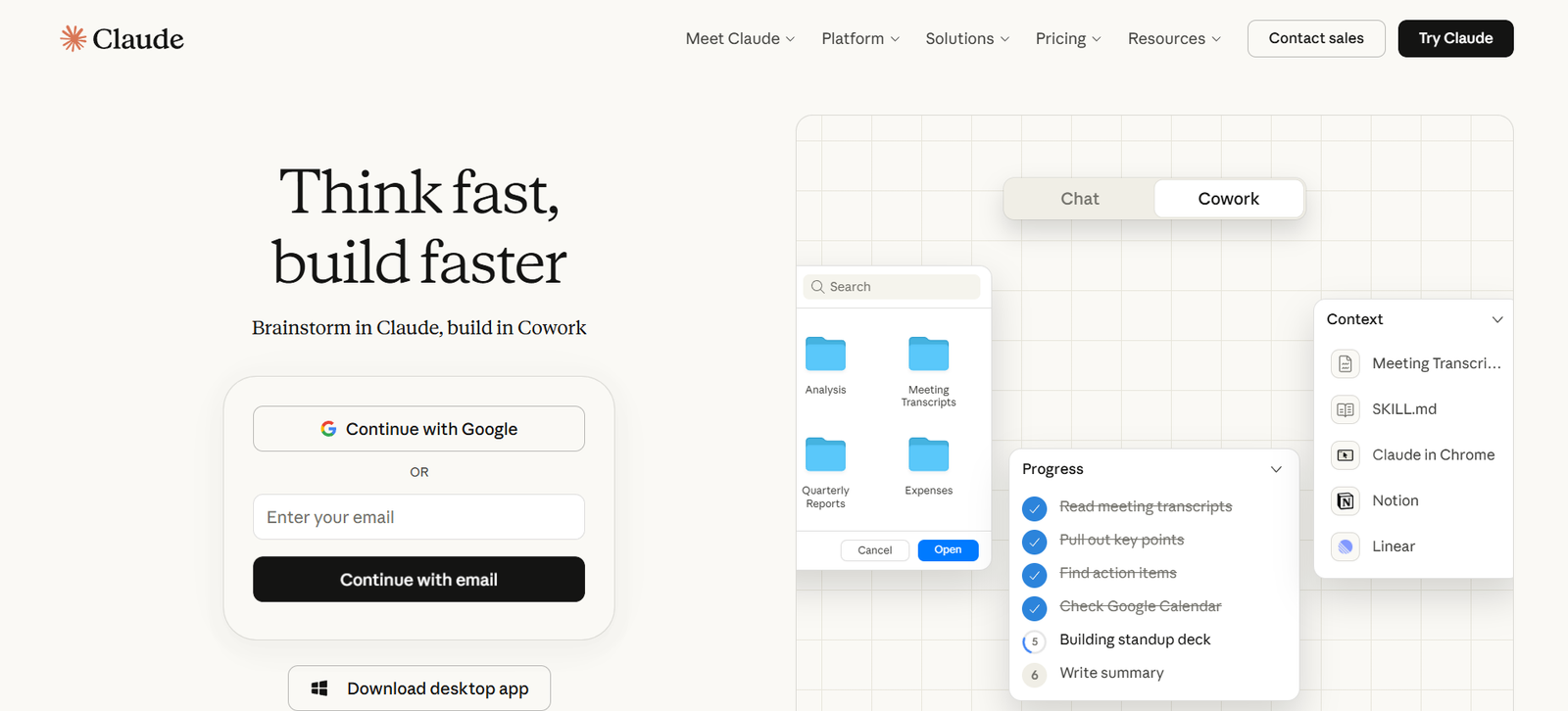
This makes Claude especially useful for literature summaries, briefing notes, report shaping, and structured writing from source material you already trust. It is not that Claude cannot research. It is that its clearest advantage for most users is what happens after the information is gathered. That distinction is easy to miss in generic tool roundups, but it matters a lot for actual research workflows.
Which one is best for different research tasks?
For topic exploration, choose Perplexity first. Its source-first experience is the cleanest fit for scanning a subject quickly. For working with uploaded files, mixed tasks, or evolving research into an outline, choose ChatGPT. For deep synthesis, report writing, or shaping longer analysis, choose Claude. These are not abstract differences. They map directly to how each product is positioned today and how comparison pages describe their strongest everyday use cases.
A simple way to think about it is:
- Perplexity = find
- ChatGPT = work through
- Claude = shape and refine
That does not mean the tools cannot overlap. It means one of them usually feels more natural depending on the research stage.
The smartest workflow is often not choosing only one
Many of the better current comparison takes arrive at the same practical conclusion: combine tools by stage. Use Perplexity for discovery, ChatGPT for organizing and expanding the workflow, and Claude when you want stronger long-form synthesis. That stack makes more sense than forcing one tool to do everything equally well, and it aligns with how researchers, writers, and analysts actually work.
This also explains why broad “which AI is best?” comparisons often feel unsatisfying. Research is a sequence, not a single action. The best tool changes depending on where you are in that sequence.
Common mistakes people make
The biggest mistake is using ChatGPT or Claude as if they were pure research engines when the actual need is source discovery. Another mistake is using Perplexity as if it were the final writing environment when the real need is structured synthesis. A third mistake is assuming cited output automatically means perfect reliability. Source visibility helps, but users still need to check whether the sources are relevant, current, and correctly interpreted. These are exactly the kinds of practical trade-offs that separate stronger comparison content from generic “tool A vs tool B” summaries.
Suggested Read:
- AI Tools for Research and Writing in 2026
- Best AI Tools for Students: Research, Notes, and Presentations
- Best AI Tools for Bloggers and Content Writers
- Best Free AI Tools in 2026
- AI Tools With Free Plans Worth Using in 2026
- Prompt Engineering for Beginners: A Practical Guide
FAQ: ChatGPT vs Perplexity vs Claude for Research
Which is best for research: ChatGPT, Perplexity, or Claude?
For pure research discovery, Perplexity is usually the best starting point. For flexible end-to-end research workflows, ChatGPT is often the strongest overall. For synthesis and long-form writing from research, Claude is often the best fit.
Is Perplexity better than ChatGPT for research?
Usually yes for search-first research, because Perplexity is built around live answers with citations. ChatGPT becomes more compelling when you need to move from research into files, analysis, outlining, and drafting without switching tools.
Is Claude good for research?
Yes, but its clearest strength is not first-pass source discovery. Claude is often better for analysis, synthesis, and long-form writing from research material, while some research-oriented features are reserved for paid plans.
Should I use one or all three?
If research is central to your work, a mixed workflow is often best: Perplexity for discovery, ChatGPT for flexible research operations, and Claude for final synthesis. That is an evidence-based synthesis from the comparison patterns above.
Final takeaway
For research tasks, the winner depends on the stage. Perplexity is best when you need to find and compare sources quickly. ChatGPT is best when you need one tool that can search, analyze, organize, and draft. Claude is best when you need to turn research into clearer long-form thinking and writing. If your goal is better research output, the smartest move is usually not choosing one forever. It is using each one where it is strongest.