
Best AI Tools for Bloggers and Content Writers in 2026
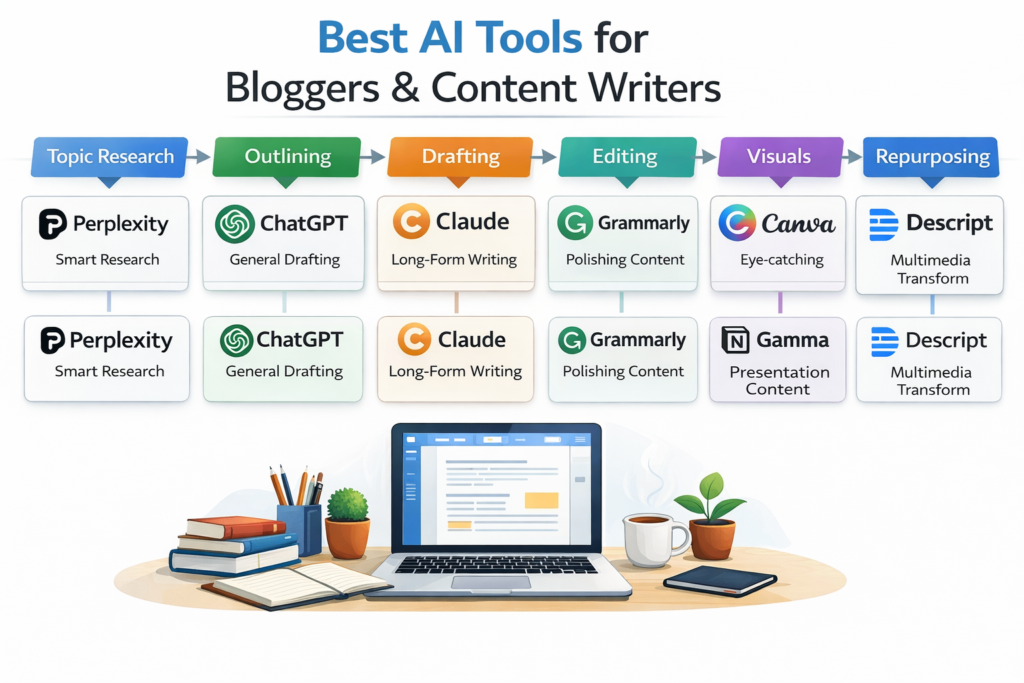
The best AI tools for bloggers and content writers in 2026 are not the ones that generate the most text. They are the ones that improve the content workflow from end to end: topic research, source discovery, outlining, draft expansion, editing, visuals, and repurposing. For most creators, the strongest stack right now includes Perplexity for research, ChatGPT or Claude for drafting, Grammarly for cleanup, Canva for visuals, Notion AI for workflow organization, and Descript or Gamma for repurposing and presentation-style output.
In simple terms
A blogger does not need one perfect AI app. A blogger needs the right tool for the right stage. Research tools help you find better information. Drafting tools help you move from blank page to structure. Editing tools help you sound clearer. Design and repurposing tools help you turn one article into multiple assets. That workflow-based approach is also what many current ranking pages do well, but they often stop short of showing how the tools fit together in a real publishing process.
How to choose the right AI tool for blogging
The fastest way to choose an AI tool is to identify your bottleneck. If your biggest problem is research, use a research-first tool. If your drafts are slow and inconsistent, use a drafting assistant. If your content is good but your polish is weak, use an editing tool. If publishing feels incomplete because you also need thumbnails, slides, or clips, choose a visual or repurposing tool. That is a better decision model than asking which tool is “best overall,” because blogging is a multi-step workflow rather than one task.
Best AI Tools for Bloggers: Quick comparison table
| Tool | Best for | Why bloggers use it | Main limitation |
| Perplexity | Research | Fast source-backed topic discovery | Not a full writing workspace |
| ChatGPT | General drafting | Flexible for outlines, rewrites, and ideation | Needs fact-checking |
| Claude | Long-form writing | Strong for thoughtful, structured drafts | Less research-first than Perplexity |
| Grammarly | Editing | Fast clarity, grammar, and tone cleanup | Weak for deep research |
| Notion AI | Workflow organization | Good for briefs, notes, and content planning | Best if you already use Notion |
| Canva | Visual content | Easy graphics, thumbnails, and blog assets | Not built for long-form writing |
| Gamma | Presentation-style content | Fast deck and doc generation | Less flexible than full design tools |
| Descript | Repurposing | Turns blog ideas into audio and video workflows | Most useful after the article exists |
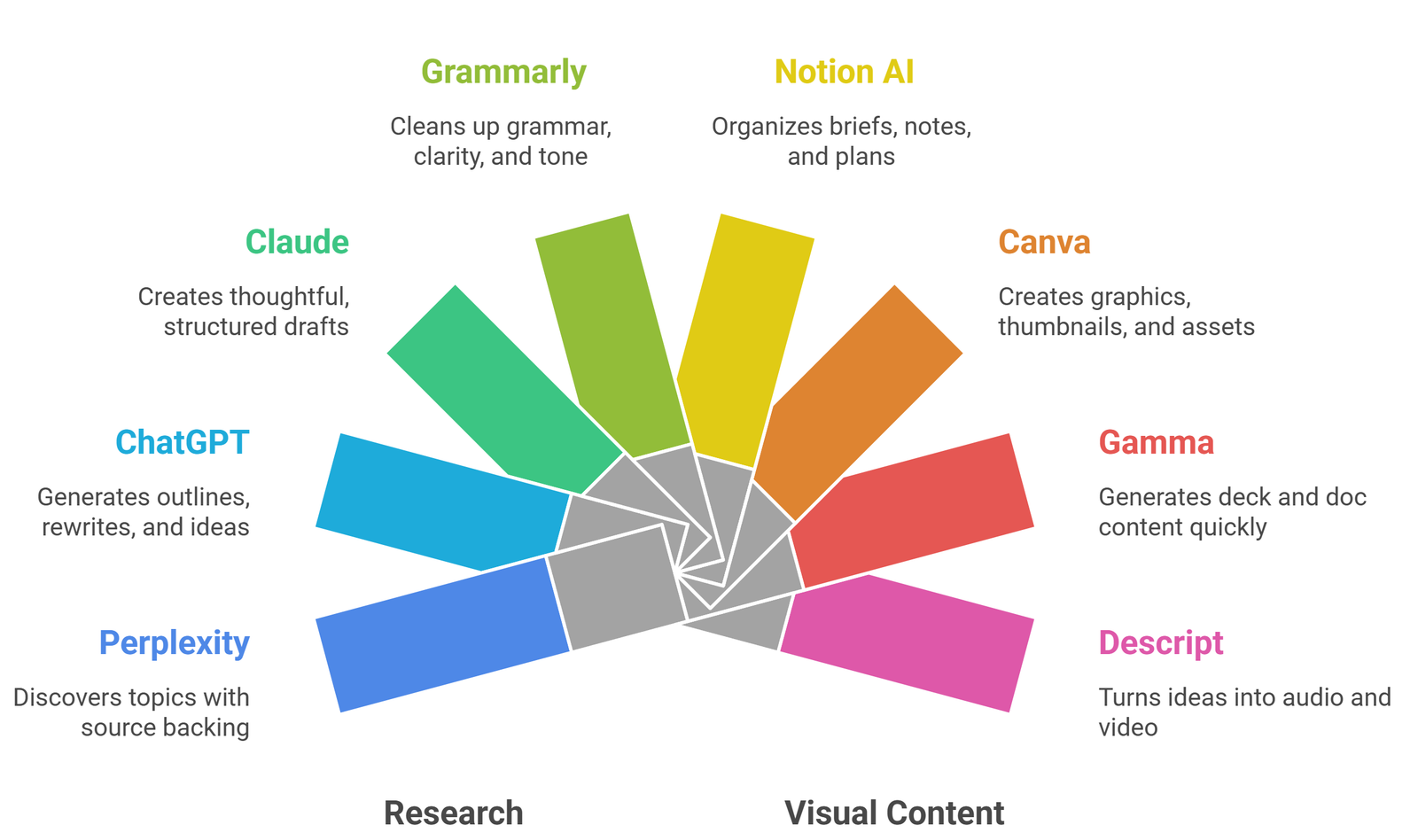
These category fits align with how official product pages position the tools today. Perplexity describes itself as an answer engine, OpenAIpositions ChatGPT as a writing and productivity assistant, Anthropic positions Claude for writing and analysis, Grammarly centers its AIwriting assistant around editing and drafting help, Canva frames Magic Studio around creative generation, Notion places AI inside docs and workspace workflows, and Descript focuses on transcription and media editing.
Perplexity for research and angle discovery
Perplexity is one of the best tools for bloggers whose biggest bottleneck is finding useful information fast. It works especially well for topic exploration, comparing sources, identifying subtopics, and collecting source trails before drafting starts. For content writers, that matters because poor research usually leads to generic posts, while better source discovery leads to sharper outlines and stronger hooks. Its research-first design is the biggest reason it keeps appearing in current roundups for writers and marketers.
ChatGPT for flexible blogging workflows
ChatGPT remains one of the best all-purpose tools for bloggers because it is useful at multiple stages: brainstorming headlines, clustering ideas, outlining sections, rewriting paragraphs, tightening transitions, and turning rough notes into workable drafts. It is not the most specialized tool on this list, but it is the broadest. That flexibility is why it continues to appear across high-ranking roundup pages as a default tool for content creators. For bloggers who want one central assistant and do not want a fragmented stack too early, ChatGPT is still one of the easiest starting points.
Claude for long-form clarity
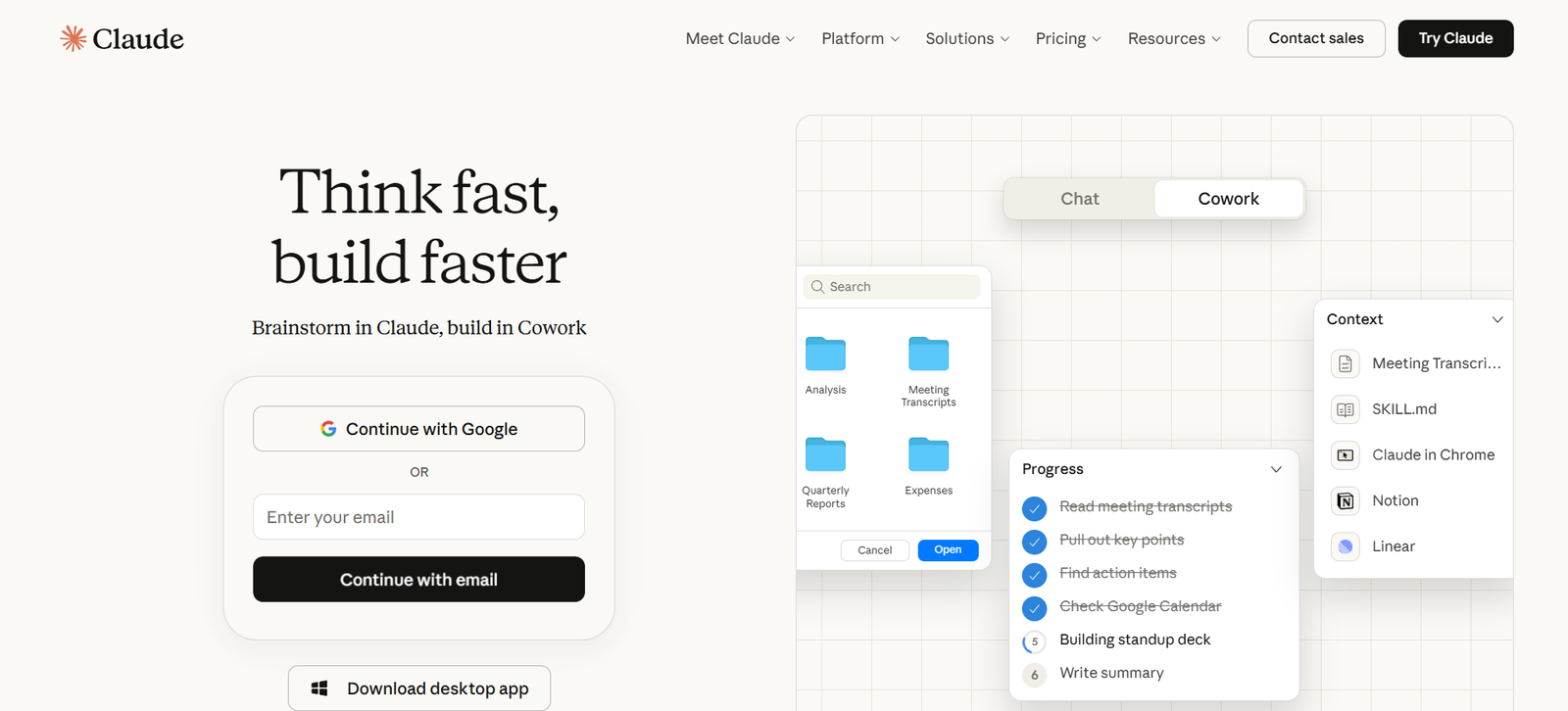
Claude is a strong choice for bloggers who care more about readable long-form output than about rapid-fire research. It is especially useful when you already know what you want to say but need help shaping the argument, organizing the flow, or expanding short notes into cleaner prose. In practice, many writers prefer Claude for first-draft shaping and structural rewrites rather than for early discovery. That makes it a good complement to a research tool rather than a replacement for one.
Grammarly for cleanup and polish
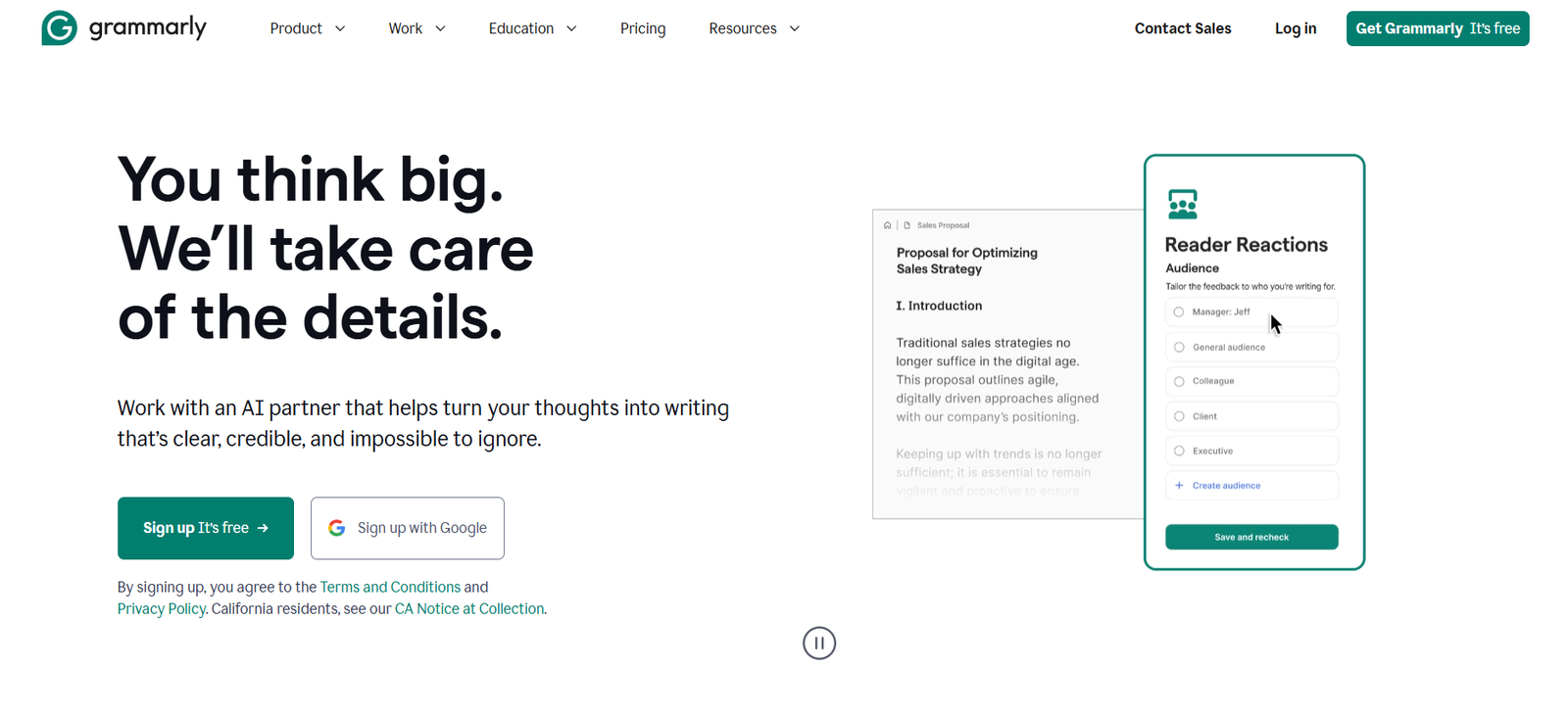
Grammarly is one of the highest-utility tools for bloggers because nearly every article benefits from final cleanup. It is strongest at clarity, grammar, sentence tightening, and tone smoothing. For content teams and solo bloggers alike, that saves time in the final editing stage, especially when the draft already exists and the goal is to improve quality rather than invent content. Many AI writing roundups still include Grammarly for exactly this reason: it solves a narrower problem, but it solves it well.
Notion AI for briefs, notes, and publishing systems
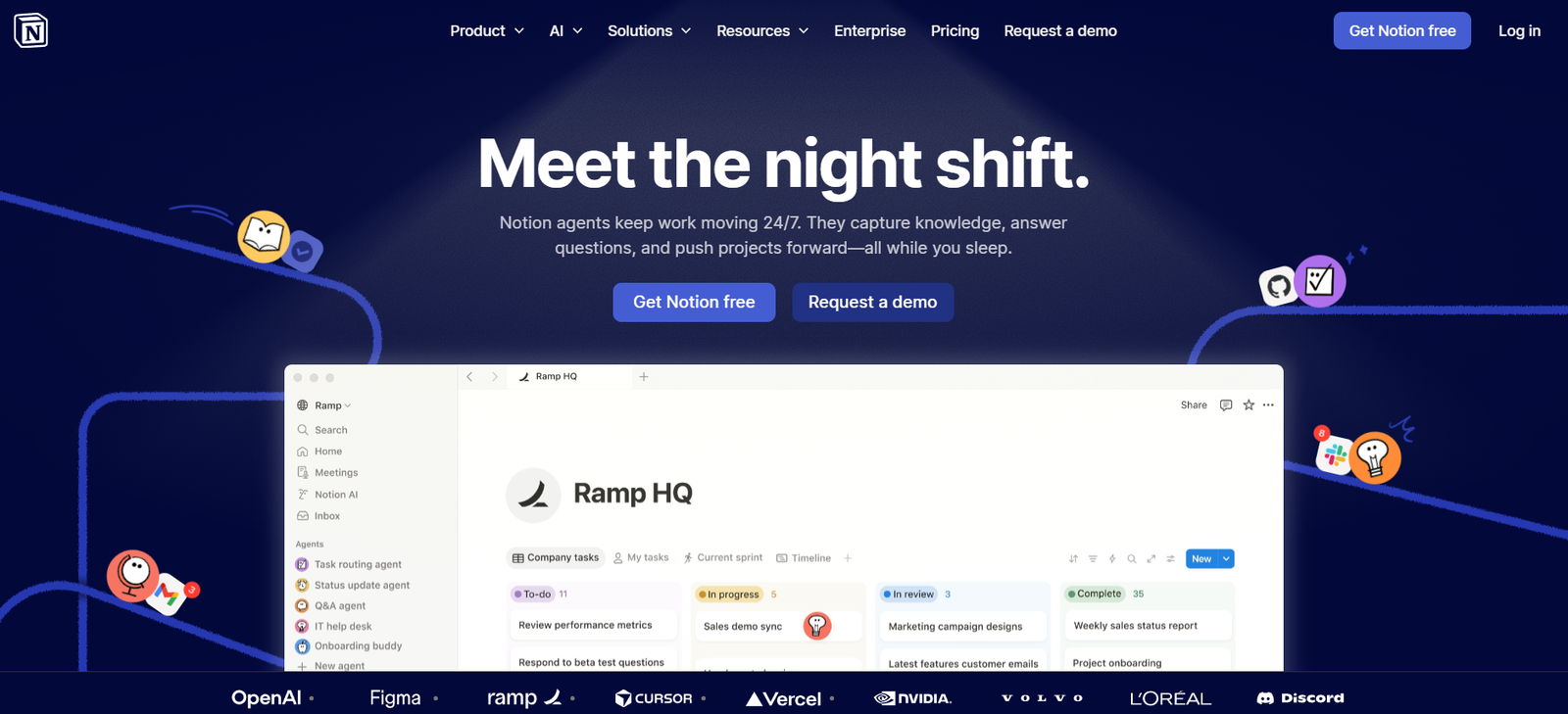
Notion AI is useful when blogging is part of a repeatable workflow rather than a one-off writing task. It works well for storing source notes, maintaining content calendars, summarizing research inside documents, and organizing editorial systems. For creators who already plan content in Notion, the value is not just AI generation. It is keeping planning, notes, and draft support in one place. That makes it more of a workflow tool than a pure writing tool.
Canva and Gamma for visual packaging
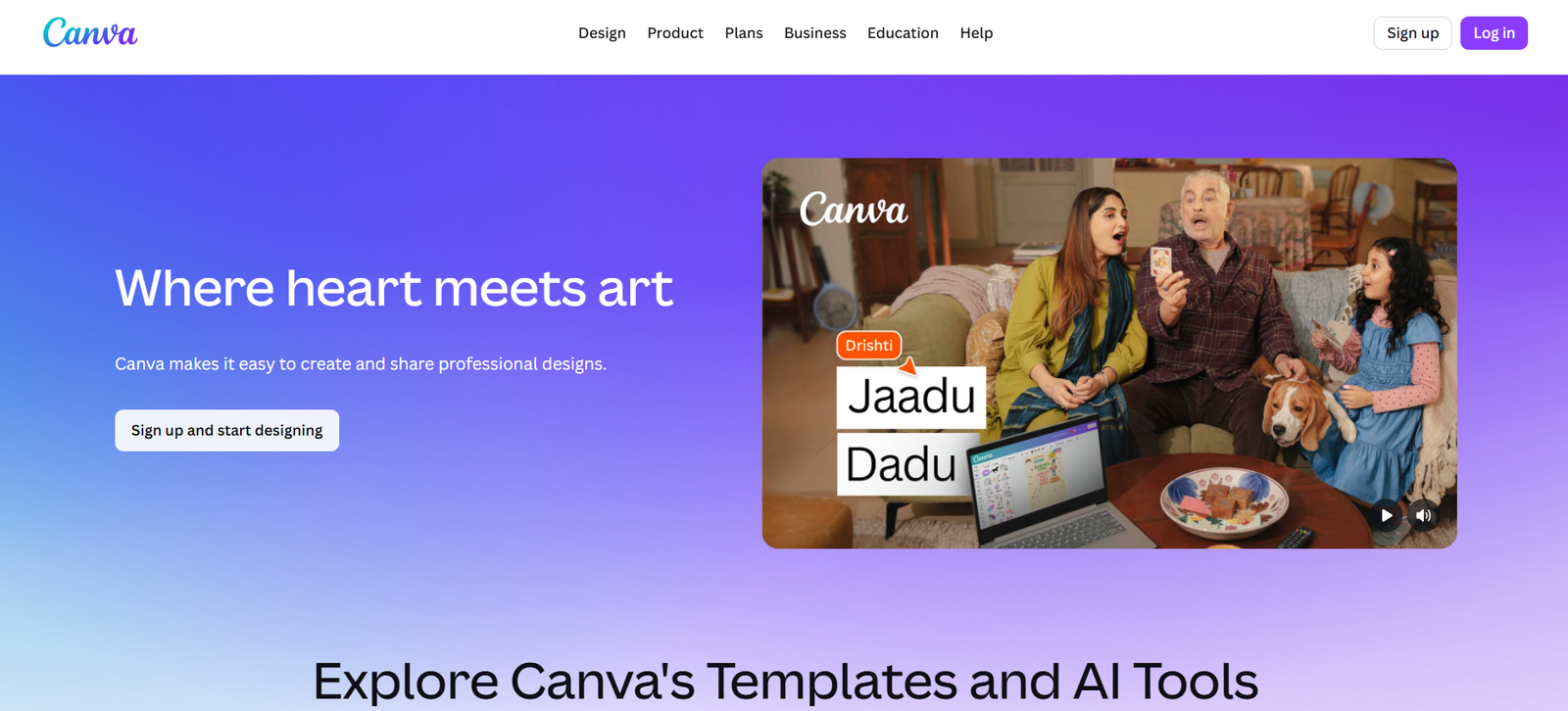
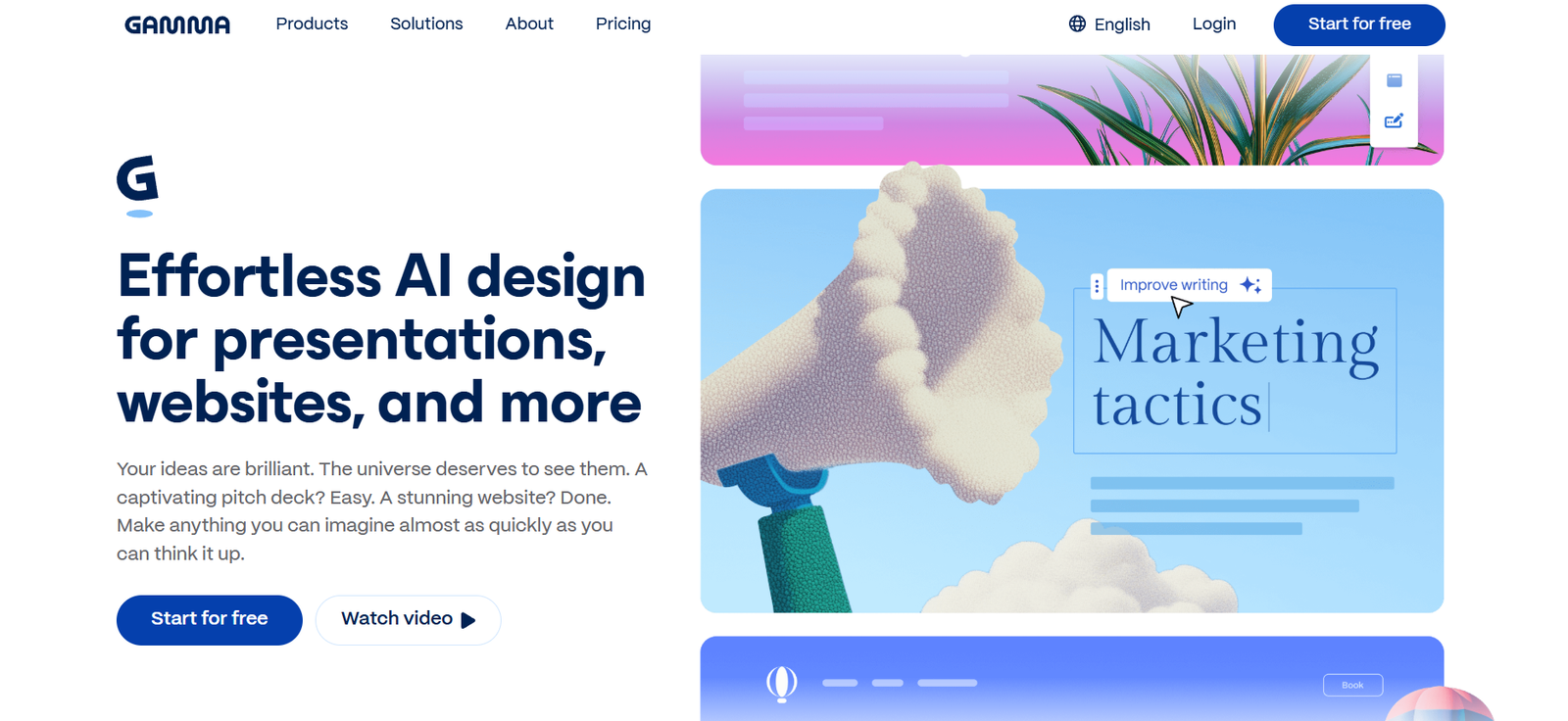
Blogging is no longer just about the article body. Many creators also need featured images, quote cards, carousels, and slide-style assets for distribution. Canva is stronger when you need flexible visual output and quick design help. Gamma is stronger when you want to turn an outline or article into a clean deck or presentation-style page. Both matter because stronger packaging often improves distribution even if the article itself is already solid.
Descript for repurposing content
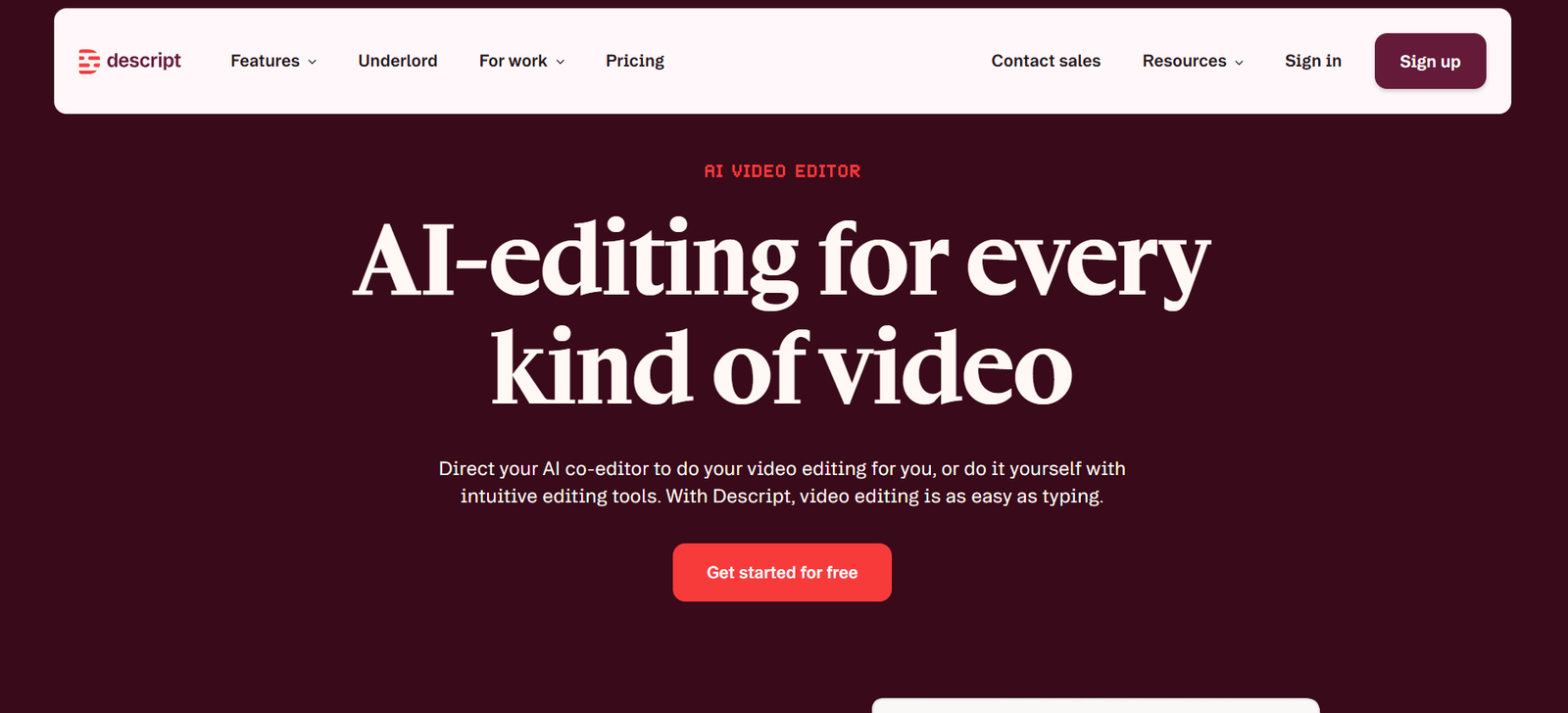
Descript is one of the more useful tools once the article is done and you want to repurpose it into audio, clips, or talking-head style content. That makes it less of a writing tool and more of a content multiplication tool. For bloggers trying to extend one post into video or podcast-style assets, that is a meaningful advantage. Many ranking pages underweight this stage, but repurposing is a major part of modern content writing workflows.
Best picks by use case
If your biggest problem is research, start with Perplexity. If your problem is turning ideas into drafts, start with ChatGPT or Claude. If your issue is final polish, use Grammarly. If your workflow is messy, use Notion AI. If your content needs visual packaging, use Canva. If you want to turn blog content into slides or alternate formats, use Gamma. If you want audio or video repurposing, use Descript. This category-first approach is stronger than picking one tool by popularity alone, and it closely matches how current top-ranking pages guide users through choice.
Common mistakes bloggers should avoid
The biggest mistake is expecting one tool to handle research, drafting, editing, visuals, and distribution equally well. Another is treating AI output as publish-ready without fact-checking or rewriting for voice. A third is paying for multiple overlapping tools before identifying the real bottleneck. The pages that already rank well in this space usually win because they simplify the choice, but many still stay too generic. A better approach is to match tools to workflow stages and keep the stack small.
Suggested Read:
- Best AI Tools for Beginners in 2026
- AI Tools for Research and Writing in 2026
- Best AI Tools by Use Case in 2026
- AI Tools for Productivity in 2026
- ChatGPT vs Perplexity vs Claude for Research Tasks
- AI Tools With Free Plans Worth Using in 2026
- Prompt Engineering for Beginners: A Practical Guide
FAQ: Best AI Tools for Bloggers and Content Writers
What is the best AI tool for bloggers overall?
For most bloggers, ChatGPT is still the strongest general-purpose starting point because it can support ideation, outlining, rewriting, and drafting in one place.
What is the best AI tool for blog research?
Perplexity is one of the strongest research-first choices because it is built around answer generation with source visibility.
What is the best AI tool for editing blog posts?
Grammarly remains one of the best editing-focused tools because it is built around clarity, grammar, and rewriting support.
What is the best AI tool for blog visuals?
Canva is one of the easiest tools for thumbnails, featured images, and supporting visual assets, while Gamma is stronger for turning ideas into presentation-style content.
Final takeaway
The best AI tools for bloggers and content writers are the ones that fit a specific stage of the content workflow. Use Perplexity for better source discovery, ChatGPT or Claude for draft building, Grammarly for cleanup, Notion AI for workflow structure, Canva for visual packaging, and Descript or Gamma for repurposing. That stack is more practical than chasing one “best AI writing tool” claim, and it is more aligned with how real content gets made.