
AI Tools for Research and Writing in 2026
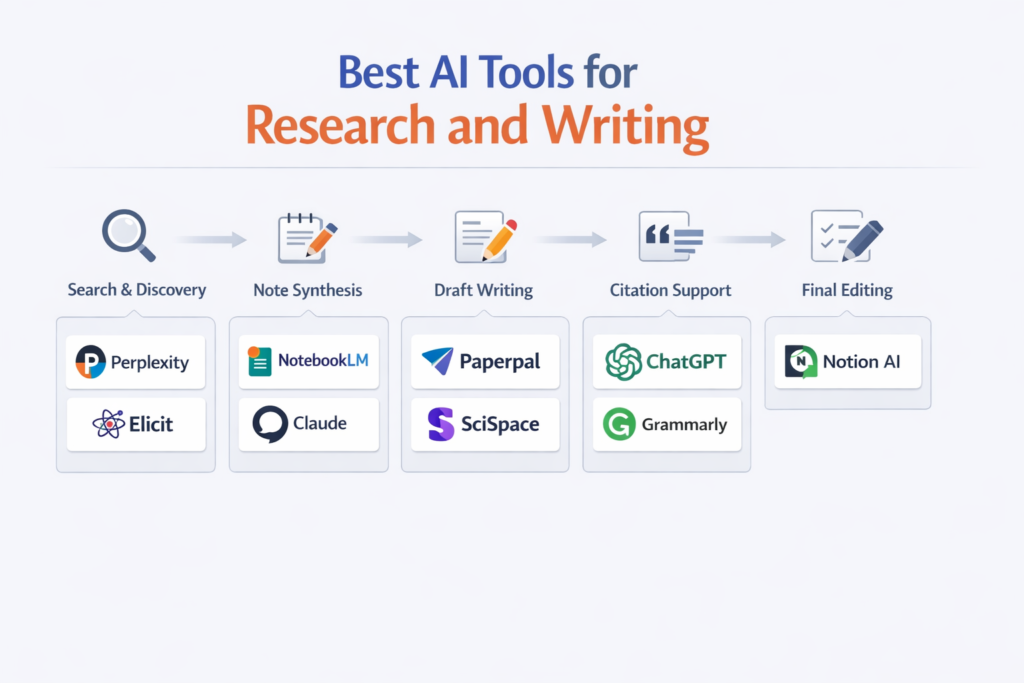
The best AI tools for research and writing in 2026 are not the ones that write the most text. They are the ones that help you move from messy information to trustworthy output faster. A strong workflow usually combines one discovery tool, one source-grounded note tool, one drafting tool, and one editing layer. Right now, the strongest options across that workflow are Perplexity, NotebookLM, Elicit, Paperpal, SciSpace, ChatGPT, Claude, Grammarly, and Notion AI.
In simple terms
Research and writing are not one task. They are a chain of tasks: finding sources, understanding them, organizing notes, shaping an argument, drafting clearly, and polishing the final version. That is why the best tool stack is usually not one app. It is a small system where each tool handles a specific bottleneck well. That same divide also shows up across current high-visibility search results, which separate literature discovery, source synthesis, and writing support instead of treating them as one product category.
How to choose the right tool
Start with the stage that slows you down most. If you cannot find good sources, use a research-first tool. If you already have documents but struggle to turn them into useful notes, use a source-grounded synthesis tool. If your ideas are clear but your drafts are weak, use a writing or editing assistant. This is also the main weakness in many generic roundups: they mix search, synthesis, and writing into one bucket even though the reader usually needs only one layer fixed first.
AI Tools for Research and Writing: Quick comparison table
| Tool | Best for | Why it stands out | Main limit |
| Perplexity | Fast exploratory research | Real-time answers with sources | Not a full writing workspace |
| NotebookLM | Source-grounded notes | Works from your own sources | Best only if you already have material |
| Elicit | Paper discovery and extraction | Built for scientific research workflows | Less useful for non-paper writing |
| Paperpal | Academic writing and polish | Research-aware writing and editing | More academic than general-purpose |
| SciSpace | Reading and literature workflows | Large paper base and research tools | Can feel specialized for non-academic users |
| ChatGPT | General drafting and explanation | Broadest flexible assistant | Needs careful fact-checking |
| Claude | Long-form drafting | Strong structured writing support | Less research-first than Perplexity |
| Grammarly | Editing and clarity | Fast cleanup across apps | Weak for deep research |
| Notion AI | Research organization | Writing and synthesis inside a workspace | Best if you already use Notion |
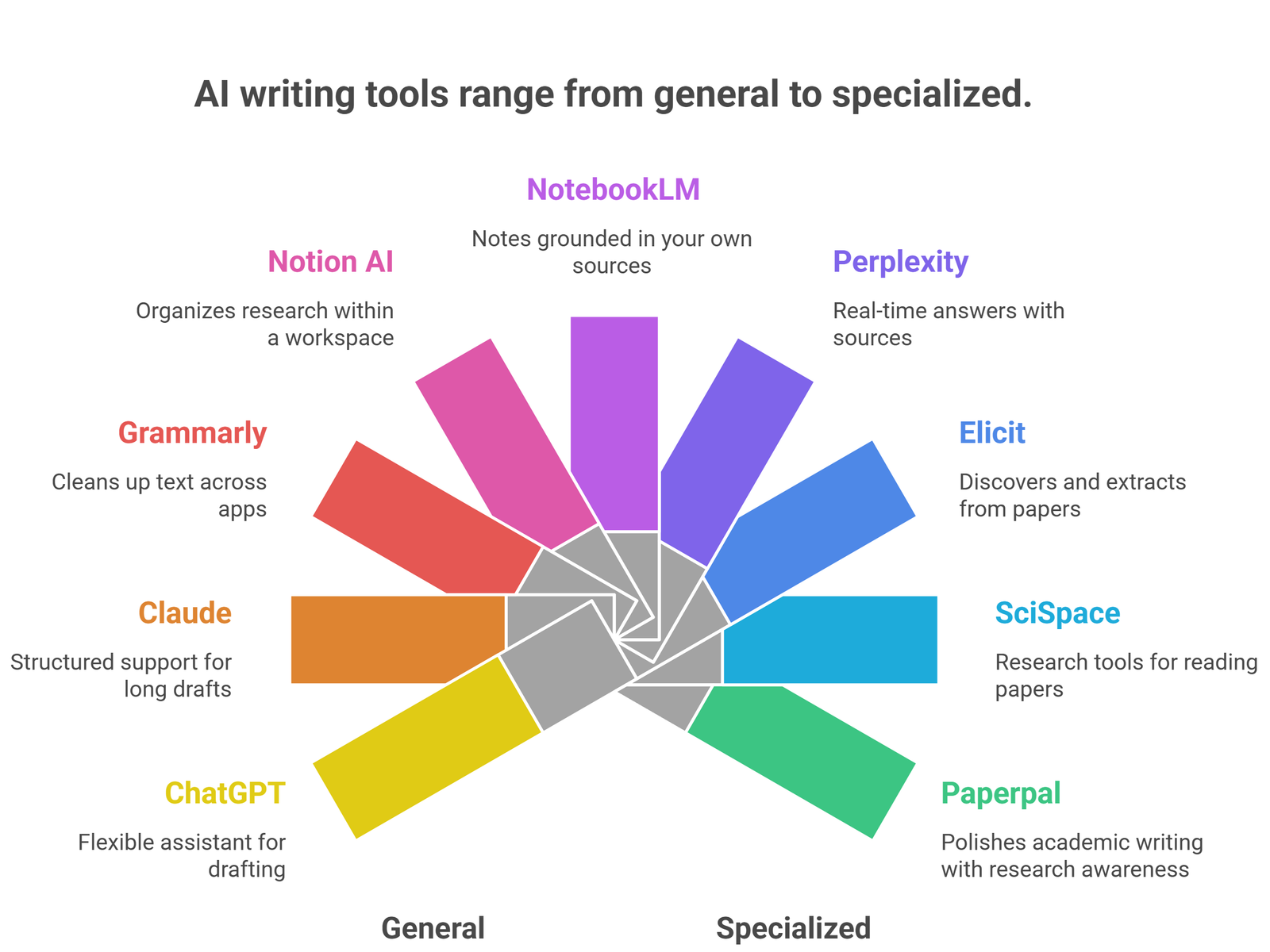
These product positions are based on current official pages, not marketing summaries from third parties.
Perplexity for research-first discovery
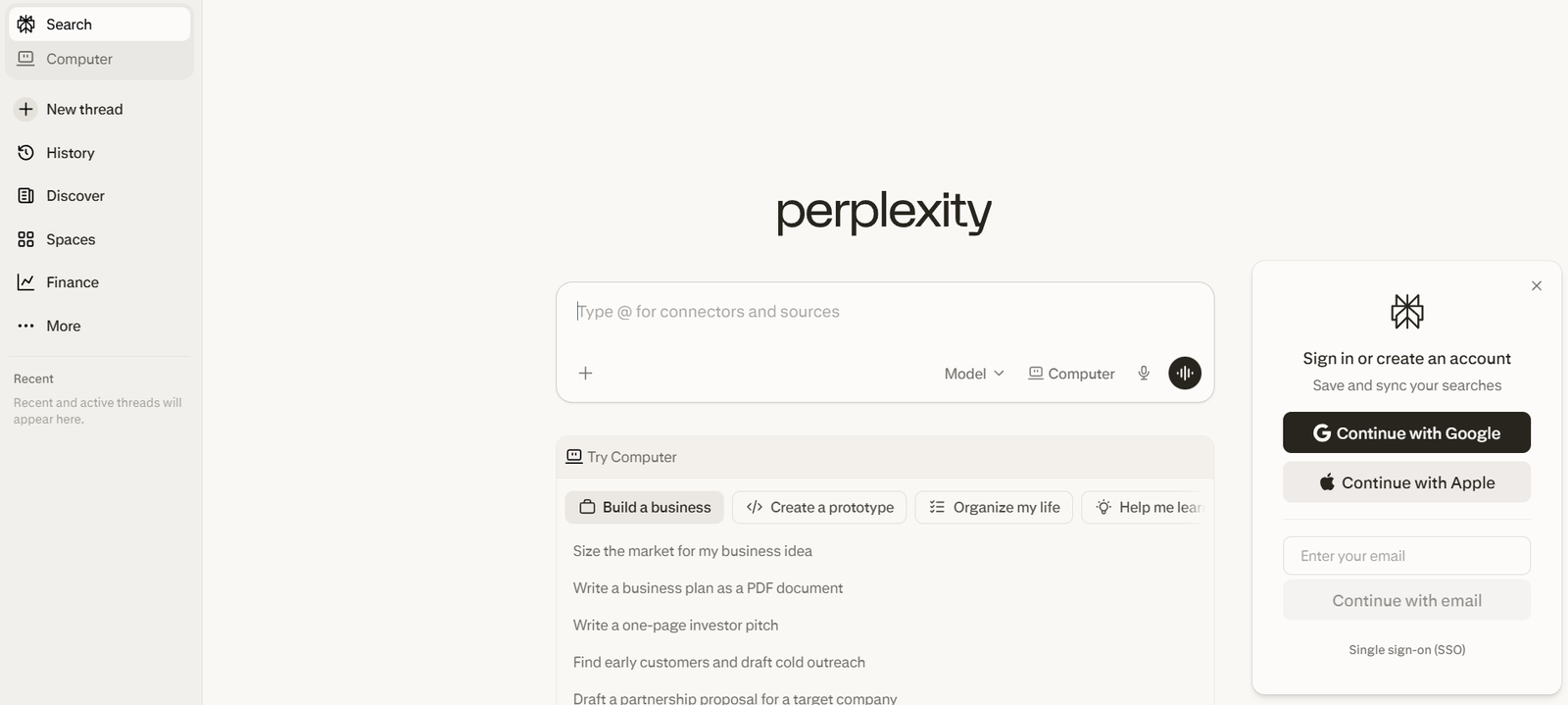
Perplexity is one of the best starting points when you need quick, source-backed answers and want to move through follow-up questions rapidly. Its own help content describes it as an answer engine that searches the web, identifies trusted sources, and synthesizes them into direct responses. That makes it especially useful for topic exploration, market scans, and early-stage literature gathering.
NotebookLM for source-grounded synthesis
NotebookLM is strongest when your research starts from your own documents instead of from the open web. Google positions it as an AI research tool and thinking partner, and its app listing emphasizes uploading PDFs, websites, videos, and text, then creating summaries and Audio Overviews from that material. For researchers, students, and analysts, that grounding is a major advantage over generic chat tools.
Elicit for academic paper workflows
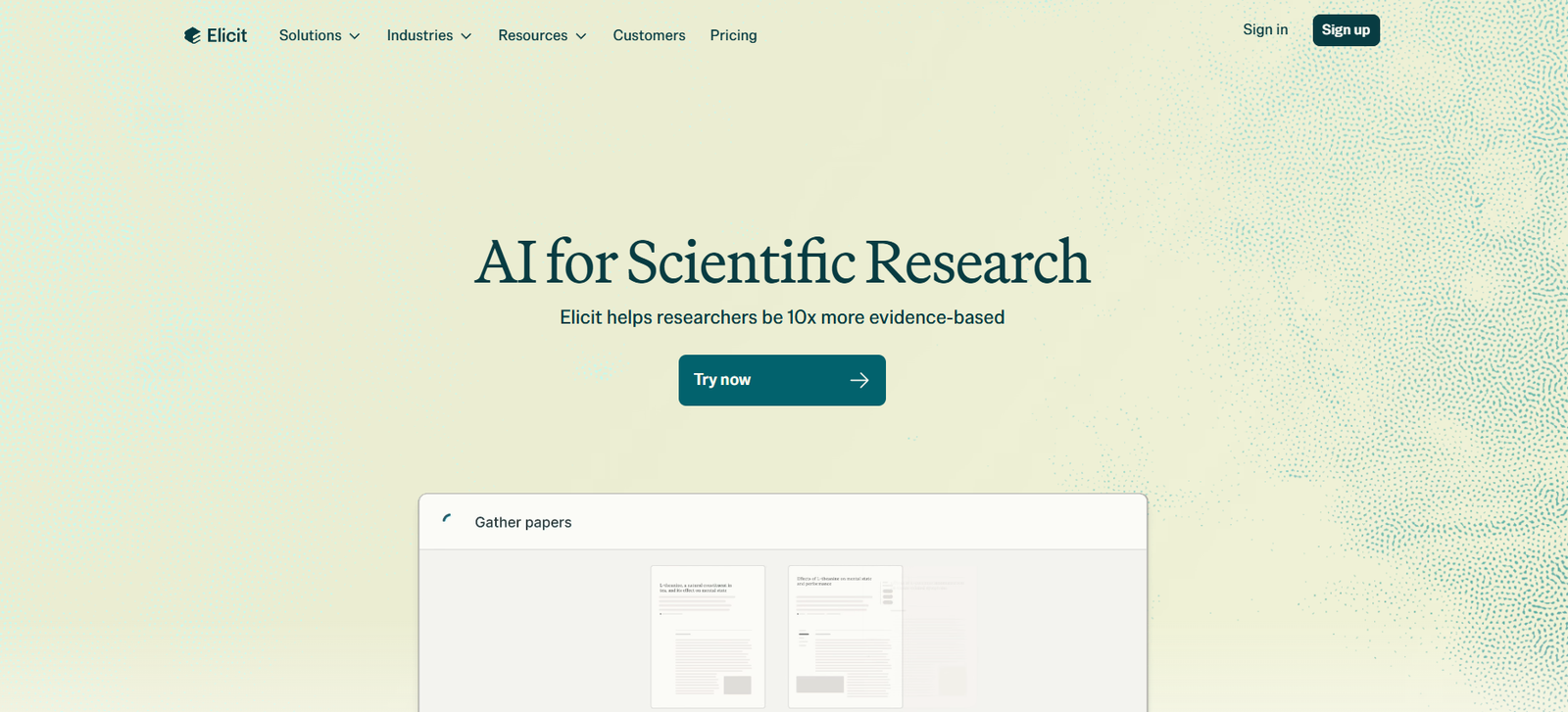
Elicit is one of the clearest specialized tools in this category. Its official site says it can search, summarize, extract data from, and chat with more than 125 million papers, with dedicated workflows for systematic reviews and paper search. That makes it especially strong for research-heavy workflows where paper discovery and extraction matter more than blog-style drafting.
Paperpal and SciSpace for research-heavy writing
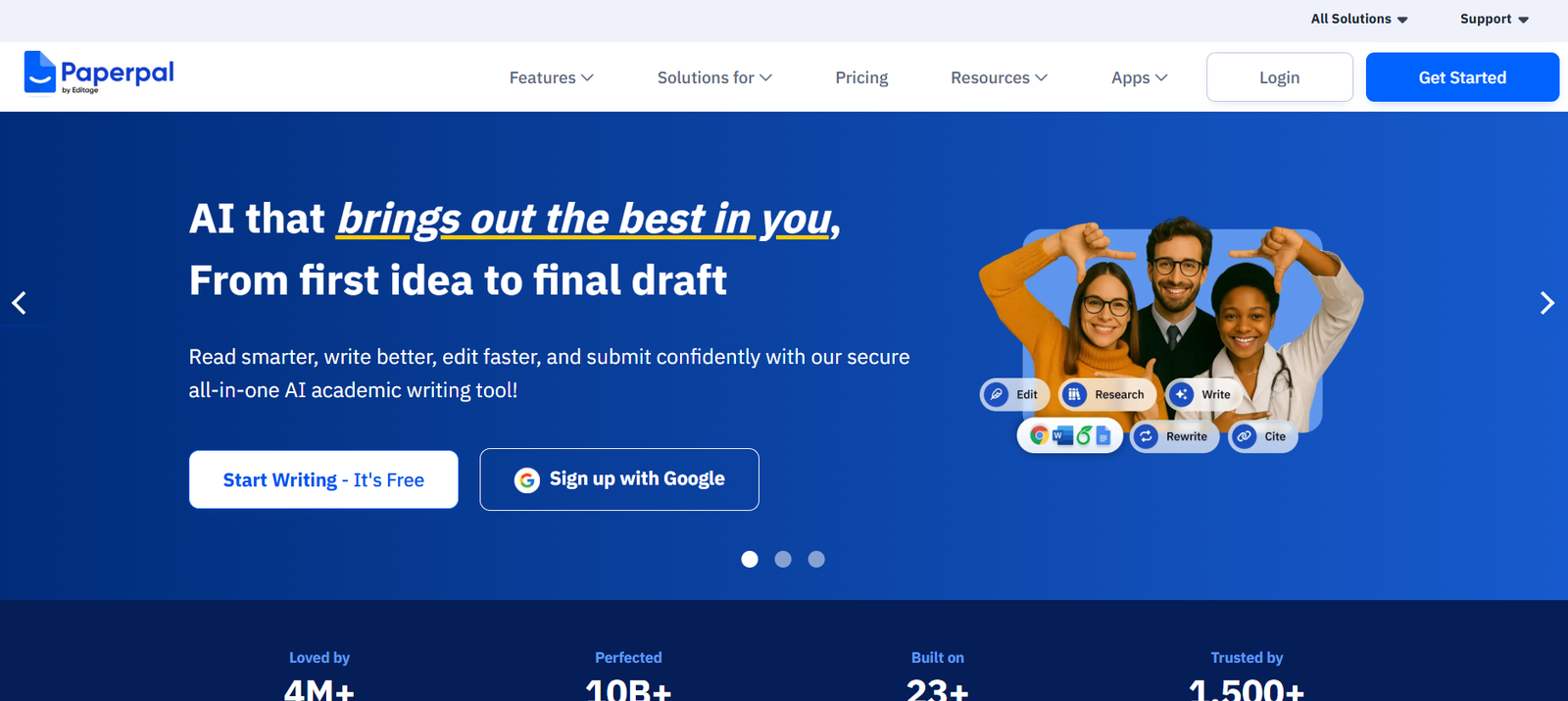
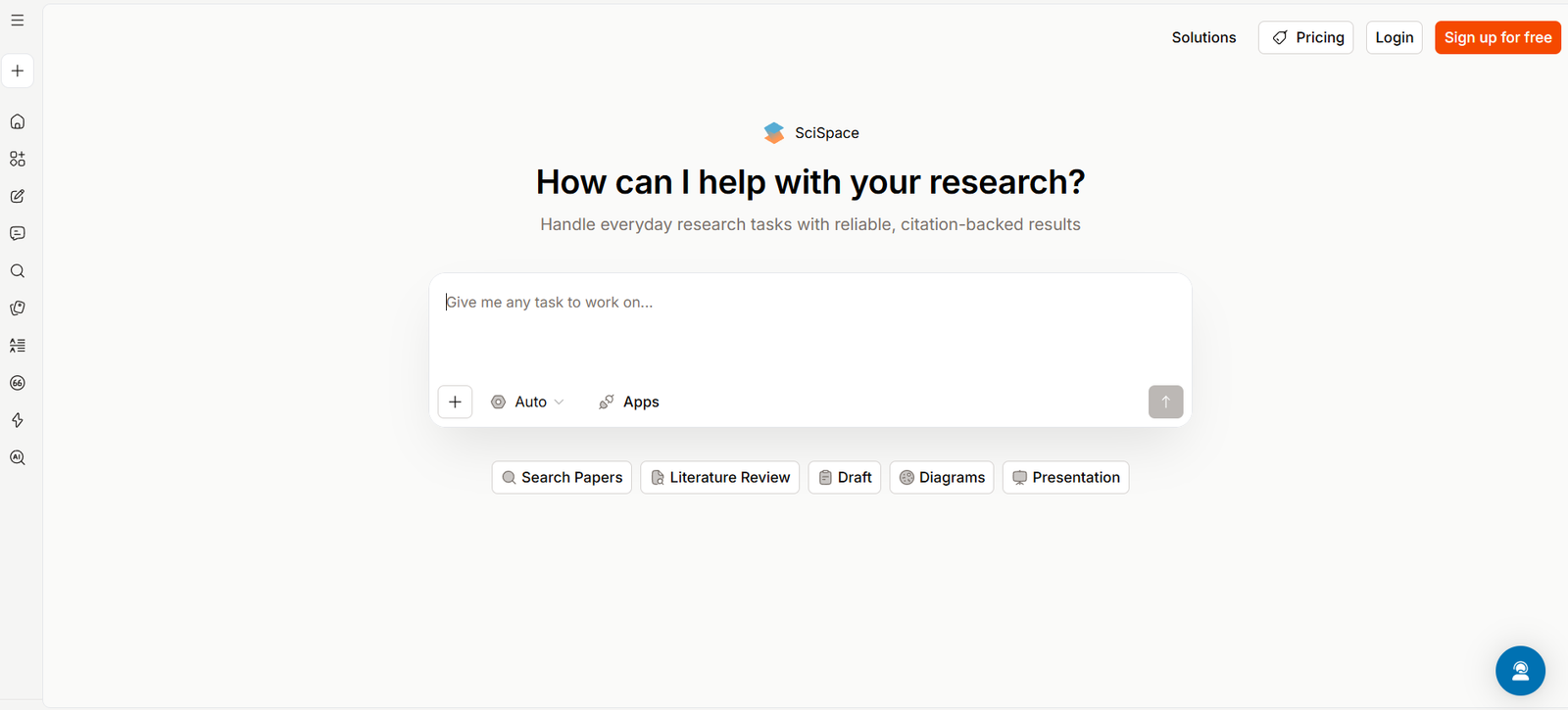
Paperpal positions itself as an all-in-one academic writing tool for reading, writing, editing, and citation-related work, while SciSpace positions itself around research agents, paper search, reviews, drafting, and journal matching. These are better fits when the writing task is tightly linked to academic papers rather than generic content production.
ChatGPT and Claude for drafting and idea shaping
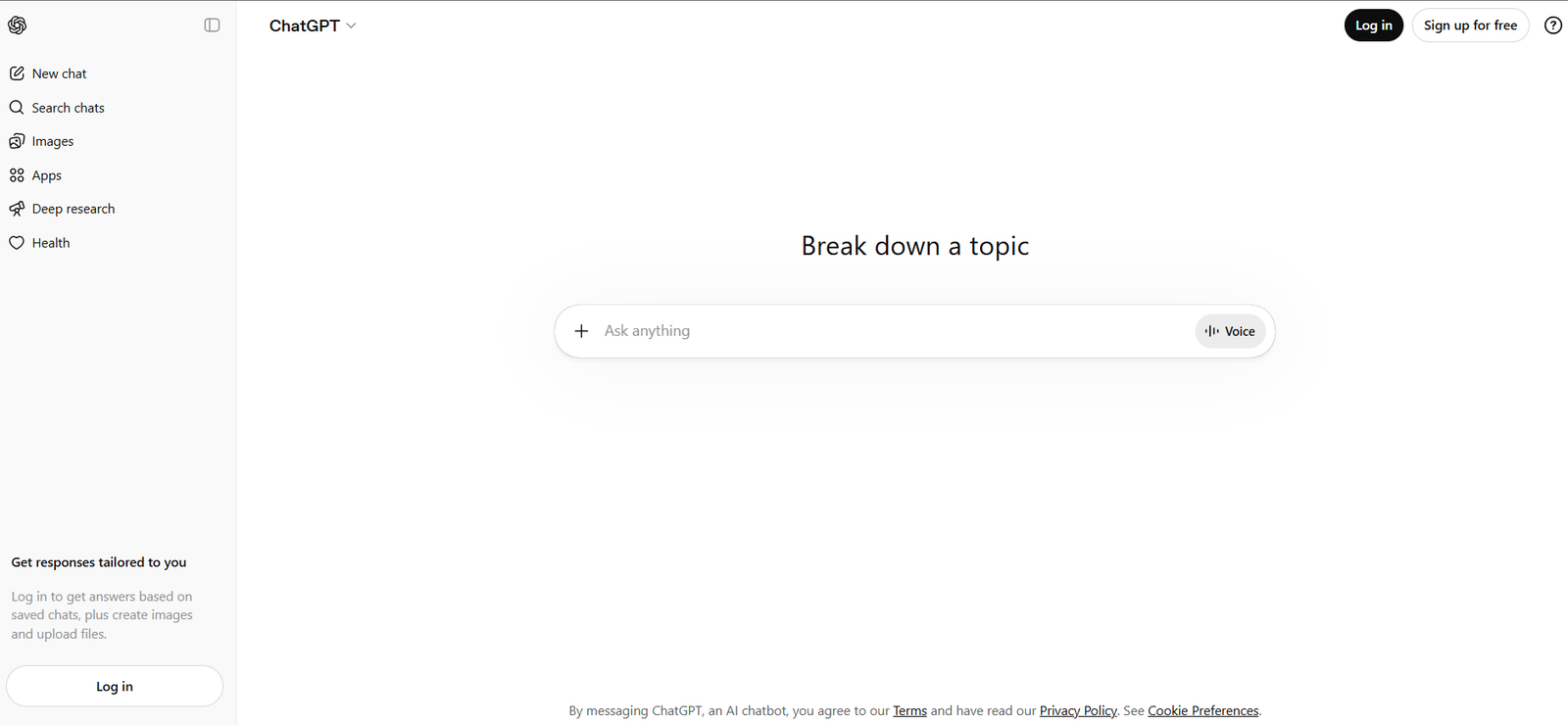
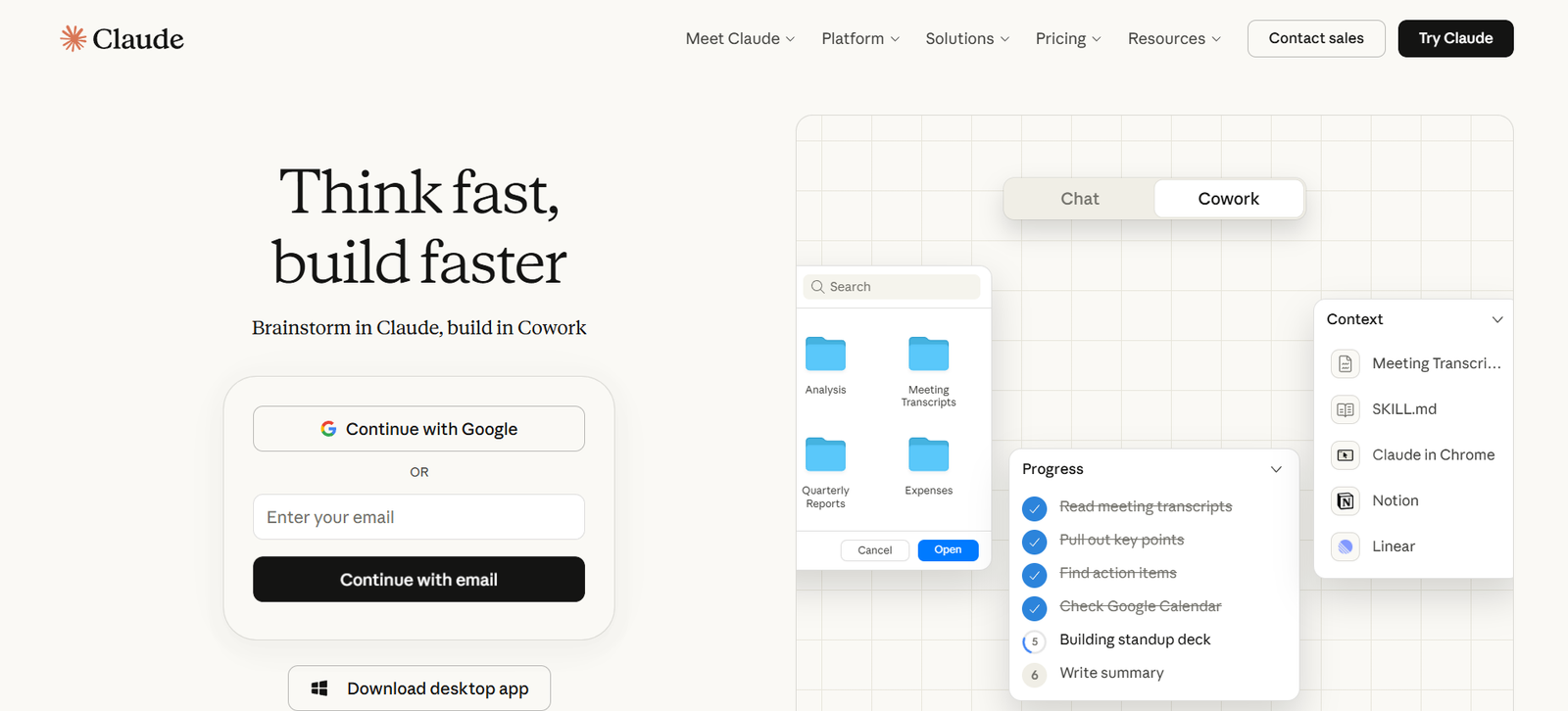
ChatGPT and Claude are still two of the most flexible tools for turning notes into drafts, rewriting dense material, and clarifying arguments. OpenAI describes ChatGPT as useful for explaining concepts, drafting, rewriting, and summarizing, while Anthropic positions Claude for writing, research, code, and problem-solving. In practice, these are better used after you have already found or organized your sources.
Grammarly and Notion AI for final polish and organization
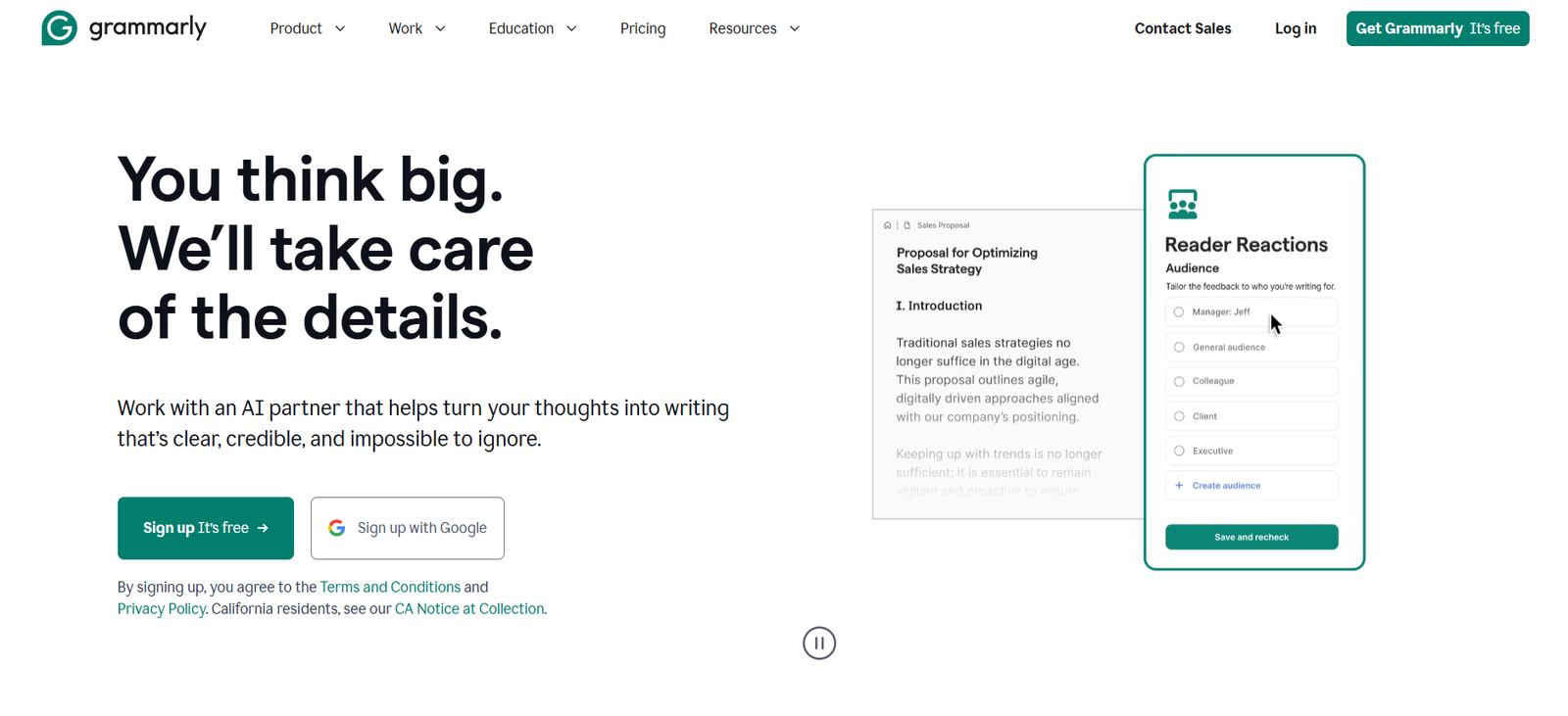
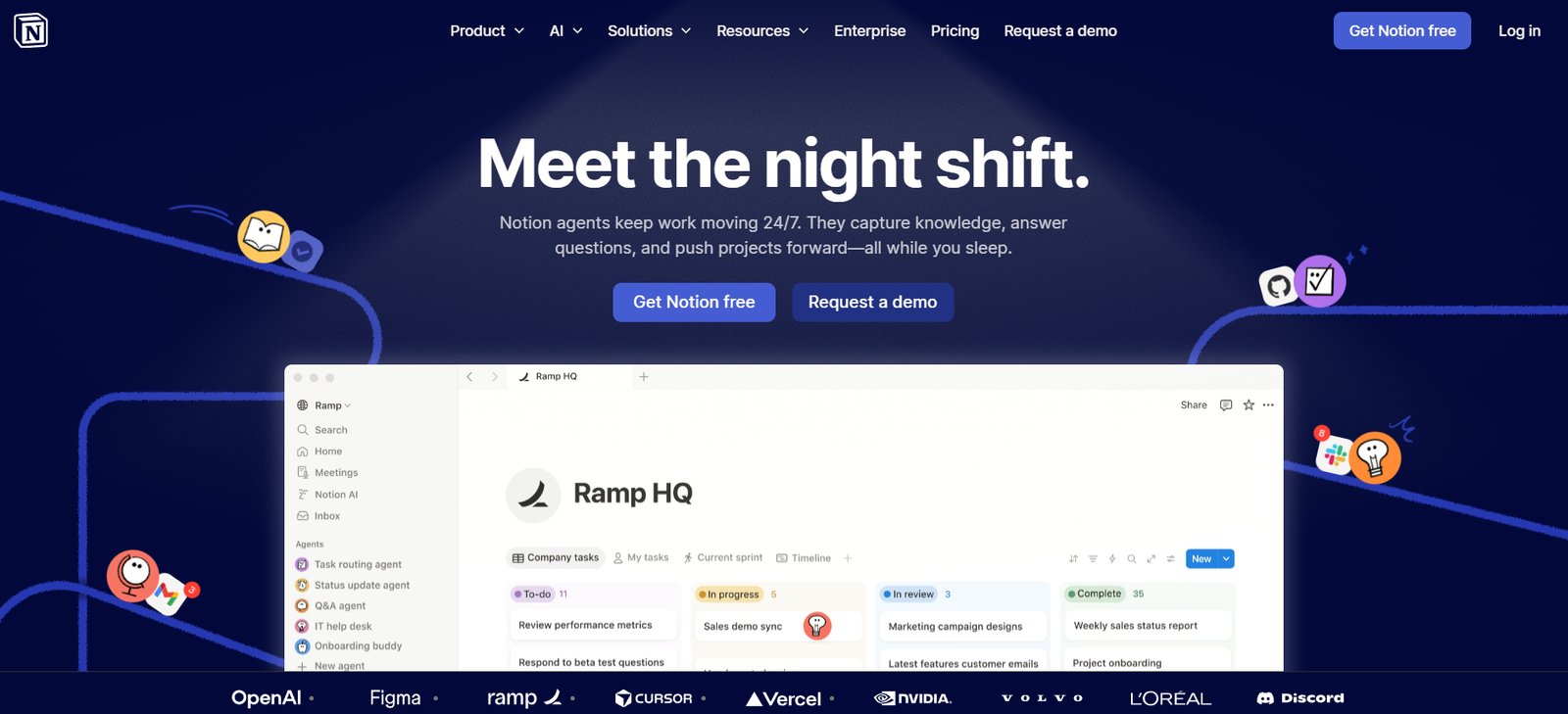
Grammarly is strongest for cleanup, tone, and clarity, while Notion AI works well when your research and writing live inside a connected workspace. Grammarly explicitly frames itself as AI writing assistance across apps, and Notion AI is positioned as a way to transform text, automate simple tasks, and generate content inside docs and notes.
Real-world use cases
A student writing a literature review might use Elicit to find papers, NotebookLM to synthesize uploaded PDFs, and Grammarly for cleanup. A blogger or content strategist may start with Perplexity for source discovery, use ChatGPT or Claude to shape an outline, then polish in Grammarly. A researcher preparing a manuscript may combine SciSpace or Paperpal with NotebookLM for grounded note synthesis and final editing. That multi-tool workflow is also consistent with what current academic and library guides recommend: combine tools by stage instead of expecting one assistant to handle the full process reliably.
Mistakes, limitations, and risks
The biggest mistake is using a writing tool as if it were a research authority. Another is trusting polished AI text when the source trail is weak. A third is buying too many overlapping products too early. Current academic guidance repeatedly stresses that general-purpose chat tools are helpful, but specialized research workflows still matter for transparency, rigor, and verification. That is why source visibility, citation discipline, and human checking remain essential.
Suggested Read:
- Best AI Tools for Beginners in 2026
- Best AI Tools for Students: Research, Notes, and Presentations
- Best AI Tools for Bloggers and Content Writers
- ChatGPT vs Perplexity vs Claude for Research Tasks
- AI Tools With Free Plans Worth Using in 2026
- Prompt Engineering for Beginners: A Practical Guide
FAQ: AI Tools for Research and Writing
What is the best AI tool for research and writing overall?
There is no single best tool for every stage. For most users, a combination of Perplexity for discovery, NotebookLM for source-grounded notes, and ChatGPT or Claude for drafting is stronger than relying on one app.
What is the best AI tool for academic research?
Elicit, Paperpal, SciSpace, and NotebookLM are strong options depending on whether you need paper discovery, writing support, or source-based synthesis.
Can ChatGPT replace research tools?
Not fully. It is strong for drafting and explanation, but current library and research guides still recommend more structured or source-grounded tools when rigor and traceability matter.
Which tool is best for turning sources into notes?
NotebookLM is one of the strongest options when you already have documents and want grounded summaries, questions, and structured notes from those materials.
Final takeaway
The best AI tools for research and writing are the ones that match the stage of work you are actually in. Use Perplexity or Elicit to find better material, NotebookLM to synthesize your sources, ChatGPT or Claude to shape drafts, and Grammarly or Notion AI to clean up the final output. That workflow is more practical, more trustworthy, and more scalable than chasing one all-purpose tool.